
|
Thank you, from the Foods of the World Forums! |
Bo Ssam |
Post Reply 
|
Page 12> |
| Author | ||
TasunkaWitko 
Admin Group 

Joined: 25 January 2010 Location: Chinook, MT Status: Offline Points: 9389 |
 Post Options Post Options
 Thanks(0) Thanks(0)
 Quote Reply Quote Reply
 Topic: Bo Ssam Topic: Bo SsamPosted: 06 February 2012 at 14:43 |
|
|
The Bo Ssam Miracle By Sam Sifton
This weekend’s dinner is a slow-roasted shoulder of pig, a meal that can be picked apart by a table of friends armed only with chopsticks and lettuce. A tight and salty caramel crust sits on top of the moist, fragrant collapse of meat, and juices run thick to pool beneath it, a kind of syrup, delicious in its intensity. It is pork as pommes soufflé. The dish is known in Korea as bo ssam — pork wrapped like a package in fresh greens, with rice and kimchi. David Chang, the chef and an owner of a small restaurant empire in New York and abroad, offers an exemplary version at his Momofuku Ssam Bar in Manhattan’s East Village for $200, where it serves 6 to 10 people and regularly blows minds. That you can achieve almost exactly the same result at home for a fraction of the cost is both a testament to Chang’s magnanimity (he published a recipe for the dish in his recent “Momofuku” cookbook) and also an example of how important it is for chefs to be able to write good recipes. The best restaurant kitchens are filled with exceptional cooks, or are meant to be. This is particularly the case in the kitchens run by Chang, whose restless, inventive cooking requires a great deal of skill and training. You cannot stuff mushroom caps in a sports bar and then expect to get a job working for him straight out of culinary school. (You can try!) But hacks will still sometimes get in the door, just as they do in every game: craftsmen rather than artists, regular joes, people exactly like most of us. For them, perhaps (for us, for sure!), recipes like Chang’s bo ssam are a godsend. They make any cook appear to be better than he or she really is, elevating average kitchen skills into something that approaches alchemy. Tell no one how easy this all turns out to be, though. Simply cook the food and serve it and watch as those at your table devour the meat in a kind of trance. The drill is simple. Buy a pork shoulder — it is generally labeled “Boston butt” in supermarket meat racks. Rinse and dry it with paper towels and cover it in a large bowl with salt and sugar, a dry brine that will begin to cure the meat. The next day, put the shoulder in a low oven for six hours, until the meat surrenders and becomes a kind of heap. Let it rest. Turn the oven on high. Slather on brown sugar and salt, and blast it into lacquer. Rest it again, then serve. (The skin at this point will have fused into a kind of caramel bark; you may need to use a pair of tongs to get at the meat.) Meanwhile, make condiments. Chang, like most proper New Yorkers, is addicted to the ginger-scallion sauce used to flavor noodles at the Chinatown restaurant Great N.Y. Noodletown. The brightness of the ginger in his version, as well as the zap of the scallions, is an excellent match for the pork. You will need spice too, something with some heat to it, to provide contrast. Kochujang, a sweet Korean hot-pepper paste, is one possibility, as is its cousin ssamjang, a fiery soybean paste. Chang thins out ssamjang with oil and sherry vinegar to achieve a marvelous result. Having all three sauces on the table would not be a waste. From-scratch kimchi is a tall order for weekend warriors (it takes weeks to achieve the proper taste and fermentation). But commercial varieties are available in some supermarkets and online. In a pinch you can buy new pickles and amplify them with red pepper. Rigorous testing confirms their deliciousness in a homemade bo ssam. There should be rice on the table and clean, cold bibb lettuce in which to wrap everything up. Chang suggests raw oysters as well. “I like the textural contrast,” he says, “as well as the temperature contrast.” But these are not strictly necessary for the miracle to occur. What is necessary: close attention to the final disposition of the pork itself, when you return it to the oven to build its crust. “Once that last bit of sugar and salt is on there and the meat is back in a hot oven,” Chang says, “you want to watch it carefully. You’re not looking for a color so much as for the moment when the fat and the skin begins to fluff up a little. It’s not so much about the sugar caramelizing as it is about the fat starting to bubble.” When that happens — Chang calls it the soufflé effect — you are ready to go. The meat should look roughly like a deflated and yet strangely attractive football. Let it rest a little while longer (take some of the sugar-thickened fat and whisk it into your thinned-out ssamjang for some extra oomph) while you gather together a quorum to eat. Now take a piece of lettuce to show others the way. Place into it a torn string of meat, a dab of rice, some hot sauce or kimchi or pickles. Fold and bite, fold and bite. Try it with a scissored shard of the candied pigskin. Or with an oyster. Or both. Repeat. Chang served bo ssam at his new restaurant in Australia recently. “We put a lot of sugar on the meat at the end,” he says, “and served it like a pork petit four.” Most of the diners had eaten a full tasting menu already, so Chang did not think people would really eat the ssam. It was almost abusive, he felt: “People were full, you know, they’d eaten like 10 courses already.” But then he looked out at the dining room. The ssams were being taken apart as if by frenzied animals. “People were just housing them,” Chang said. “They smell it and they look at it and they just go crazy.” See for yourself. Momofuku Bo Ssam To serve 6 to 10: Pork Butt: 1 whole bone-in pork butt or picnic ham (8 to 10 pounds) Ginger-Scallion Sauce: 2½ cups thinly sliced scallions, both green and white parts Ssam Sauce: 2 tablespoons fermented bean-and-chili paste (ssamjang, available in many Asian markets, and online) Accompaniments 2 cups plain white rice, cooked 1. Place the pork in a large, shallow bowl. Mix the white sugar and 1 cup of the salt together in another bowl, then rub the mixture all over the meat. Cover it with plastic wrap and place in the refrigerator for at least 6 hours, or overnight. 2. When you’re ready to cook, heat oven to 300. Remove pork from refrigerator and discard any juices. Place the pork in a roasting pan and set in the oven and cook for approximately 6 hours, or until it collapses, yielding easily to the tines of a fork. (After the first hour, baste hourly with pan juices.) At this point, you may remove the meat from the oven and allow it to rest for up to an hour. 3. Meanwhile, make the ginger-scallion sauce. In a large bowl, combine the scallions with the rest of the ingredients. Mix well and taste, adding salt if needed. 4. Make the ssam sauce. In a medium bowl, combine the chili pastes with the vinegar and oil, and mix well. 5. Prepare rice, wash lettuce and, if using, shuck the oysters. Put kimchi and sauces into serving bowls. 6. When your accompaniments are prepared and you are ready to serve the food, turn oven to 500. In a small bowl, stir together the remaining tablespoon of salt with the brown sugar. Rub this mixture all over the cooked pork. Place in oven for approximately 10 to 15 minutes, or until a dark caramel crust has developed on the meat. Serve hot, with the accompaniments. |
||
|
If you are a visitor and like what you see, please click here and join the discussions in our community!
|
||
 |
||
| Sponsored Links | ||
|
||
|
Hoser
Admin Group

Joined: 06 February 2010 Location: Cumberland, RI Status: Offline Points: 3454 |
Post Options
Thanks(0)
Quote Reply
Posted: 07 April 2012 at 06:04 |
|
|
I don't know how I missed this when you posted it Ron, but WOW!
This sounds absolutely off the charts good....gather round the table out on the deck, and shred as you go. I will try a version of this some time this summer.
|
||
|
Go ahead...play with your food!
|
||
|
||
|
TasunkaWitko
Admin Group
Joined: 25 January 2010 Location: Chinook, MT Status: Offline Points: 9389 |
Post Options
Thanks(0)
Quote Reply
Posted: 09 April 2012 at 09:43 |
|
|
hi, dave, and glad you liked this one. yep. i was thinking that this must be tried this spring or summer as well - looks too good to ignore!
|
||
|
If you are a visitor and like what you see, please click here and join the discussions in our community!
|
||
|
||
|
gracoman
Chef 
Joined: 09 August 2013 Status: Offline Points: 887 |
Post Options
Thanks(0)
Quote Reply
Posted: 30 September 2013 at 17:09 |
|
|
This post peaked my interest. Sometimes that's all it takes.
Bo Ssam or Bossam is a traditional Korean dish made with boiled pork belly and served with napa cabbage. Chef David Chang created quite a stir in the NY restaurant scene with his Momofuku Bo Ssam which is served at his Momofuku Bo Ssam Bar. His yin yang approach to this dish with its salty/sweet, crunchy/soft, spicy/cooling, hot/chilled, rich fatty/vegetable components really set me off and so here we are. Step one. Apply an overnight cure mix of 1 cup kosher salt and 1 cup white sugar.  12 hours later quite a bit of liquid has exuded from the 8 and 1/2 pound bone-in pork butt.  For comparison, the "cured" butt is on the right.  2 butts hit the cooker. Guess which one is for Bo Ssam.  The butts are done. It is unnecessary, and even ill advised, to cook with a water pan in a ceramic cooker. I purposely used a water pan for this cook to retard bark formation on the Bo Ssam. To bad about the other one but sometimes sacrifices must be made. The rubbed butt was going to friends of mine who wouldn't know he difference anyway so I was not to upset about it.   Here's a close up of the butt slated for Bo Ssam  Let this thing rest for an hour or so. In the meantime steam some rice, make the Ginger-Scallion Sauce (to die for) and the Ssam Sauce. Ready the oysters if using, dish out the kimchi, and wash and dry lots of Bibb lettuce leaves.  Coat the rested pork with 1 part kosher salt to 7 parts brown sugar.  Place the coated pork into a 500 degree F ceramic cooker or kitchen oven for 10 - 15 minutes to melt the brown sugar and salt coating into a beautiful salty-sweet lacquered crust.  Serve with steamed rice, sauces, kimchi and plenty of bibb lettuce leaves.  This is meant to be a communal dinner. Grab the tongs and a lettuce leaf and place some meat with crust in it. Add rice, kimchi, and drizzle the sauces over the top. Use extra ginger-scallion sauce because its worth its weight in gold. Plop an oyster on top if you've a mind and bite into salty-sweet, crunchy-soft, spicy-cool, hot and chilled heaven on Earth. These flavors were meant to be together. Everyone was greatly impressed. Count myself at the top of that list. Pure bliss
 |
||
|
||
|
Addtotaste
Cook 

Joined: 18 May 2012 Location: Cape Town Status: Offline Points: 230 |
Post Options
Thanks(0)
Quote Reply
Posted: 01 October 2013 at 03:50 |
|
|
my mouth is watering. Considering africanmeat and I are the only ones who imbibe in the short german sheep do you reckon something similar can be done with lamb?
|
||
|
Check out some more recipes and reviews - www.addtotaste.co.za
|
||
|
||
|
MarkR
Chef

Joined: 03 February 2011 Location: St. Pete FL Status: Offline Points: 625 |
Post Options
Thanks(0)
Quote Reply
Posted: 01 October 2013 at 11:32 |
|
|
Ohhhhhk, I think i like it!
|
||
|
Mark R
|
||
|
||
|
MarkR
Chef
Joined: 03 February 2011 Location: St. Pete FL Status: Offline Points: 625 |
Post Options
Thanks(0)
Quote Reply
Posted: 01 October 2013 at 11:37 |
|
I don't think lamb has enough fat content...but I may be wrong. |
||
|
Mark R
|
||
|
||
|
TasunkaWitko
Admin Group
Joined: 25 January 2010 Location: Chinook, MT Status: Offline Points: 9389 |
Post Options
Thanks(0)
Quote Reply
Posted: 01 October 2013 at 11:37 |
|
|
Incredible-looking bo ssam, Gman ~ a really, really nice job there!
|
||
|
If you are a visitor and like what you see, please click here and join the discussions in our community!
|
||
|
||
|
Rod Franklin
Chef

Joined: 17 February 2010 Location: USA Status: Offline Points: 921 |
Post Options
Thanks(0)
Quote Reply
Posted: 01 October 2013 at 18:35 |
|
|
That looks incredibly good! I'm gonna try some of those sauces for sure.. I really like the whole pile things on a lettuce leaf way of eating too. I usually use romaine and fill with a lot of different things from chicken salad to hamburger to bacon/tomato/dill pickle/onion.
|
||
|
Hungry
|
||
|
||
|
AK1
Master Chef

Joined: 10 April 2012 Location: Ontario, Canada Status: Offline Points: 1081 |
Post Options
Thanks(0)
Quote Reply
Posted: 02 October 2013 at 07:34 |
|
|
||
|
||
|
MarkR
Chef
Joined: 03 February 2011 Location: St. Pete FL Status: Offline Points: 625 |
Post Options
Thanks(0)
Quote Reply
Posted: 02 October 2013 at 10:47 |
|
Cook by temp, not time. I'm not that familiar with lamb (working on it) but my guess is it still has to get to 195° - 205° internal to fall apart like that. Might want to try a cut of lamb that is similar to a butt. I'll have to go look to see what that is. ?shoulder roast? |
||
|
Mark R
|
||
|
||
|
TasunkaWitko
Admin Group
Joined: 25 January 2010 Location: Chinook, MT Status: Offline Points: 9389 |
Post Options
Thanks(0)
Quote Reply
Posted: 02 October 2013 at 11:05 |
|
|
I am no expert on lamb, but shoulder roast or possibly leg of lamb should be good - I would guess that those cuts are smaller than a full-blown pork butt (shoulder roast), so cooking time would be shorter. As Mark says, go by temperature until the meat is to the point where the fats and collagens have melted and the roast is fall-apart tender. On pork and beef this is in the 200 degree range (internal) for pork, but not sure about lamb. Seems to me it would be delicious cooked this way ~
|
||
|
If you are a visitor and like what you see, please click here and join the discussions in our community!
|
||
|
||
|
AK1
Master Chef
Joined: 10 April 2012 Location: Ontario, Canada Status: Offline Points: 1081 |
Post Options
Thanks(0)
Quote Reply
Posted: 02 October 2013 at 11:35 |
|
|
What would worry me though, is taking lamb to that temp. I know that the 190+ works for pork shoulder and brisket, but lamb, I don't know. I've never cooked lamb that high. Is it going to be similar... maybe. Is it going to as tough as shoe leather...maybe. I just don't know.
|
||
|
||
|
MarkR
Chef
Joined: 03 February 2011 Location: St. Pete FL Status: Offline Points: 625 |
Post Options
Thanks(0)
Quote Reply
Posted: 02 October 2013 at 11:44 |
|
Africanmeat cooks a lot of lamb, he should know. Hopefully he'll let us know. Me, I'm making my best guess. |
||
|
Mark R
|
||
|
||
|
gracoman
Chef
Joined: 09 August 2013 Status: Offline Points: 887 |
Post Options
Thanks(0)
Quote Reply
Posted: 02 October 2013 at 11:49 |
|
|
I am not a fan of lamb, just don't like it, but I don't see why this process could not be used.
The principals would be the same for any roast. First give it an overnight cure to concentrate the meats flavor, add saltiness and dry it out a little. The recipe says when the meat is cooked (I smoked the pork to 190F internal) it should look like a deflated football. I believe I succeeded BTW: This would have been excellent without the overnight cure as long as it was cooked naked, no rubs or injections, just different. Because of my aversion to lamb, I don't know how the brown sugar coating would work, nor am I sure how the Korean sauces would compliment the meat. I'll leave that up to someone braver than I. The pork coating was candy-like and I had to punch through it with the tongs. You can see exactly where I hit it. It split rather than fall apart as one would expect with a normal pulled pork. The brown sugar/salt coating may be something worth experimenting with on ribs. The texture was extremely tender. It was a perfect fit for the lettuce leaves.
|
||
|
||
|
gracoman
Chef
Joined: 09 August 2013 Status: Offline Points: 887 |
Post Options
Thanks(0)
Quote Reply
Posted: 02 October 2013 at 12:07 |
|
|
I'm sorry, I left something out.
Cook the lamb as you normally would to achieve desired "doneness". It would then be a simple matter to coat in brown sugar and melt at 500F
|
||
|
||
|
AK1
Master Chef
Joined: 10 April 2012 Location: Ontario, Canada Status: Offline Points: 1081 |
Post Options
Thanks(0)
Quote Reply
Posted: 02 October 2013 at 12:22 |
|
|
I get that. But where I have questions is, "desired doneness" I get lamb cooked properly, but I've never taken it to that "pulling" stage. Done it with brisket, done it with pork shoulder. Can it be done with lamb, mutton etc?
|
||
|
||
|
TasunkaWitko
Admin Group
Joined: 25 January 2010 Location: Chinook, MT Status: Offline Points: 9389 |
Post Options
Thanks(0)
Quote Reply
Posted: 02 October 2013 at 12:25 |
|
|
Darko - it seems to me that any piece of meat with sufficient fat and collogen can be cooked to the melty-tender "pulling" stage. We've all seen it with pork and beef, but I would say that it depends on the cut and the make-up of the meat. Lean cuts such as loin etc. would not have the same properties.
|
||
|
If you are a visitor and like what you see, please click here and join the discussions in our community!
|
||
|
||
|
gracoman
Chef
Joined: 09 August 2013 Status: Offline Points: 887 |
Post Options
Thanks(0)
Quote Reply
Posted: 02 October 2013 at 12:40 |
|
|
In this case I believe "desired doneness" would be a texture similar to pulled pork, chicken or turkey thighs.
Nothing chewy. Chewy would make it difficult to bite through the lettuce leaf filled finish. But for me, the "desired doneness" of lamb would be at the bottom of a trash can. Yuck And let's not forget, bossam originates with pork belly.
|
||
|
||
|
MarkR
Chef
Joined: 03 February 2011 Location: St. Pete FL Status: Offline Points: 625 |
Post Options
Thanks(0)
Quote Reply
Posted: 02 October 2013 at 12:51 |
|
|
I did a little Google searching, seems like you cook pulled lamb just like you cook pulled pork.
"Preheat oven to 220° F. Combine spices, rub on meat. Place meat in a large Dutch oven or covered casserole dish. Add lemon juice/water mix or wine to the bottom of the pan. Cover and place in oven for 8-12 hours No need to poke it, fuss, or worry about it. When the meat is fully tender, remove from the oven. Carefully remove the meat from the bones, pulling the meat apart into strings. Discard the bones and any large fatty pieces. Taste the liquid and add additional salt to your taste. The liquid should be strongly flavored. If it is not, reduce it on the stove apart from the meat until reduced by a quarter to a half. Once the liquid is a consistency you like, add the sweetener you prefer. Vary the amount of sweetener according to your taste as well. We like it sweet!" http://edibleboston.com/barbeque-pulled-mutton-or-lamb/ |
||
|
Mark R
|
||
|
||
|
Post Reply
|
Page 12> |
 Tweet
Tweet
|
| Forum Jump | Forum Permissions You cannot post new topics in this forum You cannot reply to topics in this forum You cannot delete your posts in this forum You cannot edit your posts in this forum You cannot create polls in this forum You cannot vote in polls in this forum |


 Topic Options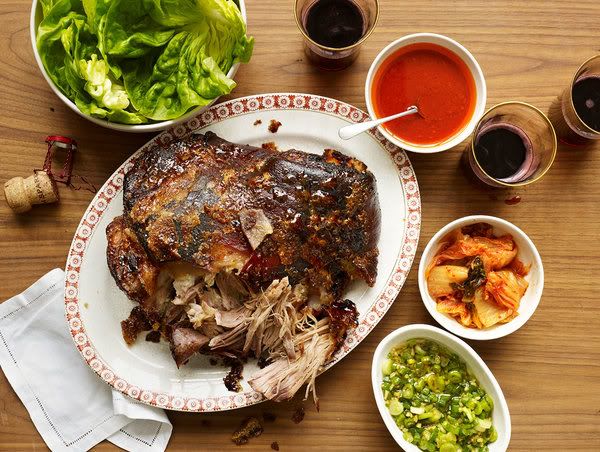
 Addtotaste wrote: