
|
Thank you, from the Foods of the World Forums! |
Estofado De Carne De Toro |
Post Reply 
|
| Author | |||
TasunkaWitko 
Admin Group 

Joined: 25 January 2010 Location: Chinook, MT Status: Offline Points: 9389 |
 Post Options Post Options
 Thanks(0) Thanks(0)
 Quote Reply Quote Reply
 Topic: Estofado De Carne De Toro Topic: Estofado De Carne De ToroPosted: 25 August 2010 at 13:40 |
||
|
the running of the bulls in pamplona, spain occurred last month, and i figured that would be an auspicious time to introduce our members to a traditional meal that is a product of that event: estofado de carne de toro; literally translated, it means "stew of bull meat" or "beef stew." this recipe comes from the book, culinaria spain, which has this to say about the yearly event:
wiki provided some in-depth information on the fiesta:
it seems that they run the bulls each day through this event, and the meat from the bulls is distributed to local restaurants etc. estofado de carne de toro is a traditional use of this meat. reading the recipe, i noticed many similarities to Bœuf Bourguignon, especially in the braising technique; however, it is the differences that make this a traditional dish of spain!
here's the recipe, from culinaria spain:
i prepared this dish on july 8th, near the end of the festival, and it was truly delicious. fasten your seatbelts and join me as we make a wonderful estofado that will truly bring forth the best of the flavours of spain!
as always, we start with a picture of the goods -
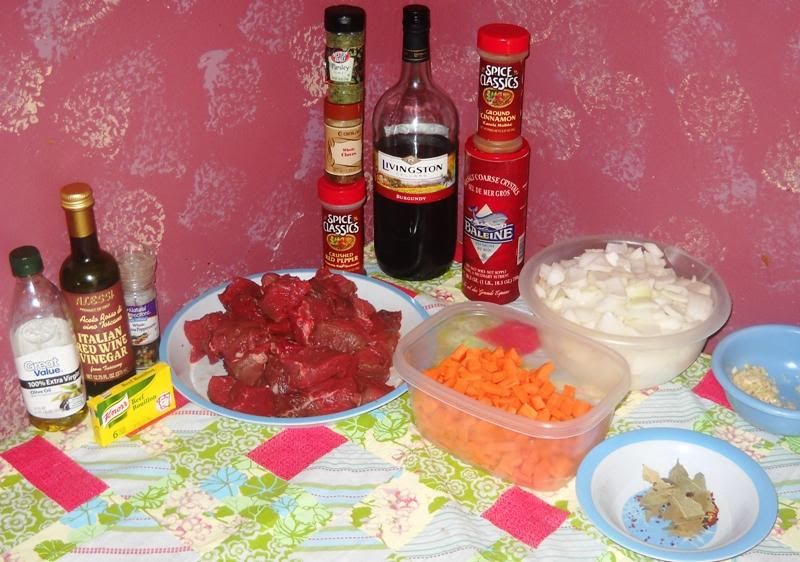 take note of just how easy this is ~ the ingredients are neither exotic (hard to find), nor are they expensive. for the record, i doubled the recipe, so the amounts of ingredients shown reflect this multiplication.
as always, mise en plase is the key! to help with preparation, i pre-chopped all of the vegetables and pre-measured the spices, herbs and liquids. this makes preparation so much easier and also allows a person to know in advance if there is anything missing. a note about the beef: this wasn't simply local beef, it was OUR local beef. my family raises a small herd of angus/hereford crosses and the steer that provided the rump roast for this meal grew up a stone's throw from where i grew up ~ there is nothing quite as satisfying as preparing a meal using beef that your family raised! i trimmed some of the fat and cut the roast into large, stew-sized cubes.
when the time came to get going with this, i heated some olive oil in a large cast iron pan and tossed the beef into it, adding a little bit of spanish sea salt in order to release the juices that provide so much beef flavour.
 the idea is to sear the meat for flavour and and begin the cooking process, which will be finished in the low, slow simmering of a dutch oven, crock pot or other soup-friendly vessel. the goal is to brown the meat, stirring often, until the liquids reduce down to some very concentrated and wonderful drippings that will be added to the meal.
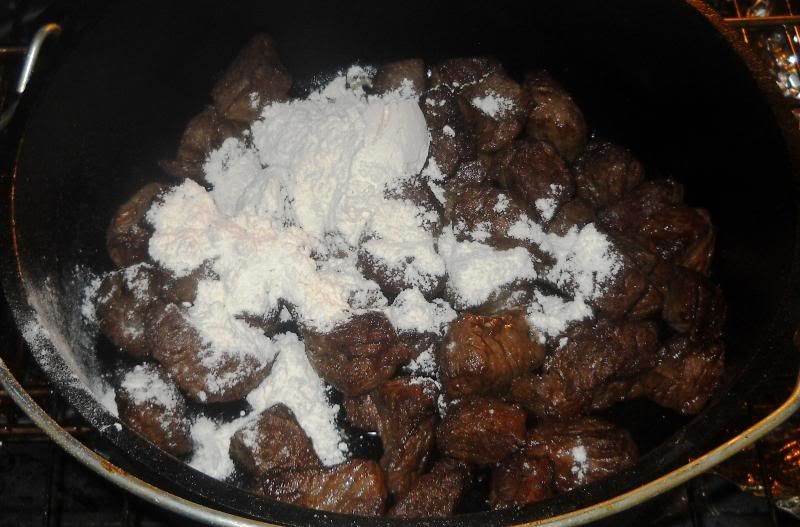
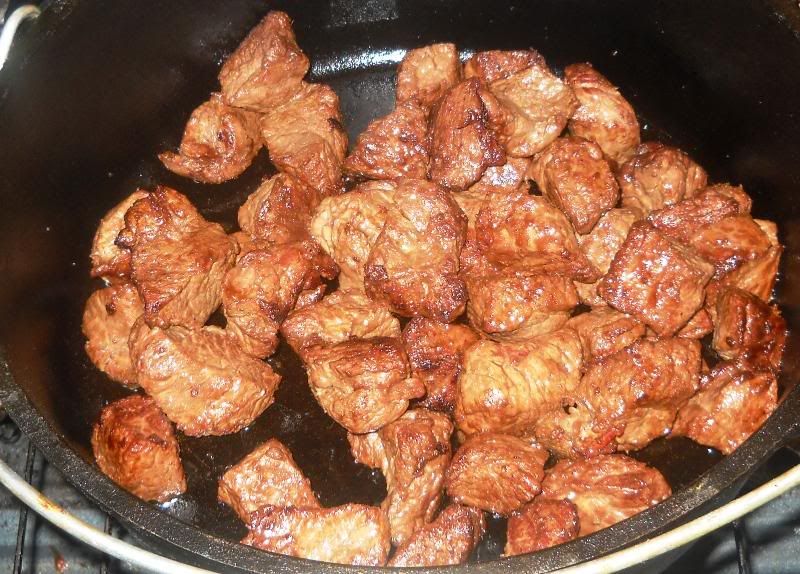 when the beef reached this point, i transferred it to our cast-iron dutch oven, that was staying warm in our oven, and added some flour in order to help thicken the final product.
 then, i carmelized some onions in a combination of butter and olive oil. when they were just starting to take on that beautiful, brownish-translucent quality, i added some finely-chopped garlic aong with a little more salt and some freshly-cracked black pepper.
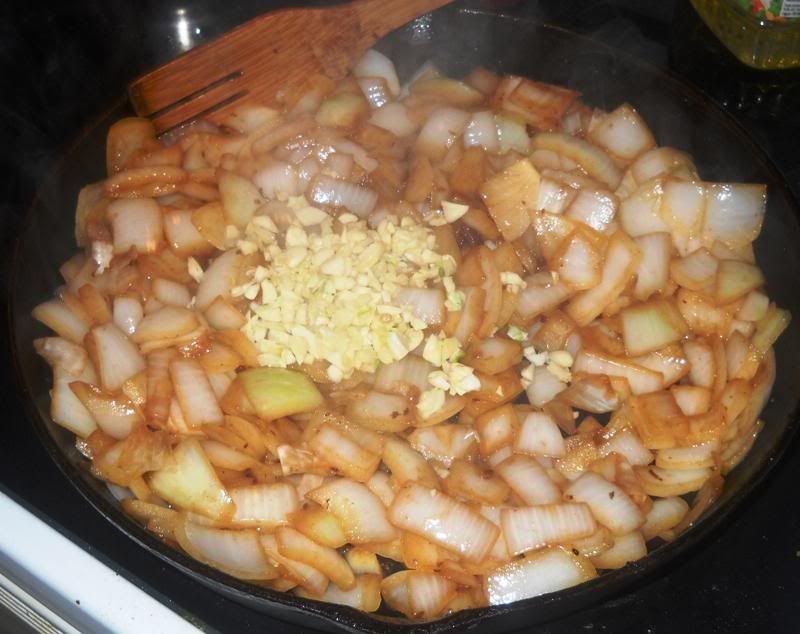 continued cooking for a couple of minutes longer, then introduced this aromatic ambrosia to the meat in the dutch oven. along with the carrots and wine, which i had used to deglaze the pan:
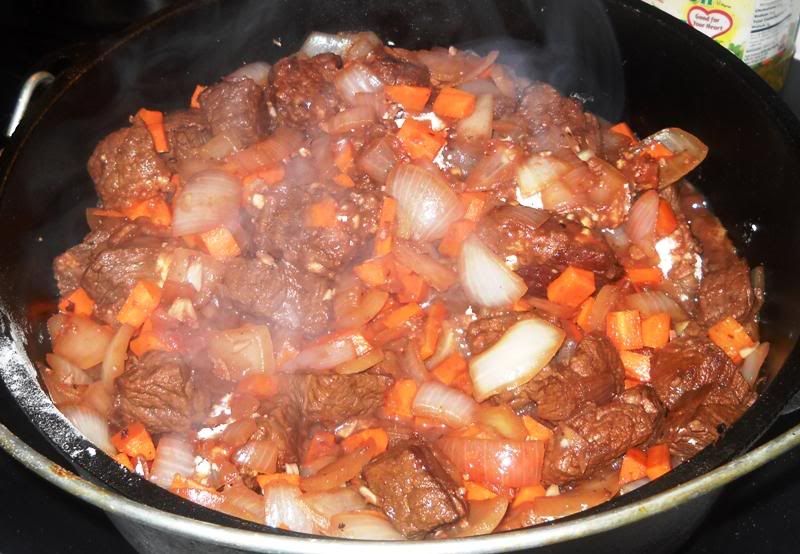 i then added the remaining seasonings and spices, shown here. some folks like to add the bay (laurel) leaves whole, then remove them when the preparation is complete, but i prefer to crumble them up a bit and leave them in the final dish.
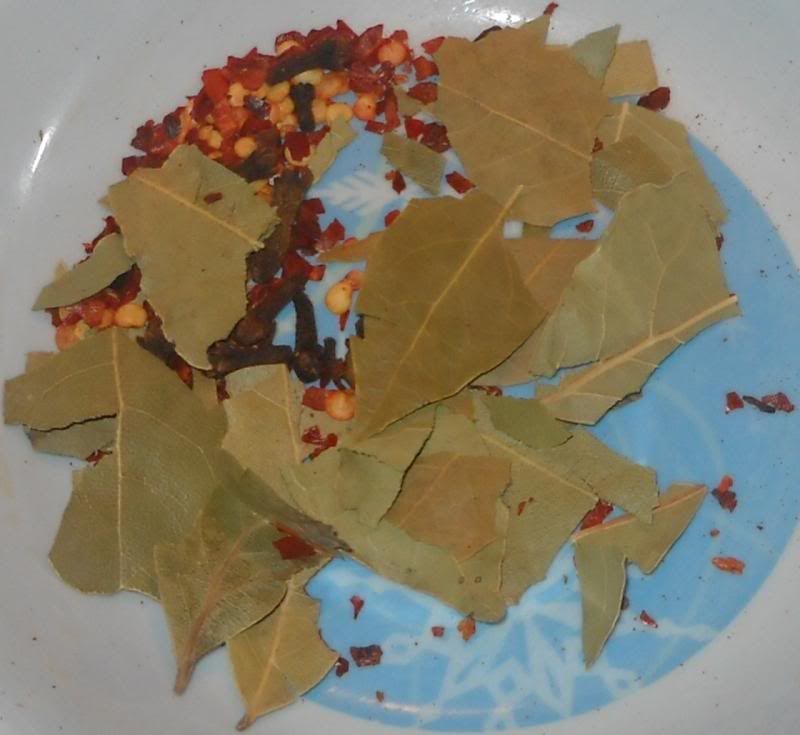 rather than hot chile peppers, i chose to add a pinch or two of red pepper flakes to this dish. my intention was to keep the heat down for my poor wife, whilst providing a little spice in the tradition of the estofado.
then came the beef stock (double-concentrated broth in this case), which brought a little too much liquid to the party, in my opinion.
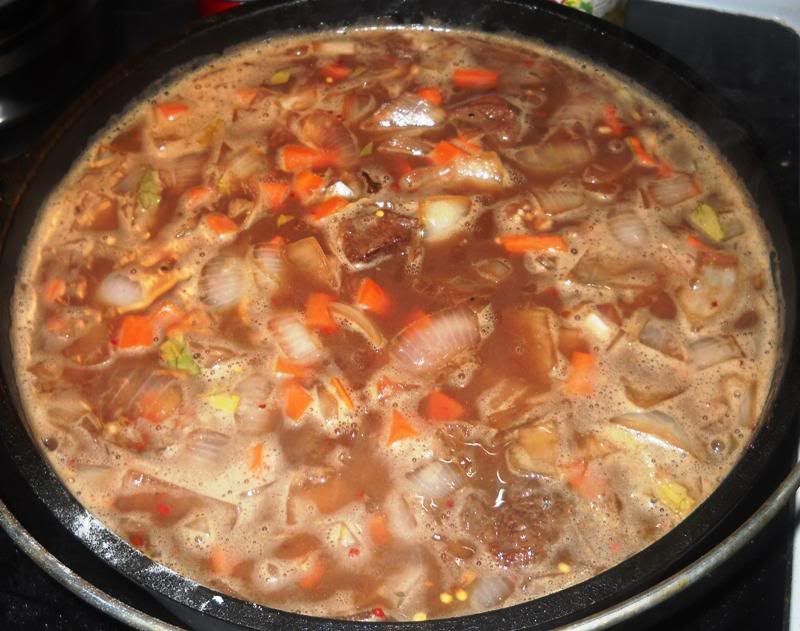 having said that, i personally prefer thick, rich stews over soups, and a combination of reducing down the broth along with thickening (in the form of flour or conrnstarch) can achieve the results i prefer. if you prefer a thinner stew, then by all means this is a great one to do as written!
after two or three hours of slow simmering in the oven (i believe the temperature was 300 or 325 degrees), the estofado had reduced down to a nice, rich stew close to the way i like it.
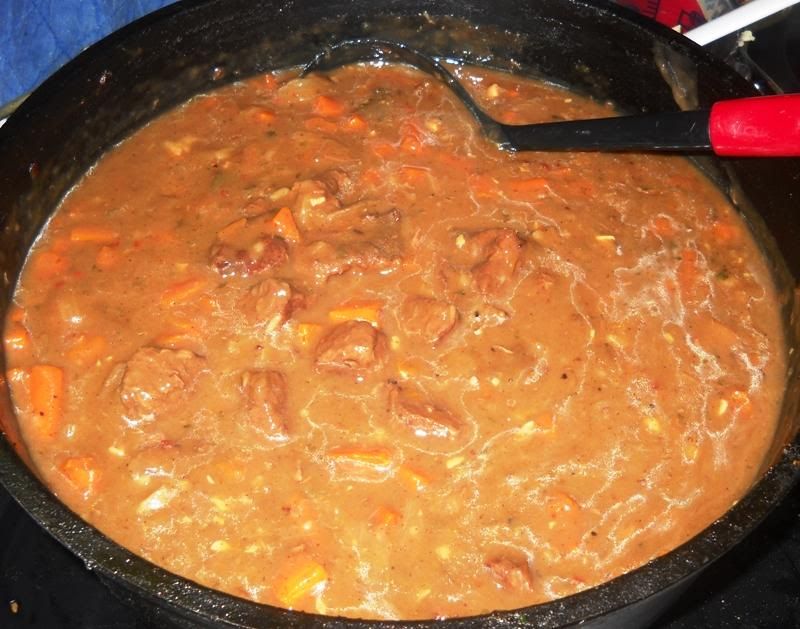 the salt and pepper seemed just fine, so i added the final touches in the form of a hint of cinnamon and some parsley and served on mashed potatoes with warm, buttered ciabatta buns that we happened to have on hand. i had wanted to serve it with rice, but at the last minute switched to the mashed potatoes and this posed no problems.
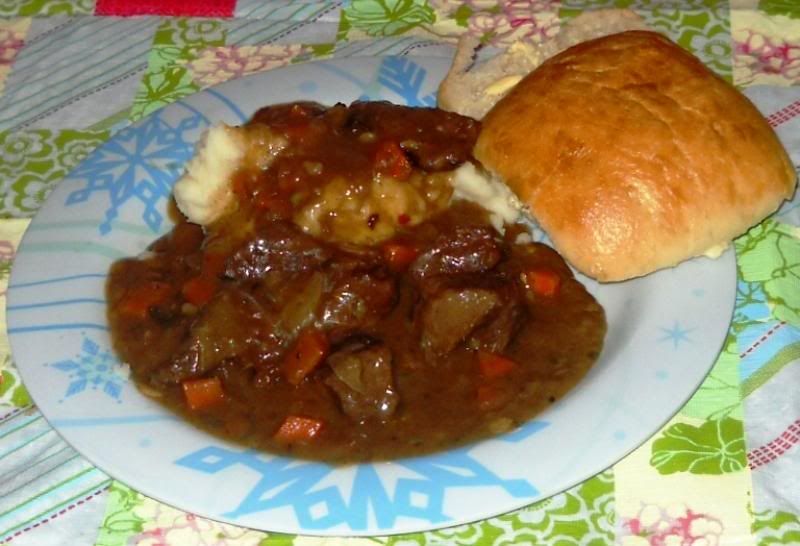 my dad managed to drop by again just in time for supper (funny how that keeps happening!), so he joined us for this meal. results were nearly all positive, with my dad and three of my boys agreeing with me that this was truly a wonderful dish. 1/8 of a teaspoon just didn't seem like enough, so i used just a touch more cinnamon than called for in the recipe, closer to a quarter-teaspoon, and truly enjoyed the essence that it provided. as with the french and belgian carbonade-type stews, this was simple to prepare and made a very rich stew with extremely tender chunks of beef. i was impressed with the mix of flavours that went into this estofado and the way they provided a good balance of savory with a hint of sweet, a breath of spicy and a touch of sour. a very good stew!
the beautiful mrs. tas wasn't so impressed with the cinnamon or the red pepper flakes as i was, and said it was rather spicy for her taste. one of my boys (the angsty 15-year-old) was downright horrified by the idea of using cinnamon in a stew, modest as it was. i can't wait to unleash some indian food on him!
conclusions - i was very impressed with this stew and would love to make this again. i can't think of anything that i would change except to go ahead and use the chiles and also thicken or reduce it a bit more. this made a very good "brunch" dish the next day, served on basmati rice that i prepared with a little butter and nothing else. i strongly recommend it to anyone who wants a warm, satisfying meal that will take the diner to the mountains near pamplona.
|
|||
|
If you are a visitor and like what you see, please click here and join the discussions in our community!
|
|||
 |
|||
| Sponsored Links | |||
|
|||
|
Guests
Guest Group 
|
Post Options
Thanks(0)
Quote Reply
Posted: 25 August 2010 at 14:47 |
||
|
That looks so tasty! I could go for some warm stew right about now. I'd say to definitely try this again with chilies, and the same amount of cinnamon. I assume that brought about a very diverse taste in this stew.
|
|||
|
|||
|
TasunkaWitko
Admin Group
Joined: 25 January 2010 Location: Chinook, MT Status: Offline Points: 9389 |
Post Options
Thanks(0)
Quote Reply
Posted: 25 August 2010 at 15:00 |
||
|
hey, coxie - the cinnamon did add an exotic taste, but better than that it brought a wonderful, earthy/spicy/exotic/warm ESSENCE, if that makes any sense. the addition of the cinnamon, in combination with the cloves, made this truly a dish that one can wrap themselves up in like a warm blanket, yet even in the heat of summer, when we prepared and ate this estofado, it was very satisfyinng. it turned a great dish into an extraordinary experience.
my strong suggestion is to try this estofado as described in the recipe (thickening it to the degree that you prefer), then sample it just before you add the cinnamon, and then once again after the cinnamon is incorporated into the dish. the difference between the two is the essence that i am referring to.
 (later)
i got to thinking about the cinnamon and other spices in the estofado. they are used in very small amounts, but their impact on the final product cannot be denied.
historically speaking, i am guessing that such spices were used to counteract the strong flavours and scents that must have been present when dealing with a young, freshly killed bull that was hyped up on adrenaline? |
|||
|
If you are a visitor and like what you see, please click here and join the discussions in our community!
|
|||
|
|||
|
Hoser
Admin Group

Joined: 06 February 2010 Location: Cumberland, RI Status: Offline Points: 3454 |
Post Options
Thanks(0)
Quote Reply
Posted: 27 August 2010 at 02:57 |
||
|
Go ahead...play with your food!
|
|||
|
|||
|
TasunkaWitko
Admin Group
Joined: 25 January 2010 Location: Chinook, MT Status: Offline Points: 9389 |
Post Options
Thanks(0)
Quote Reply
Posted: 08 February 2011 at 15:19 |
||
|
this one was a true joy to cook, and i enjoyed the flavours, including the common-yet-exotic-tasting mixture of spices added, such as cinnamon and cloves. they really set the dish apart as something that is truly cocina española ~
a couple of notes: i prefer thick rich stews that have the liquid reduced down into a hearty, gravy-like viscosity that is only slightly thinner than pudding. because of that, i probably should have simmered this in the oven with the lid off, as explained above, or used maybe half the beef stock. if you make this, adjust the beef stock or simmer according to your preference where viscosity is concerned. it's going to be good either way, guaranteed ~
second, be sure to have some hot, crusty freshly-baked-and-buttered bread on hand, because this stuff begs for it! if you haven't yet tried andy's no-knead bread, you might find its fermented nature to be a hearty, bold bread for a hearty, bold estofado!
|
|||
|
If you are a visitor and like what you see, please click here and join the discussions in our community!
|
|||
|
|||
|
mgwerks
Cook's Assistant 
Joined: 20 April 2010 Location: TX Hill Country Status: Offline Points: 24 |
Post Options
Thanks(0)
Quote Reply
Posted: 23 February 2011 at 22:47 |
||
|
Mmmmmm...
|
|||
|
|||
|
TasunkaWitko
Admin Group
Joined: 25 January 2010 Location: Chinook, MT Status: Offline Points: 9389 |
Post Options
Thanks(0)
Quote Reply
Posted: 21 June 2012 at 14:56 |
||
|
Margi, would you consider this to be an example of Cocina de Cuchara?
|
|||
|
If you are a visitor and like what you see, please click here and join the discussions in our community!
|
|||
|
|||
|
africanmeat
Chef 

Joined: 20 January 2012 Location: south africa Status: Offline Points: 910 |
Post Options
Thanks(0)
Quote Reply
Posted: 22 June 2012 at 04:04 |
||
|
Ron i don't know if it is cocina de cuchara but for sure it looks yummy i am sure that Margi will agree with me

|
|||
|
Ahron
|
|||
|
|||
|
Margi Cintrano
Master Chef

Joined: 03 February 2012 Location: Spain Status: Offline Points: 6362 |
Post Options
Thanks(0)
Quote Reply
Posted: 22 June 2012 at 04:32 |
||
|
Buon Giorno, Tas and African Meat,
We have never actually made this dish at home, as we always go to a Taberna Taurina ... However, I would love to prepare it using this recipe that Tas posted. I am sure it had been scrumptuous.
This masterpiece of a historically celebrated dish is one of the most popular and tantalizing Iberian regional dishes. It can definitely be considered La Gastronomía de La Cuchara ... Furthermore, it is a dish, which utilizes the bull meat ( after the dead animal is removed from the Bull Ring ), and is a Restaurant Delicacy during Bull Fighting Season ( las corridas ).
*** Do please note: that this dish is served with a tablespoon, fork and knife ... Tourists from visiting nations, do tend to eat this dish with a fork and butter knife for slicing.
|
|||
|
Volamos a Mediterraneo, un paraiso que conquista su gente u su cocina.
|
|||
|
|||
|
TasunkaWitko
Admin Group
Joined: 25 January 2010 Location: Chinook, MT Status: Offline Points: 9389 |
Post Options
Thanks(0)
Quote Reply
Posted: 22 June 2012 at 09:09 |
||
|
hi, ahron - this was certainly good for sure. i had a slight problem executing with too much beef broth/stock, but the dish itself was perfect. i should have reduced the liquids down a little farther, but the flavours were out of this world.
margi - this recipe came from "culinaria spain" and was very good indeed. i used a good rump roast from our own family beef. as the opening comments state, it is evidently a traditional dish, especially in pamplona in july with the freshly-killed bulls. this recipe specified a dry, red wine, and not having any good spanish wines available, i used burgundy, which was a good substitute, i think.
|
|||
|
If you are a visitor and like what you see, please click here and join the discussions in our community!
|
|||
|
|||
|
Margi Cintrano
Master Chef
Joined: 03 February 2012 Location: Spain Status: Offline Points: 6362 |
Post Options
Thanks(0)
Quote Reply
Posted: 22 June 2012 at 10:06 |
||
|
Tas, Buonasera,
I had forgotten to comment, that you have done a lovely job on the history and of course, you know I am a Hemmingway Fan, and my favorite work of Hemmingway is The Sun Also Rises. Furthermore, Tyrone Power who portrayed Hemminway in the film with leading lady Ava Gardner did a spectacular job ... The film was shot in Spain and France. Have you ever seen it ? A MUST SEE FILM ...
Thanks so much for the post.
Your beef recipe is stunning. I have a good olfactory system !!!
Margi.
|
|||
|
Volamos a Mediterraneo, un paraiso que conquista su gente u su cocina.
|
|||
|
|||
|
TasunkaWitko
Admin Group
Joined: 25 January 2010 Location: Chinook, MT Status: Offline Points: 9389 |
Post Options
Thanks(0)
Quote Reply
Posted: 22 June 2012 at 10:16 |
||
|
hi, magi -
thanks for the complements on my work here with this recipe - to me, i didn't do quite a good enough job making it, but the fault was mine alone, and the flavour was wonderful. this recipe seems to be good with any stew meat, the cheaper (by cheap i mean more flavourful and tender when braised (cocido a fuego lento?) the better.
|
|||
|
If you are a visitor and like what you see, please click here and join the discussions in our community!
|
|||
|
|||
|
Margi Cintrano
Master Chef
Joined: 03 February 2012 Location: Spain Status: Offline Points: 6362 |
Post Options
Thanks(0)
Quote Reply
Posted: 04 July 2013 at 14:33 |
||
|
Happy 6th July (San Fermin). Fabulous Dish. We are reading your lovely simple recipe & the Navarran ... And making shopping list. Phil has a mighty big decision. The ingredients are classical.
|
|||
|
Volamos a Mediterraneo, un paraiso que conquista su gente u su cocina.
|
|||
|
|||
|
Post Reply
|
|
 Tweet
Tweet
|
| Forum Jump | Forum Permissions You cannot post new topics in this forum You cannot reply to topics in this forum You cannot delete your posts in this forum You cannot edit your posts in this forum You cannot create polls in this forum You cannot vote in polls in this forum |


 Topic Options
 The festival, which lasts for nine-and-a-half days, commemorates Ferminus, a devout Pamplona citizen who died a martyr's death during the conversion of France to Christianity.