|
Thank you, from the Foods of the World Forums! |
Pequin Chiles |
Post Reply 
|
| Author | |||
TasunkaWitko 
Admin Group 

Joined: 25 January 2010 Location: Chinook, MT Status: Offline Points: 9389 |
 Post Options Post Options
 Thanks(0) Thanks(0)
 Quote Reply Quote Reply
 Topic: Pequin Chiles Topic: Pequin ChilesPosted: 14 August 2012 at 14:54 |
||
|
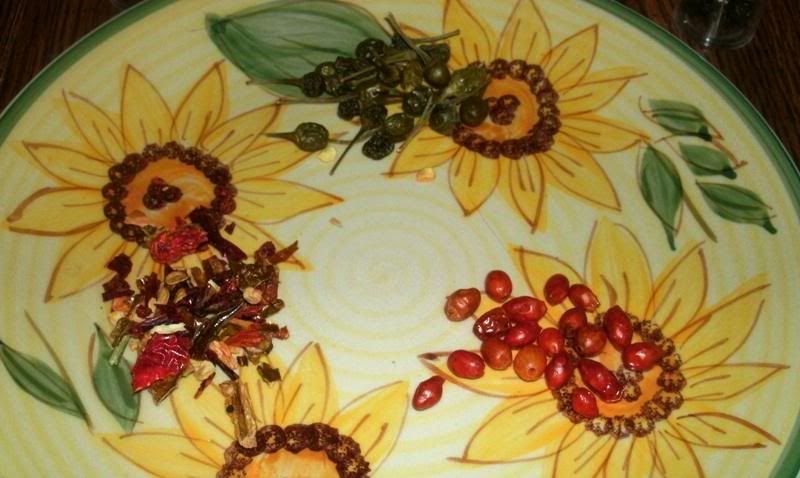
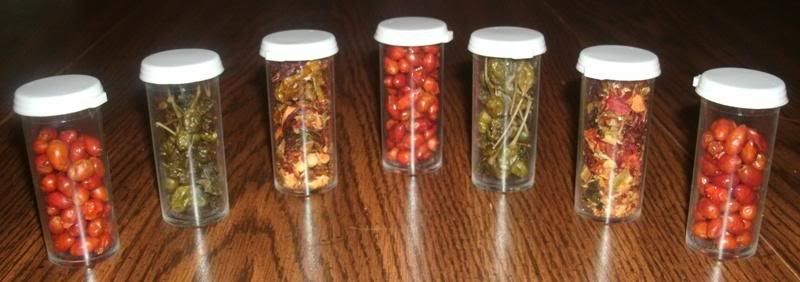
Pequin Chiles Not too long ago, during some discussion on the origins of Chili and the obvious role played by the great state of Texas, I expressed an interest in trying to grow some native Texas chiles. A generous fellow who goes by the name CropDuster graciously offered to send me some pequins that he had grown and dried, and I was happy to accept. He dropped them in the mail, and when I received them I was impressed:
The red peppers in the picture above are dried, fully-mature Pequin chiles; the green ones are at an earlier stage in their maturity, but still ripe. The vials with crushed peppers are a mixture of assorted dried and crushed peppers that CropDuster sent along. Pequin chiles - which, as far as I can tell, translates to a "Texanized" form of "chiles pequeños " ("little peppers") - are common in south Texas, where they grow wild. They are also cultivated and used privately or sold. Wikipedia has this information: 
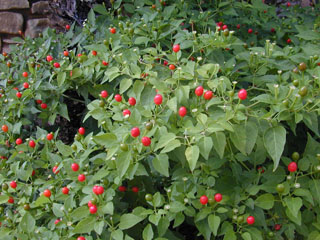
 Another Wikipedia article states that pequins are related to the native, wild chile tepin, which is acknowledged as an "ancestor" to most varieties of chiles that have spread across the world:
The same Wikipedia article informed me that pequins and tepins are often confused, but there were some differences:
Armed with this information, I took a look at what I had:
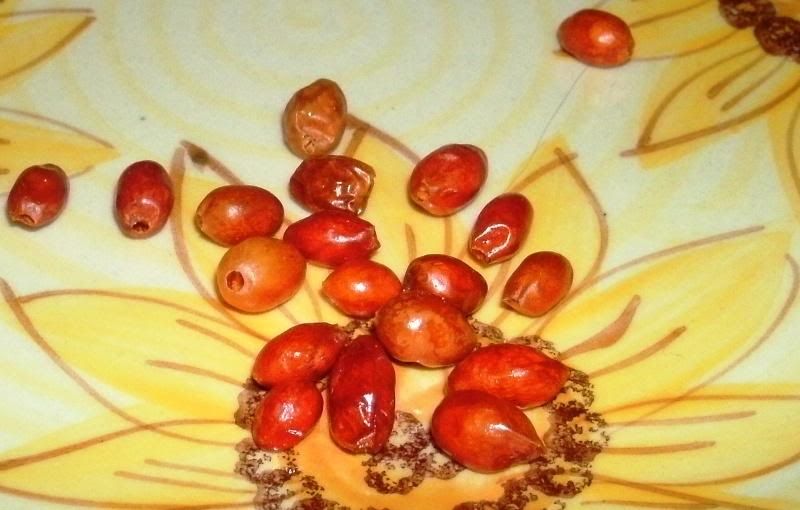
Since the peppers I had were quite oval-shaped, I reasoned (correct me if I am wrong!) that they must be pequins. Here's a closer shot of the fully-mature, red ones:
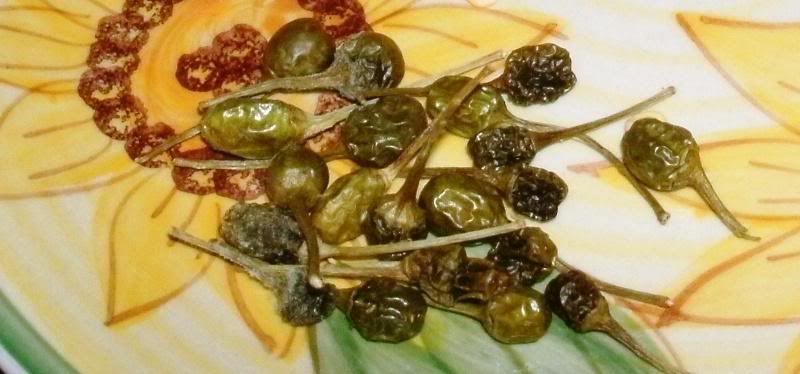
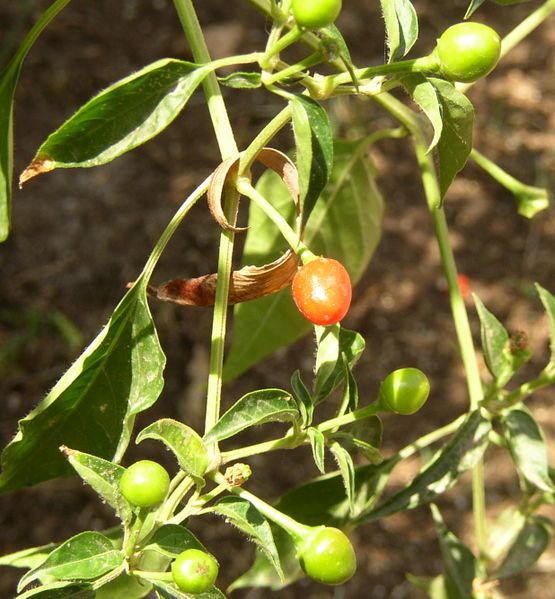
And here are the slightly-younger green ones:
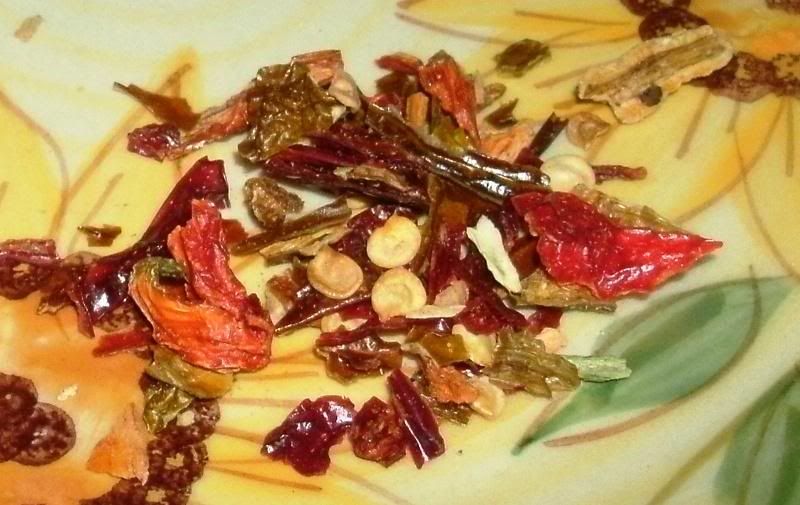
I tried one of each, and both were scorching hot - this is no exaggeration! They had a very interesting heat that must be experienced. It came up and really smacked me, then eventually backed off to something that was much more comfortable, even enjoyable, since they had such a wonderful, fruity-nutty flavour beneath the heat that was really unique. True to my experiences with "milder' peppers, the green ones were much different than the red ones, having a bit of something unique to them that I can only describe as "greener." CropDuster also included a dried/crushed mix of assorted peppers:
I found these also to be pretty spicy, and am looking forward to using them in my Tex-Mex cooking. My impression of all of these peppers - red, green and assorted - was very positive. I had never really encountered such fragrant chiles that had such a fruity (for lack of a better term) ambience to them. Make no mistake: they are all hot - VERY hot, and I am not much of a chilehead; but in this case, as I said above, I was able to ride the heat, and even enjoy it, because of the other properties of the chiles. I don't have much luck gardening, especially with chiles, but I am looking forward to trying a few of these next spring; I might even start them indoors over the winter, so they have a head start, and grow them in a large vessel such as a 5-gallon bucket. Another fine Texan, LaVaca, has offered to collect some for me on his next trip down south, and this will be good, giving me a supply to "play with" where cooking is concerned, and also to share with anyone who might be interested. I did send some to BoilerMaker, since he is a primo chilehead, and also a very good gardener, and we will see if he can get some to grow. Regarding options for using pequins in cooking, Chili con carne is an obvious first choice, but if anyone has any other ideas on what can be done with them, please let me know. One other thing I was considering was a pequin version of pepper jelly that I had very good luck with a couple-three years ago using jalapeños: http://foodsoftheworld.activeboards.net/jalapeno-jelly-inspired-by-got14u_topic63.html  With this jelly, using pequins, I would use red food colouring rather than green, or none at all, relying on the natural colours.
I am sure that there are dozens, if not hundreds of uses - salsas, picante sauces etc., as well as opportunities to use them in many dishes as well, and am looking forward to some experimenting. Any and all suggestions would be appreciated.
My thanks again to CropDuster for such a generous gift - it is much appreciated, my friend! |
|||
|
If you are a visitor and like what you see, please click here and join the discussions in our community!
|
|||
 |
|||
| Sponsored Links | |||
|
|||
|
TasunkaWitko
Admin Group
Joined: 25 January 2010 Location: Chinook, MT Status: Offline Points: 9389 |
Post Options
Thanks(0)
Quote Reply
Posted: 14 August 2012 at 15:51 |
||
|
A member of another forum called DiggingDogFarm has some information to add:
|
|||
|
If you are a visitor and like what you see, please click here and join the discussions in our community!
|
|||
|
|||
|
Margi Cintrano
Master Chef

Joined: 03 February 2012 Location: Spain Status: Offline Points: 6362 |
Post Options
Thanks(0)
Quote Reply
Posted: 15 August 2012 at 02:29 |
||
|
Tas,
Fanstastic Thread ... gorgeous photography ... Informative and totally mind capturing ... Thank you so much for posting.
BASILICATA, ITALIAN CHILI PEPPERS: Basilicata in southeastern Italy, is the major chili pepper producer in Italy ... This province with its 13 kilometre coast, is land locked on three sides and totally mountainous, with a pastoral historical culture of milk fed baby lamb and charcuterie. It is also a large olive oil producer, and stunning vegetables are still hand picked.
PIMIENTOS PADRÓN CHILI PEPPERS: These green small jalapeño looking Galician, Iberian Peppers, are served as Tapas, throughout Spain and its islands. They are from a small town called Padrón close to La Coruña. They resemble a jalapeño physically, however, they are sautéed in Olive Oil and sprinkled with Sea Salt ... They are not used as a condiment or spice in Galicia, Spain.
PIQUILLOS VASCOS: The Piquillo Red Pepper, though sweet and lacking a piquant heat, the Basques prize their gorgeous sweet red peppers, and serve them stuffed with tuna in olive oil, fresh or salt cod and even stuff them with Basque raised Beef and Veal. ANOTHER Basque Red Pepper, is the BASQUE RED CHILI PEPPER, which is grown both on the Spanish side of Spain and in The French Basque Country and these, are a red chili pepper, and they are sun dried, possessing a piquant heat and are used as red pepper flakes in many Basque Tapas and dishes.
I shall seed if I can obtain some seeds when I return to Madrid on 3rd September.
Have a lovely August.
Margi.
|
|||
|
Volamos a Mediterraneo, un paraiso que conquista su gente u su cocina.
|
|||
|
|||
|
Tatoosh
Scullery Servant 

Joined: 27 August 2012 Location: Philippines Status: Offline Points: 18 |
Post Options
Thanks(0)
Quote Reply
Posted: 30 August 2012 at 23:34 |
||
|
Great information there! I got a small package of Tepin chili powder a few weeks ago in a surprise package from the USA. I was impressed with the heat and also how it dissipates quickly compared to many of the hotter peppers.
Since the two peppers (Tepin and Pequin) are apparently related, the heat and taste are fairly similar? I will keep my eyes open for more of the powder, which used wisely (read sparingly) can add a nice kick without overwhelming the taste buds for an extended period. |
|||
|
Mabuhay BBQ & Pizza
|
|||
|
|||
|
HistoricFoodie
Admin Group
Joined: 21 February 2012 Location: Kentucky Status: Offline Points: 4945 |
Post Options
Thanks(0)
Quote Reply
Posted: 31 August 2012 at 04:39 |
||
|
Bontanists and some chiliheads separate tepins and pequins, Tatoosh. But most regular cooks would be hard-pressed to tell any difference between them. Shape, coloration, flavor, and heat levels are pretty much the same.
|
|||
|
|||
|
Tatoosh
Scullery Servant
Joined: 27 August 2012 Location: Philippines Status: Offline Points: 18 |
Post Options
Thanks(0)
Quote Reply
Posted: 31 August 2012 at 04:53 |
||
|
Good to know! A friend from Georgia is sending me some home grown chili (powdered) but I will be getting a bit of the Tepin and a couple of others brought over by someone else's suitcase. Since they are similar in heat and flavor, I will add the Pequin as a potential substitute for the Tepin.
There is a local VFW that has a chili cook-off for charity in the neighboring province. I have a number of friends that enjoy cooking for that and I want to offer them a choice of chilis to use in their entry this year. |
|||
|
Mabuhay BBQ & Pizza
|
|||
|
|||
|
Post Reply
|
|
 Tweet
Tweet
|
| Forum Jump | Forum Permissions You cannot post new topics in this forum You cannot reply to topics in this forum You cannot delete your posts in this forum You cannot edit your posts in this forum You cannot create polls in this forum You cannot vote in polls in this forum |


 Topic Options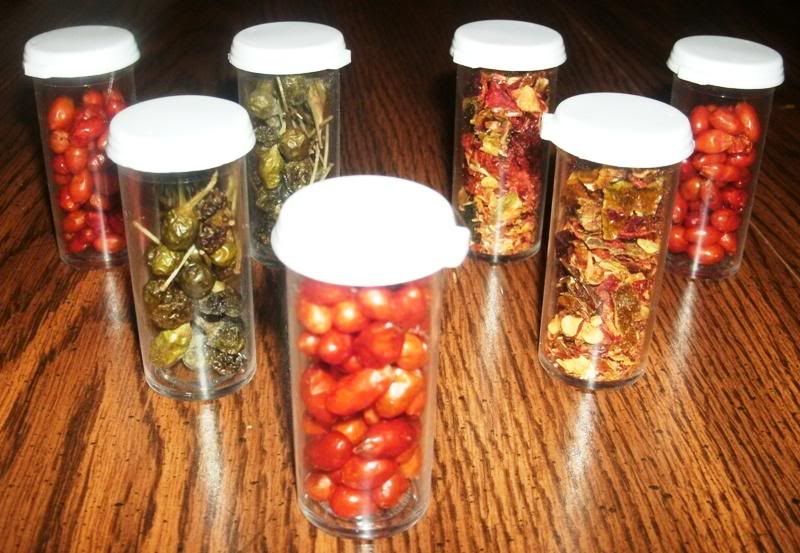
 Pequin (or Piquin) pepper (pronunciation: pee/puh-KEEN) is a hot chile pepper cultivar commonly used as a spice. Taxonomically, it is classified within variety glabriusculum of the species Capsicum annuum.