|
Thank you, from the Foods of the World Forums! |
Pão do Milho |
Post Reply 
|
| Author | |
TasunkaWitko 
Admin Group 

Joined: 25 January 2010 Location: Chinook, MT Status: Offline Points: 9389 |
 Post Options Post Options
 Thanks(0) Thanks(0)
 Quote Reply Quote Reply
 Topic: Pão do Milho Topic: Pão do MilhoPosted: 18 March 2013 at 14:53 |
|
Pão do Milho Not long ago, Brook sent an absolutely awesome book to me titled Bread: The Breads of the World and How to Bake Them at Home. It is an outstanding resource, with captivating photos and a well-organised breakdown of breads by country and region, as well as some great-looking recipes for many, many examples of the word's greatest breads. I am quite grateful to Brook for this gift, and look forward to many delicious loaves. Along about the same time, I attempted to make a Basque dish called bacalao al pil-pil which features salt cod as the primary ingredient. In order to choose an accompanying bread to bake for this dish, I turned toward the excellent resource that Brook provided, and found this bread. I decided that it fit the bill perfectly, for these reasons: 1. Dave, who made the meal possible by procuring the salt cod for me, got it from a Portuguese market, and I wanted to pay some tribute to him for the gift. For those reasons, I decided that this bread would be very plausible, and went with it - a great choice, for sure. If you're interested, you can read more about the pil-pil project here: Making this bread was very easy, and it was very good tasting; I strongly recommend it as a wonderful bread to bake any time of year, either for its own sake or as part of a meal.
Here's the recipe, from Bread: The Breads of the World and How to Bake Them at Home, by Christine Ingram and Jennie Shapter, 2003:
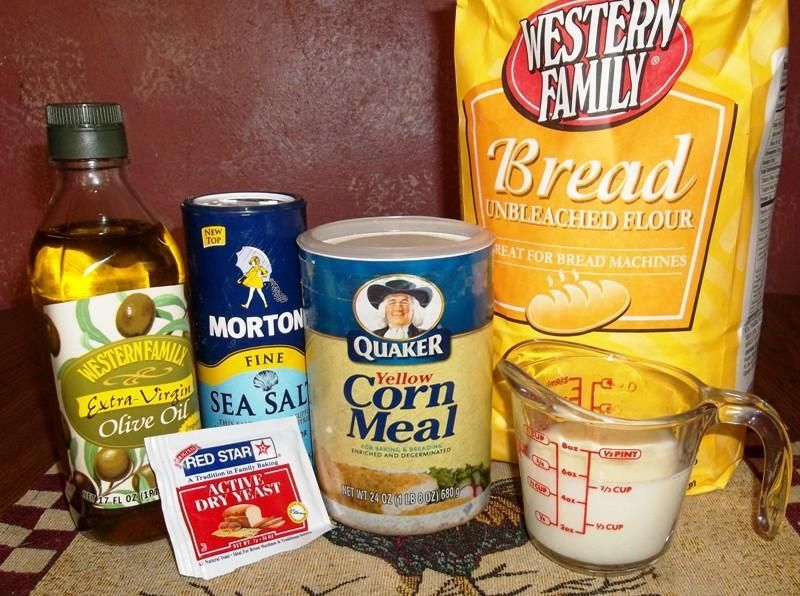
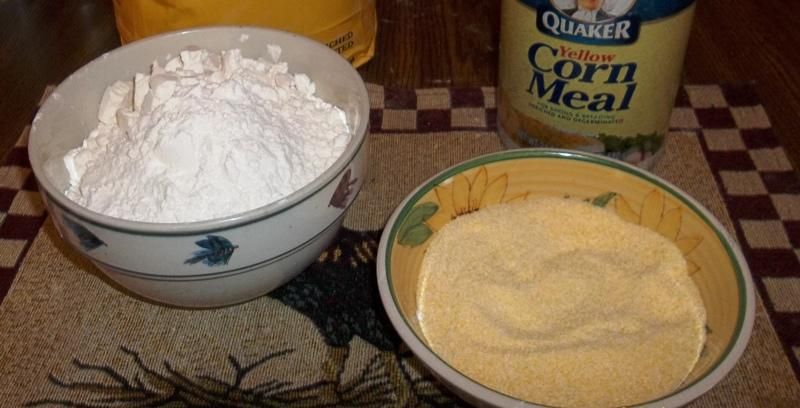
By the numbers, this is a very easy bread to make; there are, however, certain key steps that help ensure success when making it. Because of this, I tried to be very thorough in documenting the process, and I hope that I was successful. By necessity, I deviated from the recipe in 2 or 3 very minor ways, which I will explain as the pictorial progresses; as far as I can tell, those deviations did not in any way affect the over-all outcome of the bread. To get started, here's a shot of everything you need:
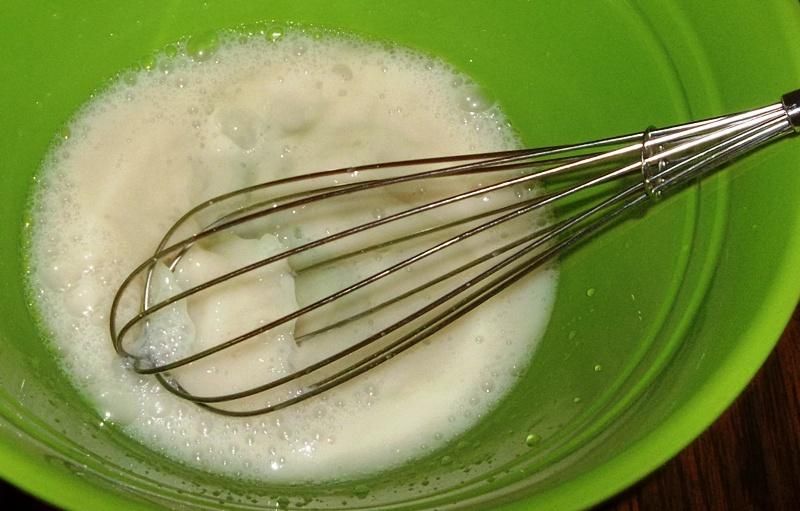
See how easy this bread is? Chances are, you've already got all of these ingredients in your pantry! A note on yeast: The recipe calls for "fresh yeast;" well, that might be easier to find in some places than others, so I consulted Brook's outstanding bread primer: http://foodsoftheworld.activeboards.net/the-staff-of-life-a-primer-on-baking-bread_topic3089.html After learning that yeast is essentially inter-changeable, I employed an envelope of plain old active dry yeast, with no ill effects. To begin, I combined the yeast with 1 cup of lukewarm water:
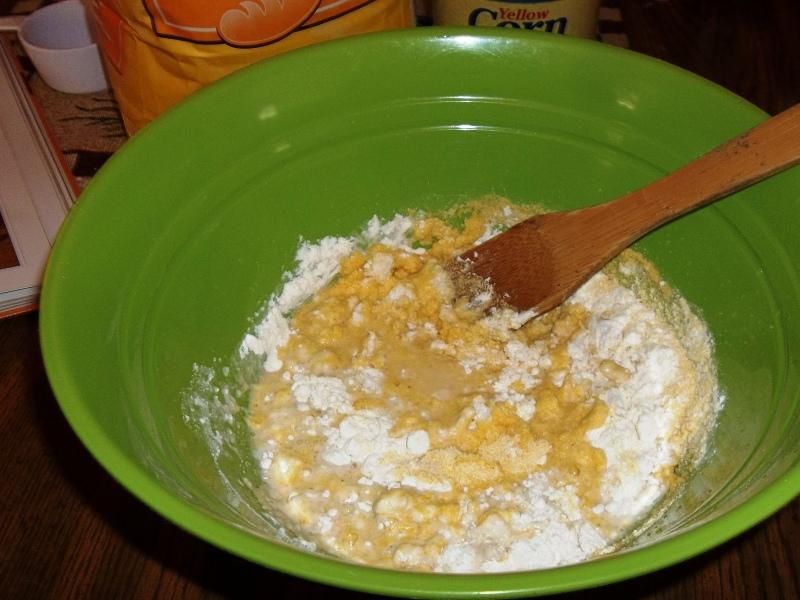
I then added half the cornmeal and 1/2 cup of the flour to the slurry, as proscribed by the recipe:
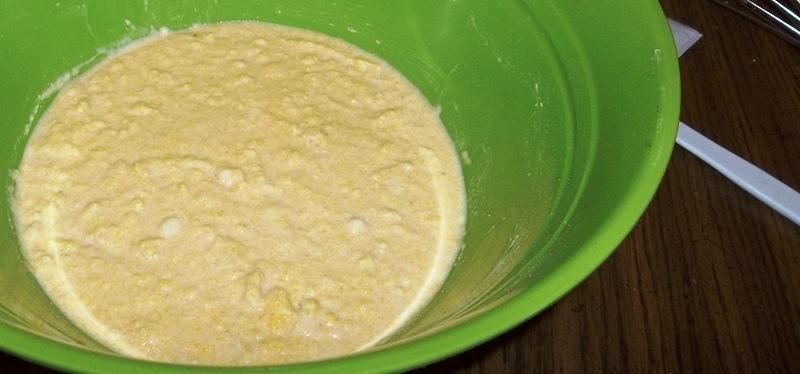
Once the flour and cornmeal were mixed into a fairly-well-incorporated batter:
I covered the bowl with plastic wrap and put it in the (turned-off) oven with the light on in order to continue proofing for half an hour. Meanwhile, since I had nothing better to do, I measured out the remainder of the cornmeal and flour required by the recipe:
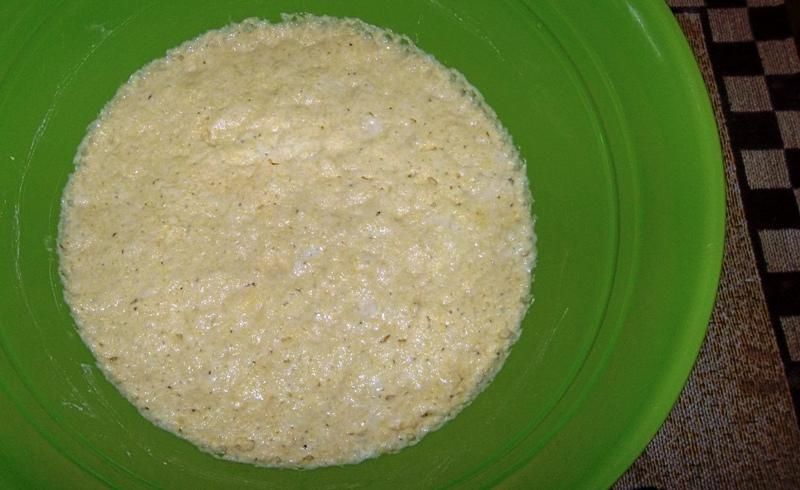
After 30 minutes, the "starter batter" was coming along nicely; I believe this is called a sponge:
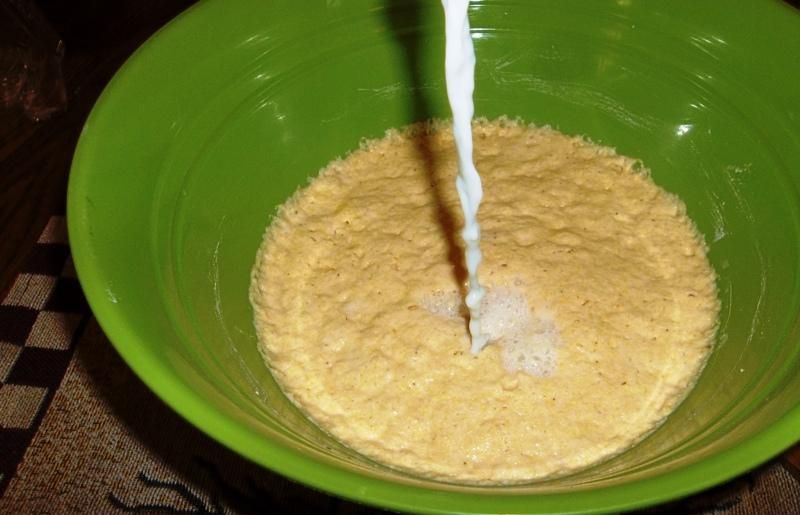
Note that this process did not require any added sugar - the natural sugars in the cornmeal seemed to be quite adequate. Ready to proceed, I added the milk:
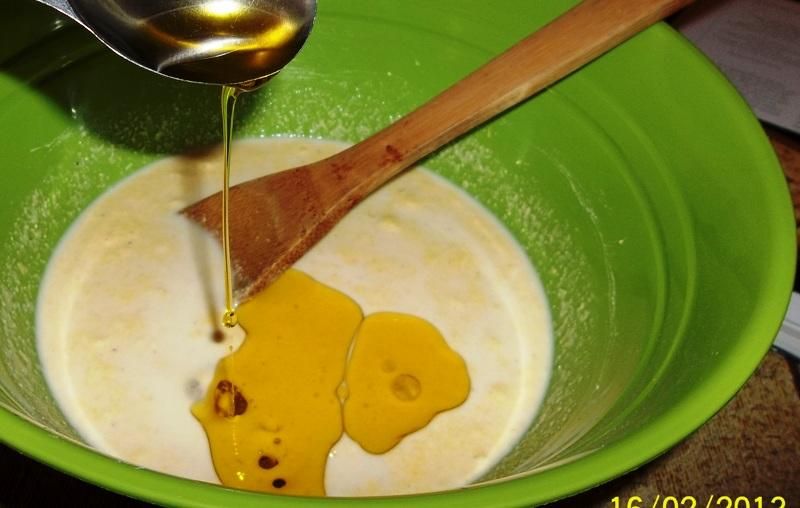
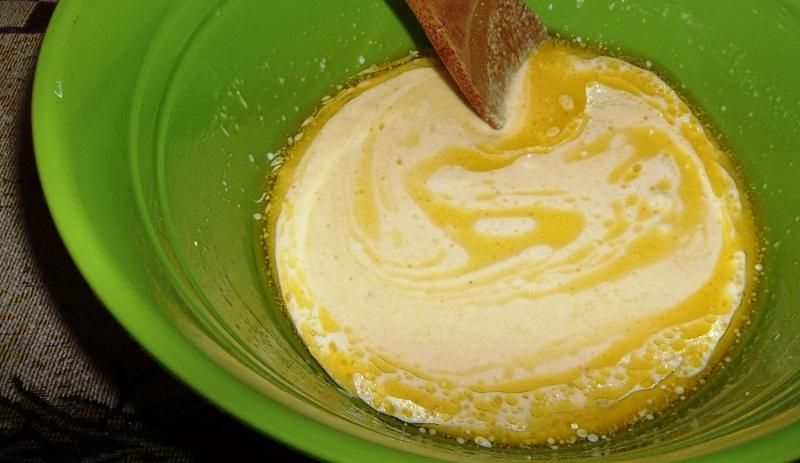
After stirring it into the batter, I then added the olive oil:
I then began stirring to incorporate the olive oil into the batter; this was a slow process at first:
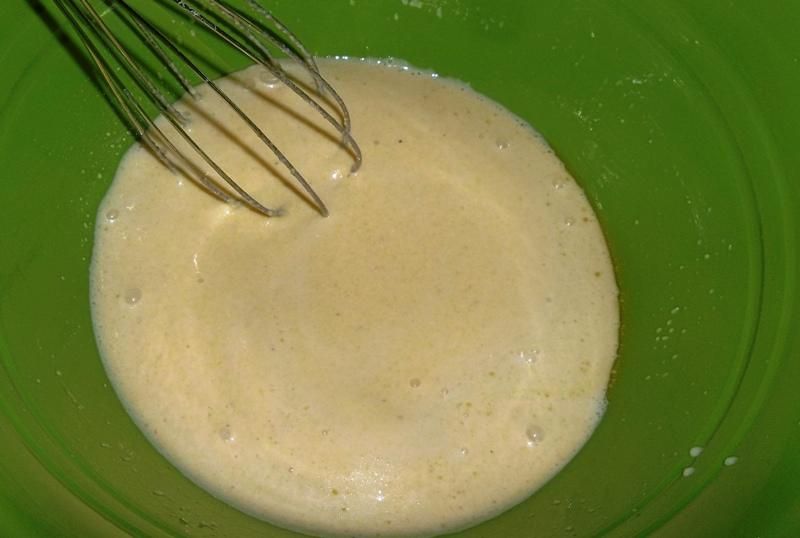
But before too long, everything was well-blended and ready for the next step:
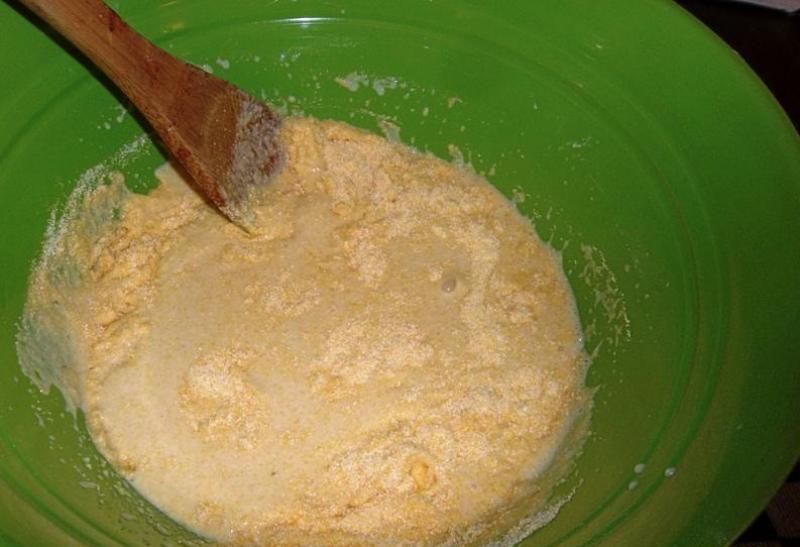
Once the olive oil was completely worked into the batter, I added the cornmeal:
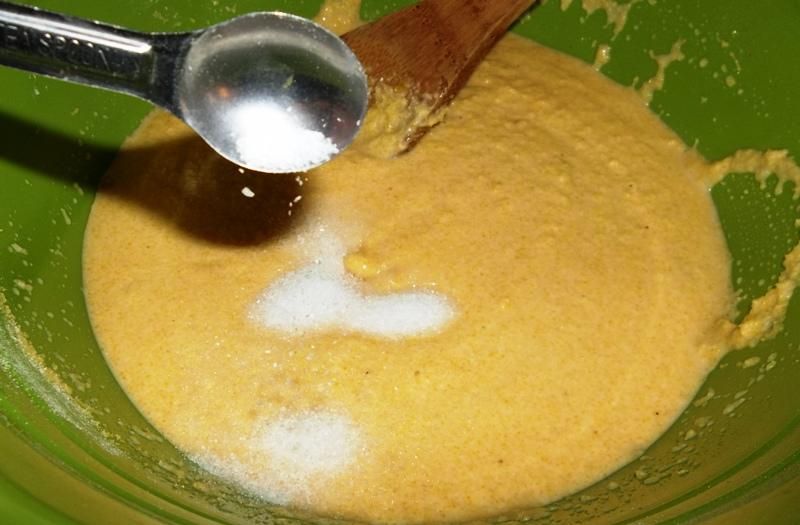
I then added the salt:
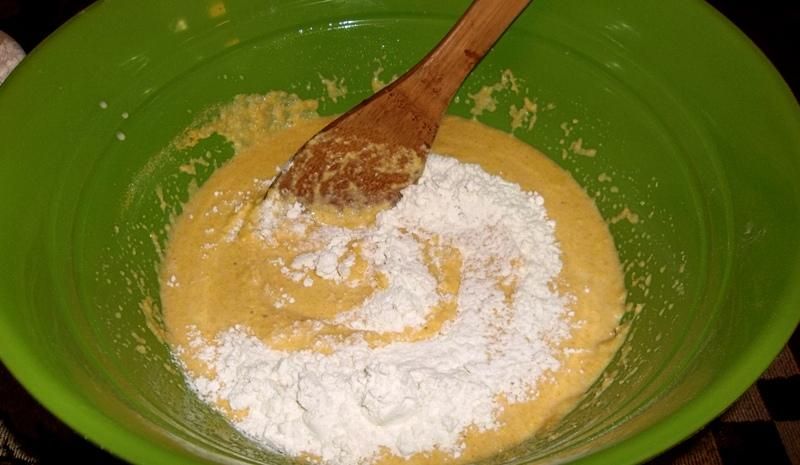
And stirred those components in thoroughly. Finally, I came to the step that I had been dreading a bit: adding the flour. When making a bread recipe for the first time, the actual, final amount of flour that is used is always subject to a little bit of tweaking; you will most likely end up using slightly more or less than is called for in a bread recipe, simply due to different characteristics of flours. The problem this time, however, is that I had never made a bread of this type before, which was a combination of cornmeal and flour. I wasn't sure exactly what texture and density to expect from the bread dough, so I decided that for this first attempt I would trust the recipe and stick with what was called for. With that, I began adding the flour gradually, a little at a time:
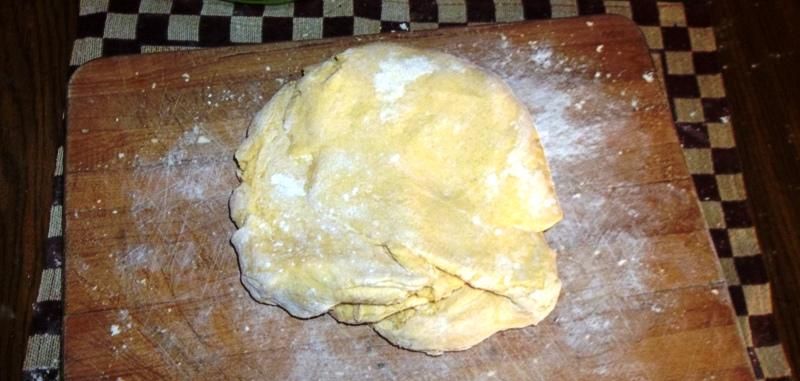
Once I had added enough flour that I could no longer stir it with the wooden paddle, I turned the dough out onto a wooden board and worked the flour into the dough, a little at a time. I was indeed able to get all of the flour into the dough:
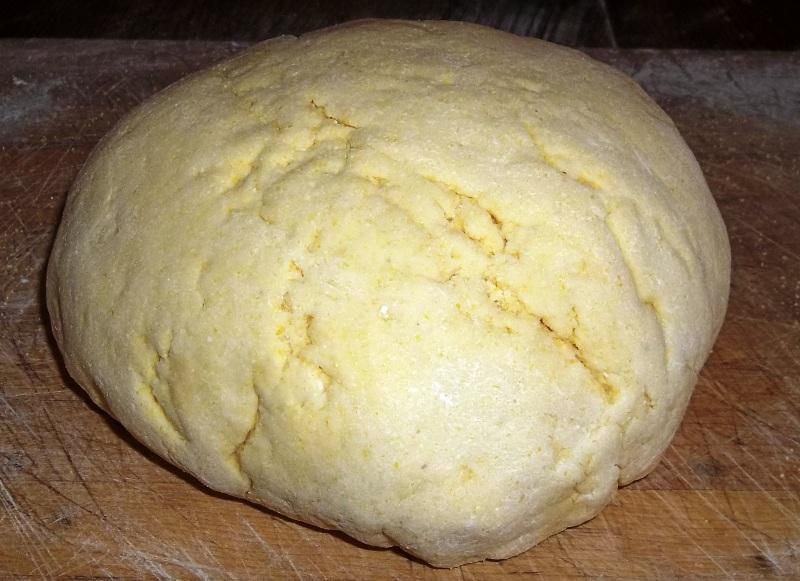
Having said that, the dough seemed awfully dry and stiff; because of this, I worried that I may have added too much, but decided to wait until I was done kneading to decide what to do about it. After 10 minutes of good, hard kneading, working the dough as best as I could, I ended up with this:
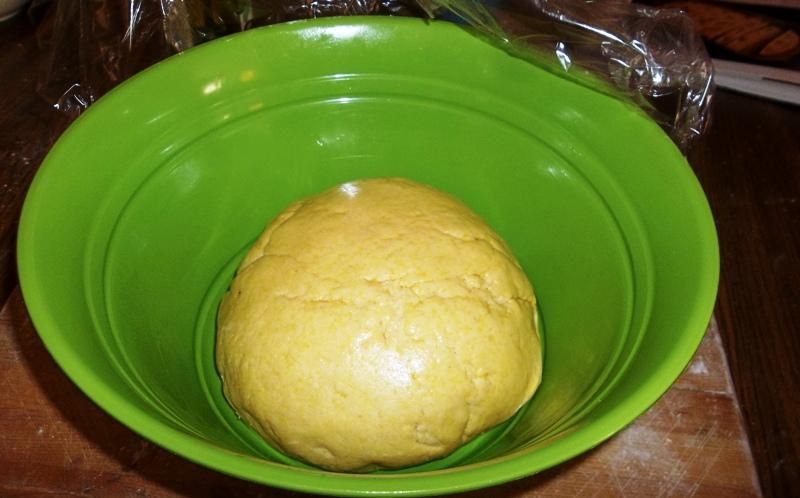
It still seemed a little stiff and dry, but not nearly as much as it had before, so I decided that it was probably very close to the way it should be, and would most likely soften up while resting. I found out later that you can indeed add a little bit of water - a tablespoon at a time - in order to soften up the dough a little and make it more pliable; however, it will still be stiffer than most bread doughs you might be used to working with. But I didn't think of this at the time, so deciding to leave the dough the way it was, I oiled it lightly and put it in the bowl, covered with lightly-oiled plastic wrap:
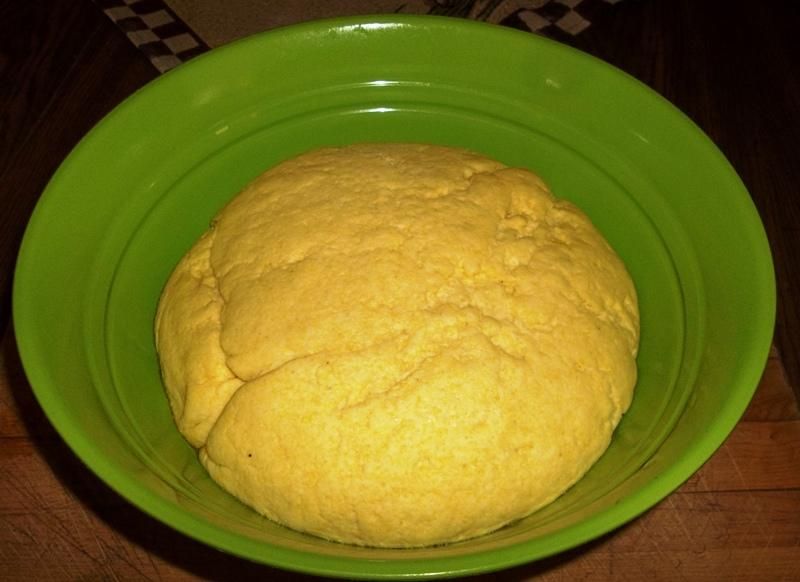
The recipe recommended giving it an hour-and-a-half to two hours to rise; because of different things going on that day, it actually ended up rising for about three hours:
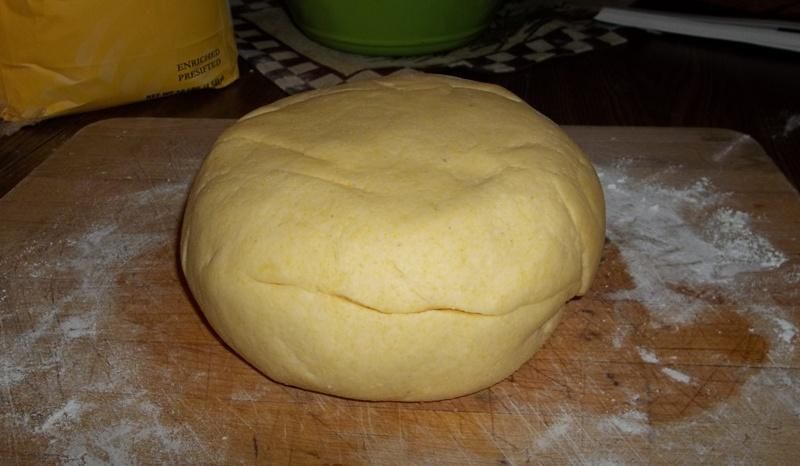
But no worries there - the extra time allowed for "ripening" and flavour development, I think. One thing is for sure: this bread dough, which had been smelling pretty darn good, was really taking on some wonderful aroma - it's nothing that I can adequately describe, but I've smelled it before during some other baking projects, and I always associate it with great bread. It's a very pleasant aroma that really promises all of the warmth and nourishment that good bread will always provide. I'm sure it has to do with the chemical reactions between the yeast and the sugars, but I am no scientist. In any case, we were coming around the third turn here, so I punched down the dough and formed it into a flattened ball:
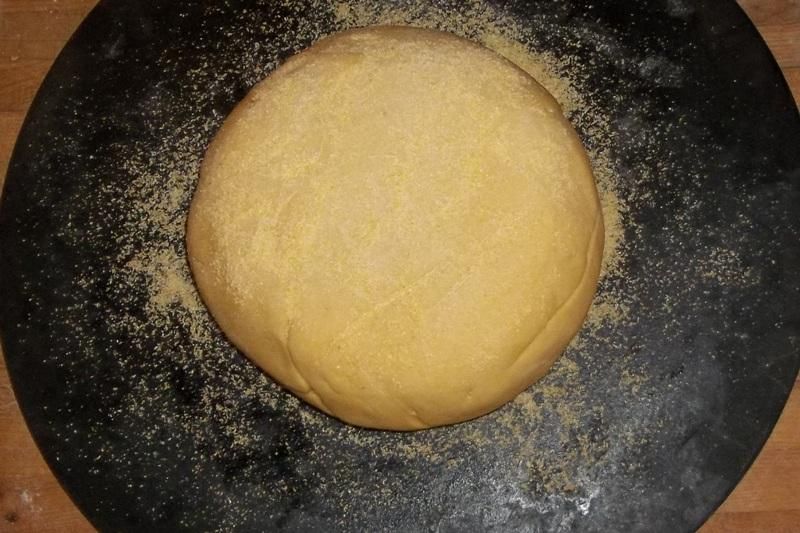
I noticed that it had indeed gotten more soft and pliable while resting, but it was still very stiff compared to what I am used to with conventional bread doughs. No worries, things seemed to be coming along nicely! Moving along, I spread some cornmeal on my baking stone, then placed the dough on top of it; the recipe says at this point to dust the dough with polenta, but we're in rural Montana, where polenta and cornmeal are pretty much the same thing, even if they aren't, so I dusted mine with cornmeal:
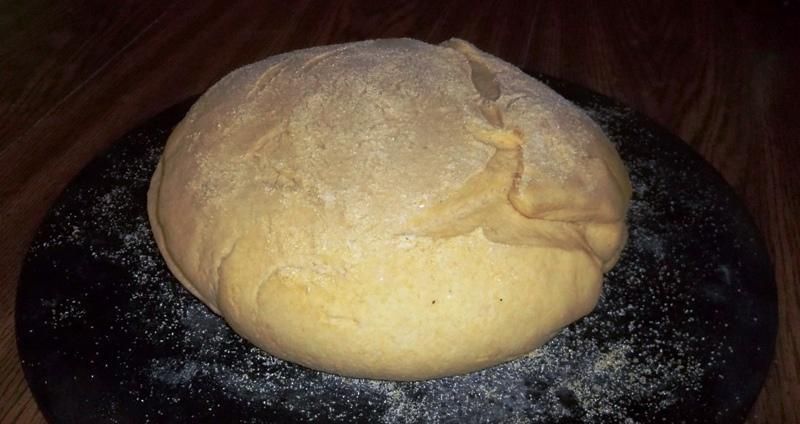
Following the recipe, I covered the dough with a large, upturned bowl and set it in a warm, draft-free place (the turned-off oven with the light on) for another hour. This had the effect of allowing the dough to rise again, and also to spread out a bit:
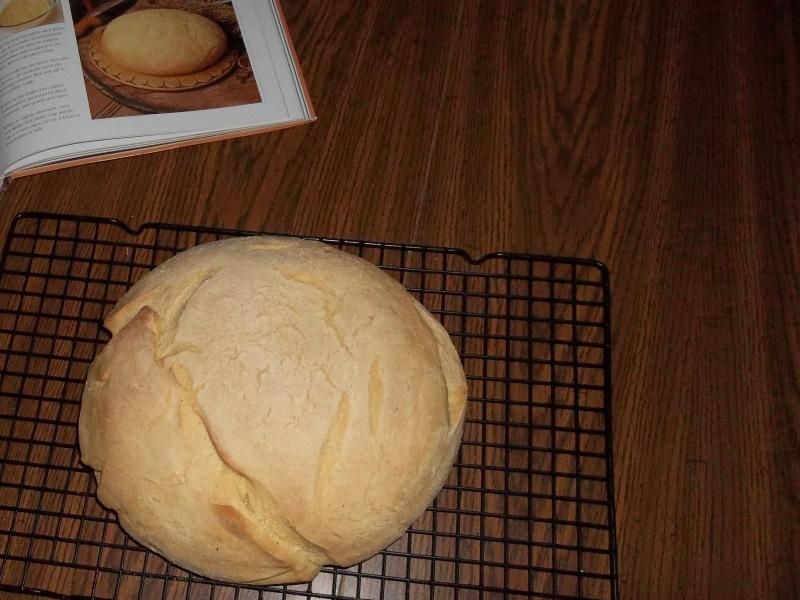
By now, it was looking pretty good, and smelling even better, and I was looking forward to baking the bread. I carefully removed it from the oven while I pre-heated it to 450 degrees, then placed it back in. If you read the recipe above, you will see that it outlines a water-spraying procedure, which aids in the development of the crust; I had never tried this before, but it seemed like a good idea, so I followed the spraying procedure for the first 10 minutes of baking, and then continued as the recipe advises. While the bread was baking in the oven, I once again couldn't get over how good it smelled - this really is some wonderful bread, and I urge you to give it a try for something a little different. By the time that the total baking time was finished, the bread had a nice, toasty colour and a solid, hollow thump when tapped on the bottom. I brought it out and took a look at what I had wrought, and it seemed to me that I had come pretty close to duplicating the loaf of bread that was shown in the book:
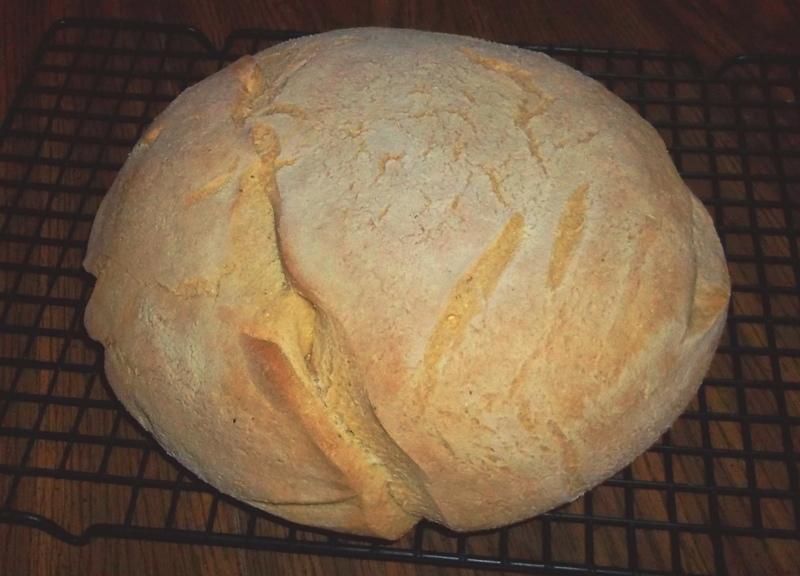
Not too bad at all, for a very first attempt by a rank amateur! Here's another shot:
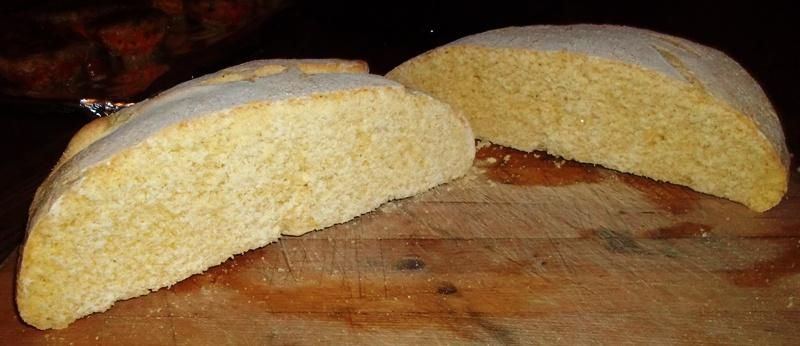
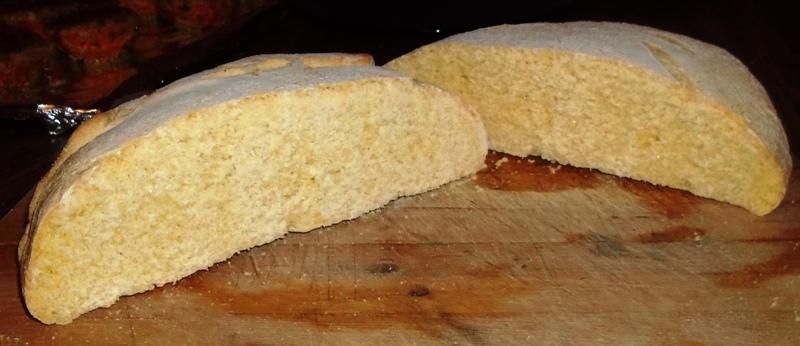
The surface of the bread wasn't as smoothed-out and "perfect-looking" as shown in the book, but considering the stiffness of the dough, I was leery of attempting any forming of the dough; besides, I kind of like the look of "imperfectly-formed" bread - to me, it seems more "home-made" and has certain credentials of its own. Fresh out of the oven, this bread smelled absolutely amazing; it was a real challenge to let this bread cool, and I desperately wanted to tear right into it and try it. Luckily, I needed to start my bacalao al pil-pil project, so my attention was diverted from this beautiful bread. When I finally did cut into it before serving, however, I was treated to a wonderful sight:
It was delicious, too!
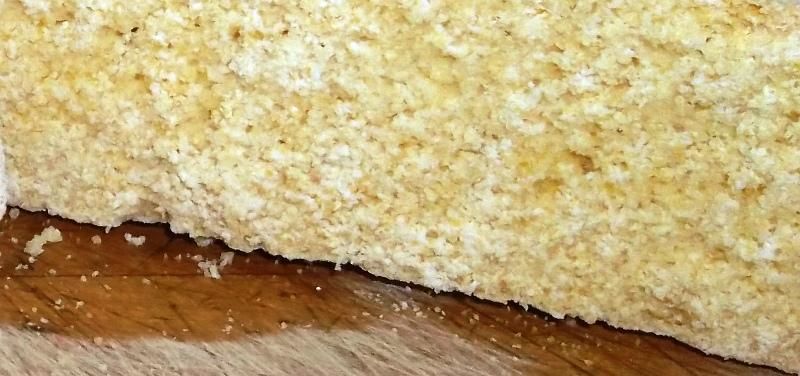
I am certainly no expert, but it seems to me that this bread did exactly what it was supposed to do, springing slightly during baking and developing a nice crumb that was slightly-open but naturally dense due to the nature of the cornmeal.
The crumb seemed - to my un-trained eye - to be a little dry and crumbly, but it was less so than I thought it would be, given the nature of the dough; also, the crust seemed to me to be very dry and crunchy, but once again, having no experience with this bread, I figured that it was pretty close to the way it should be, and was eventually proven correct. The Beautiful Mrs. Tas thought the crust to be overly-hard during the meal, but after resting over-night in a plastic bag, the moisture in the bread equalised and the crust was quite a bit softer, but still crusty on the surface.
All-in-all, I was pretty sure that the characteristics that I "thought" were mistakes were actually right for this cornbread, and was eventually proven correct. After some private discussions with Brook, he was intrigued enough to try this bread for himself, and his conclusions were the same as mine; here's a link to his experience with this excellent bread, with some thorough notes that should be helpful for anyone wishing to try it: http://foodsoftheworld.activeboards.net/portuguese-corn-bread_topic3248.html In any case, it was a delicious accompaniment for the bacalao al pil-pil; an amazingly good bread that went perfectly with this dish, and I am sure would also go very well with any meal, especially one with gravy or sauce to "sop up."
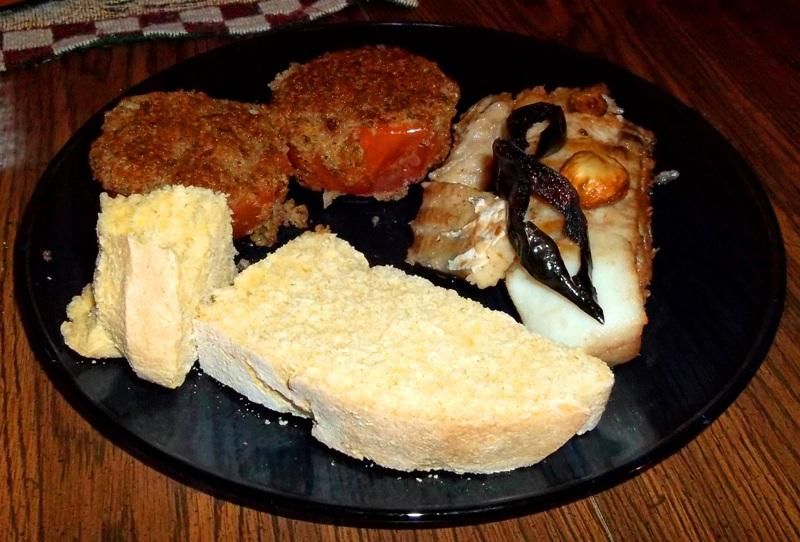 Tasty, wholesome and unique, this Portuguese cornbread is really a taste of Iberia that I am confident will be enjoyed by anyone who tries it. Thanks for taking the time to read this, and I hope you give this a try. If anyone has any questions after reading this thread, and Brook's, please ask away, and we'll get some answers for you.
I'm looking forward to the next bread that I bake from this outstanding book, and can't thank Brook enough for sending it to me.
Happy baking! Ron |
|
|
If you are a visitor and like what you see, please click here and join the discussions in our community!
|
|
 |
|
| Sponsored Links | |
|
|
|
Rod Franklin
Chef 

Joined: 17 February 2010 Location: USA Status: Offline Points: 921 |
Post Options
Thanks(0)
Quote Reply
Posted: 18 March 2013 at 15:10 |
|
Another great pictorial! That is some serious cornbread!
|
|
|
Hungry
|
|
|
|
|
Margi Cintrano
Master Chef

Joined: 03 February 2012 Location: Spain Status: Offline Points: 6362 |
Post Options
Thanks(0)
Quote Reply
Posted: 18 March 2013 at 16:25 |
|
Tas. Firstly thank you for the spectacular pictorial and dynamite cornbread. Phenomenal. Lovely thread. Marge.
|
|
|
Volamos a Mediterraneo, un paraiso que conquista su gente u su cocina.
|
|
|
|
|
gonefishin
Master Chef

Joined: 20 September 2012 Status: Offline Points: 1778 |
Post Options
Thanks(0)
Quote Reply
Posted: 18 March 2013 at 18:09 |
|
Nice post!
I'm glad you posted this project, this is one that I had thought would be right up my alley and wanted to put in regular rotation...but I forgot about it with all the other recipes around here. So thanks...I'll be making this in the next couple of days! great job! Dan |
|
|
Enjoy The Food!
|
|
|
|
|
africanmeat
Chef

Joined: 20 January 2012 Location: south africa Status: Offline Points: 910 |
Post Options
Thanks(0)
Quote Reply
Posted: 19 March 2013 at 02:51 |
|
Very very nice thanks .it will have to go to my to do list.
|
|
|
Ahron
|
|
|
|
|
HistoricFoodie
Admin Group
Joined: 21 February 2012 Location: Kentucky Status: Offline Points: 4945 |
Post Options
Thanks(0)
Quote Reply
Posted: 19 March 2013 at 06:07 |
|
If you like cornbread, Ahron, do try this one sooner, rather than later.
I'd never made a yeasted cornbread before. It really does do something special to the dough. I'll be making this one regularly.
|
|
|
|
|
TasunkaWitko
Admin Group
Joined: 25 January 2010 Location: Chinook, MT Status: Offline Points: 9389 |
Post Options
Thanks(0)
Quote Reply
Posted: 19 March 2013 at 07:19 |
|
Thanks to everyone for the kind words - I really enjoyed this bread and I think that it is worth a try for anyone who might be looking for something that is delicious and different.
I was looking through my Iberian volume of Time/Life's Foods of the World series, and saw that it contains a Portuguese cornbread that was fairly similar - not exactly the same, but close. In that volume, it is called broa:
|
|
|
If you are a visitor and like what you see, please click here and join the discussions in our community!
|
|
|
|
|
Post Reply
|
|
 Tweet
Tweet
|
| Forum Jump | Forum Permissions You cannot post new topics in this forum You cannot reply to topics in this forum You cannot delete your posts in this forum You cannot edit your posts in this forum You cannot create polls in this forum You cannot vote in polls in this forum |


 Topic Options
 Portuguese Cornbread