Pickled Kelp
Printed From: Foods of the World Forum
Category: The US and Canada
Forum Name: The Pacific Northwest and Alaska
Forum Discription: The Pacific Northwest and Alaska
URL: http://foodsoftheworld.ActiveBoards.net/forum_posts.asp?TID=1482
Printed Date: 26 March 2026 at 18:19
Topic: Pickled Kelp
Posted By: TasunkaWitko
Subject: Pickled Kelp
Date Posted: 20 October 2011 at 09:56
|
From Time-Life's Foods of the World - American Cooking: The Northwest:
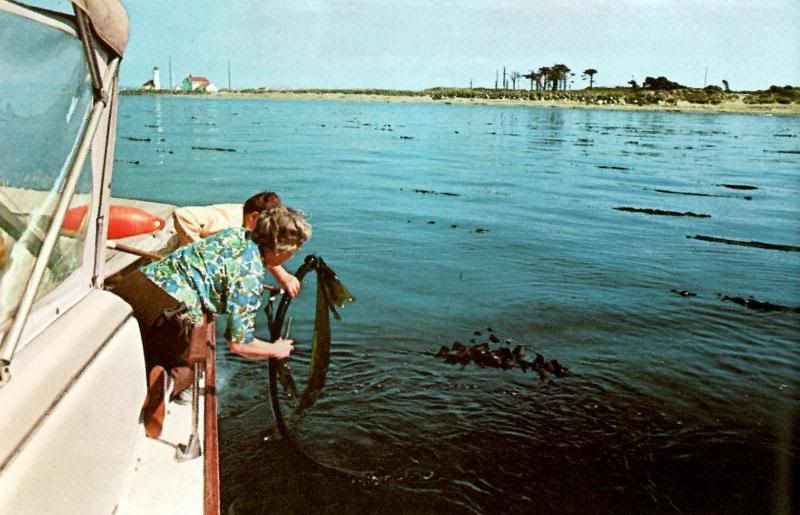
Time Life went on to say that Dorothy made her kep pickles by retrieving the kelp from the water:
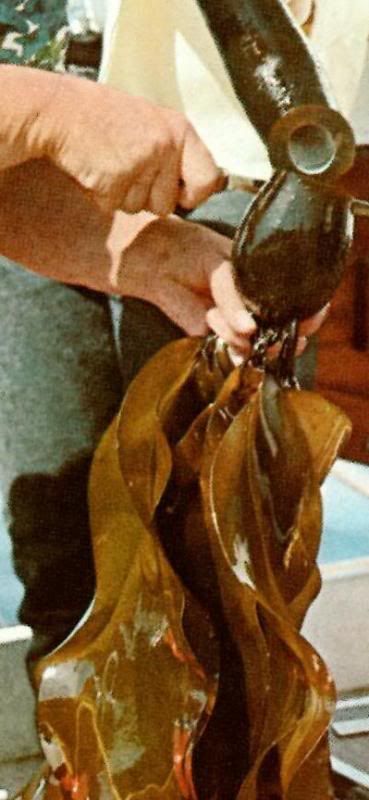
 The thick bulb is cut away and discarded:
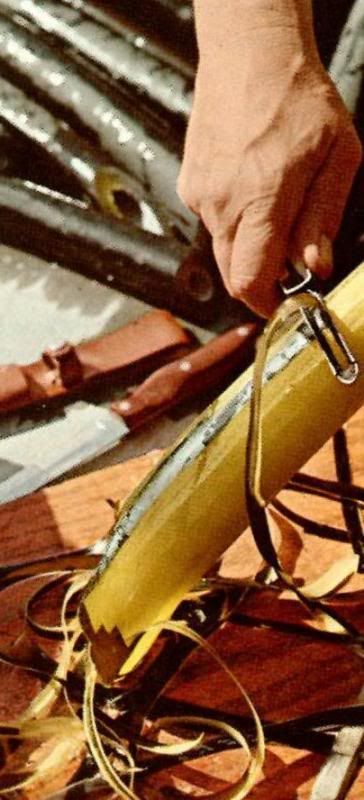
 And the tube of kelp is skinned of it's tough outer covering:
 Then the kelp is sliced into rings:
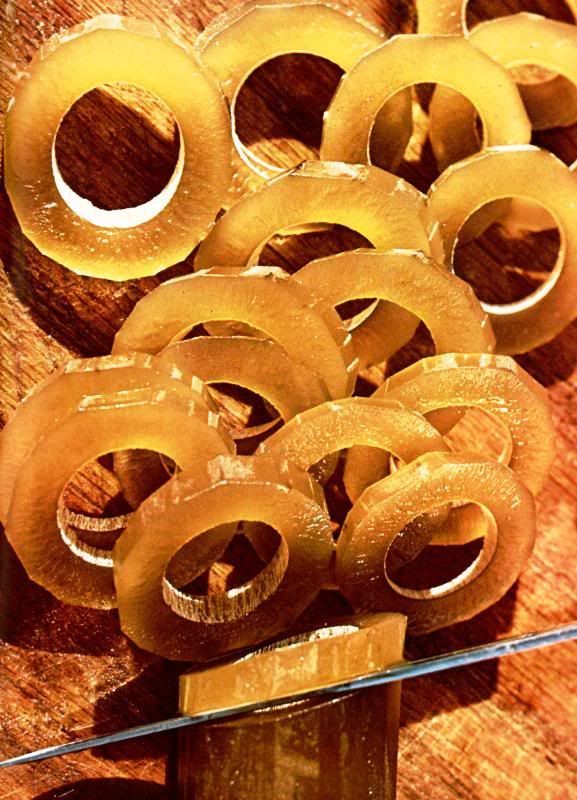 At this point, the seaweed is ready to be pickled, but unfortunately, Dorothy didn't share her recipe. All that is mentioned is that the rings are steeped in a pickling liquid consisting of water, sugar and vinegar, with a melange of spices known only to Dorothy. "After steeping for several weeks, the rings will be as crisp and refreshing as a watermelon pickle, but with a subte marine flavour all their own."
After doing an internet search (during which I actually found http://www.google.com/url?sa=t&rct=j&q=port%20townsend%20farm%20house%20restaurant%20kelp%20pickles&source=web&cd=1&ved=0CB8QFjAA&url=http%3A%2F%2Fnews.google.com%2Fnewspapers%3Fnid%3D888%26dat%3D19720720%26id%3DZuZQAAAAIBAJ%26sjid%3D6mADAAAAIBAJ%26pg%3D7118%2C4639829&ei=0kOgTuGbNJHTiALtlOB-&usg=AFQjCNGL_IxycGEjBQw-B76pgdiCbhvhrQ - a reference to Dorothy's kelp pickles in a 1972 printing of Florida's St. Petersburg Times - an article written by none other than James Beard, no less), I found this write-up and recipe for kelp pickles - I'm sure it's not exactly the same as Dorothy's but it does look good ~
From Langdon Cook's http://fat-of-the-land.blogspot.com/2011/09/pickled-kelp.html - Fat of the Land Blog :
If anyone has access to kelp and tries this, I'd really like to know how it goes ~ it looks like an interesting one! ------------- If you are a visitor and like what you see, please http://foodsoftheworld.activeboards.net/registration_rules.asp?FID=0" rel="nofollow - click here and join the discussions in our community! |
 The giant kelp, a tubular seaweed 20 to 30 feet long that floats in Washingotn's Strait of Juan de Fuca, has long fascinated John and Dorothy Conway, who run a Port Townsend Restaurant called the Farm House....The talk of wild food reminded Dorothy of her kelp pickles. She went over to the salad table and came back with a bowl of honey-coloured transluscent rings, each about an inch across. I had heard Alaskans tell how they peel and slice tubes of giant kelp and preserve the rings in a sweet-sour pickle solution, and I asked Dorothy whether she used the same kind of kelp. "I do, and I get it right out there," she said pointing to the water, "but I have my own recipe." I tried one of the rings; it was crisp and spicy, rather like a pickled watermelon rind, but with a coppery tang all its own....


Replies:
Posted By: Hoser
Date Posted: 21 October 2011 at 03:03
|
Now that is darned interesting! it's what this forum is all about. I doubt that I can get that type of kelp out here on the east coast, but if I can I'll certainly give this a try! ------------- Go ahead...play with your food! |
Posted By: TasunkaWitko
Date Posted: 21 October 2011 at 09:08
|
hey, dave - if you're able to, let me know how it goes! i find this one pretty interesting, even though i will most likely never be able to try it! ------------- If you are a visitor and like what you see, please http://foodsoftheworld.activeboards.net/registration_rules.asp?FID=0" rel="nofollow - click here and join the discussions in our community! |
Posted By: TasunkaWitko
Date Posted: 03 July 2013 at 09:49
As a follow-up, I was doing a little reading on this, and it looks like pickled kelp is made on the east coast (Maine) as well, so it stands to reason that kelp in your area should work well for this, Dave. 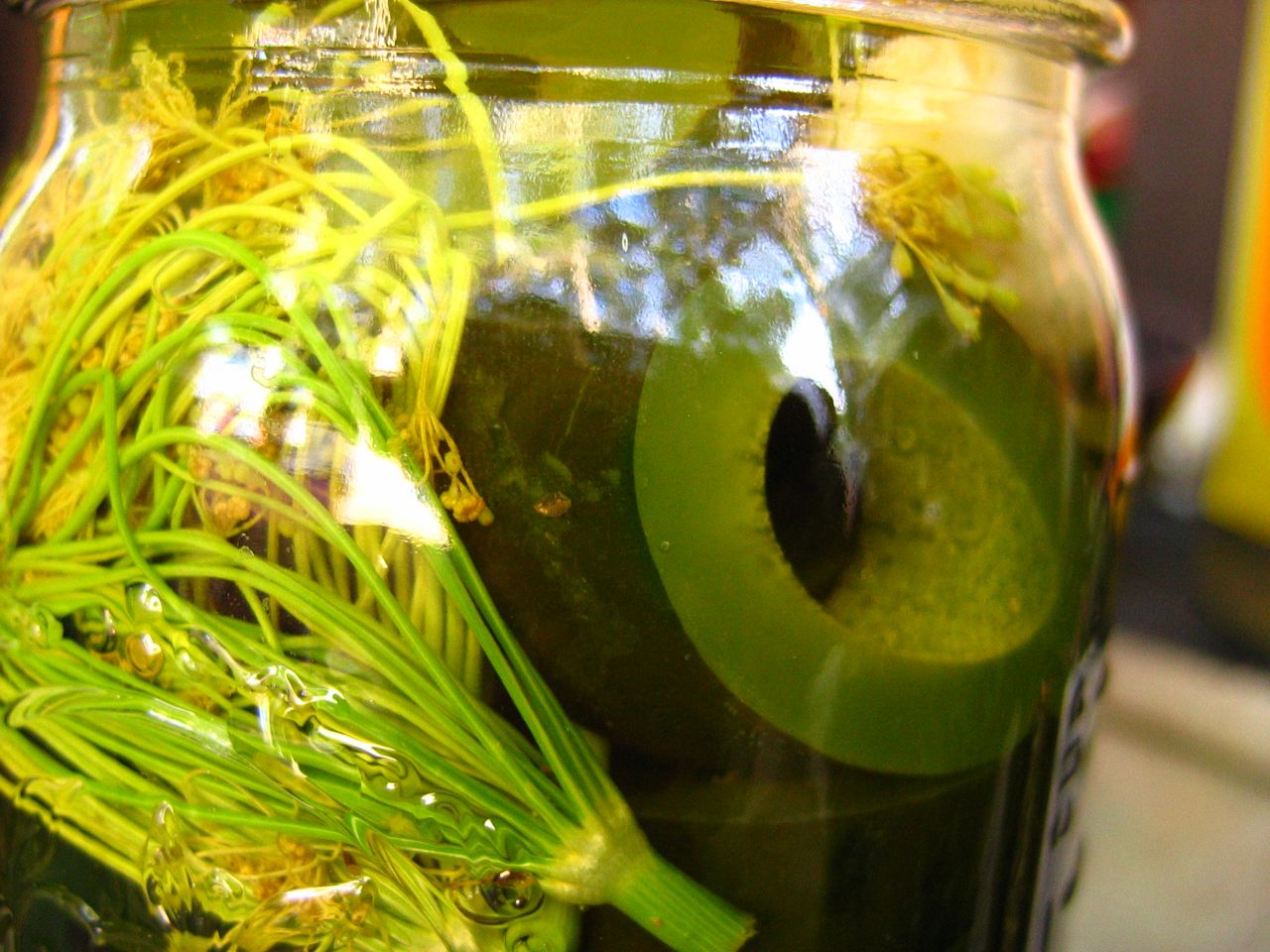 If you give it a shot, let me know!
------------- If you are a visitor and like what you see, please http://foodsoftheworld.activeboards.net/registration_rules.asp?FID=0" rel="nofollow - click here and join the discussions in our community! |
Posted By: africanmeat
Date Posted: 04 July 2013 at 01:19
|
Hi Ron . that looks Interesting . We got kelp here, but now the sea is rough and dangerous , so as it will Calm down i will go and collect some and pickle it . thanks for this great idea . ------------- Ahron |