The Grilled Cheese Sandwich
Printed From: Foods of the World Forum
Category: The US and Canada
Forum Name: The Midwest and Great Plains
Forum Discription: From the Land of 10,000 lakes to America's Breadbasket and from Beef Country to the Rocky Mountains
URL: http://foodsoftheworld.ActiveBoards.net/forum_posts.asp?TID=188
Printed Date: 26 March 2026 at 16:45
Topic: The Grilled Cheese Sandwich
Posted By: Guests
Subject: The Grilled Cheese Sandwich
Date Posted: 15 February 2010 at 04:38
|
Food historians generally agree that cooked bread and cheese combinations [in many different forms, textures and tastes] were ancient foods known across most continents and cultures. The earliest recipes for food like these are found in Ancient Roman cookbooks. Modern grilled cheese sandwiches descended from these ancient recipes. Welsh rarebit, cheese fondue, focaccia, pizza, and mozzarella sticks are all variations on the same theme. Otto Frederick Rohwedder of The first commercial use of the machine was by the Chillicothe Baking Company of The bread was advertised as, "the greatest forward step in the baking industry since bread was wrapped." St. Louis baker Gustav Papendick bought Rohwedder's second bread slicer and set out to improve it by devising a way to keep the slices together at least long enough to allow the loaves to be wrapped After failures trying rubber bands and metal pins, he settled on placing the slices into a cardboard tray. The tray aligned the slices, allowing mechanized wrapping machines to function. W.E. Long, who promoted the Holsum Bread brand, used by various independent bakers around the country, pioneered and promoted the packaging of sliced bread beginning in 1928. In 1930 Wonder Bread, first sold in 1925, started marketing sliced bread nationwide.
The grilled cheese sandwich is a variation of the French recipe, the "Croque Monsieur," which is a hot ham and cheese sandwich served in Bistros and has been around since the early1900's. It is made with two slices of bread, buttered on one side only, with ham and cheese in the center, and fried in clarified butter. However the English claim that they in fact invented the sandwich, claiming that long before the word sandwich came into use, it was common for workers in the field to place meat, fish, or cheese between two slices of black bread. Who invented the grilled cheese Americans know today? We will never know, but we can (given the ingredients) place it in time. Culinary evidence suggests our modern grilled cheese (consisting of processed cheese and sliced white bread) began in the 1920s. That's when affordable sliced bread and inexpensive American cheese hit the market. Government Issue cookbooks tell us World War II Navy cooks broiled hundreds of "American cheese filling sandwiches" in ship's kitchens. This makes sense.  The sandwich was economical, easy to make, met government nutrition standards AND (if done right?) quite tasty. In the 1940s and 50s these sandwiches were open-faced and usually made with prepackaged grated "American" cheddar cheese. It wasn't long before school cafeterias and other institutional kitchens followed suit. The usual accompaniment? Tomato soup. At that time, tomato soup would have been perceived as a healthy dose of Vitamin C. Excess sodium was not an issue. Kraft process cheese delux individual slices were introduced to
 By the 1960s; the top piece of bread became standard. The reason is not clear. Possibly this was the least expensive way to make a popular sandwich more filling.   |

Replies:
Posted By: Hoser
Date Posted: 15 February 2010 at 05:03
I know one thing....Those sammies are" building strong bodies twelve ways"  ------------- Go ahead...play with your food! |
Posted By: TasunkaWitko
Date Posted: 15 February 2010 at 08:47
| excellent! great job with your research and also very nice looking pictures! |
Posted By: Rockydog
Date Posted: 11 April 2010 at 20:57
Rivet, Those look great. The butter is the key part  . There are lots of American slices out there but those Kraft slices are among the best because they are "processed cheese", not "processed cheese food". There is a difference and it shows real quick if you compare them side by side. One of my favorite grilled cheese sandwiches involves dark rye bread and slabs of aged provolone cheese. Rockydog . There are lots of American slices out there but those Kraft slices are among the best because they are "processed cheese", not "processed cheese food". There is a difference and it shows real quick if you compare them side by side. One of my favorite grilled cheese sandwiches involves dark rye bread and slabs of aged provolone cheese. Rockydog
|
Posted By: Guests
Date Posted: 12 April 2010 at 08:26
|
Rocky, you sure know your cheese and nutrition! Big time congrats for understanding the difference between cheese and cheese-food. Thanks for your reply and your rye-provolone has a warm spot in my heart, bud! Nothing better than cheese, except melty cheese. ------------- |
Posted By: got14u
Date Posted: 12 April 2010 at 23:12
|
those look outstanding...Me and the family just went through a grilled cheese sandwich craze.....We were making them with the green chile beer bread that I was making all the time....the chiles really add a unique flavor to the grilled cheese sammie....either way I would jump all over those....great post for a simple sandwich ------------- Jerod Life's hard, it's even harder when your stupid. |
Posted By: kiwi
Date Posted: 19 April 2010 at 00:06
an interesting read! But..... ewwwwww plastic cheese!  In NZ we do something similar that we call a cheese toasty. Most kitchens around here have a special tool (sort of like a waffle iron I guess) for making them! I normally use a sandwich press though. In NZ we do something similar that we call a cheese toasty. Most kitchens around here have a special tool (sort of like a waffle iron I guess) for making them! I normally use a sandwich press though.------------- kai time! |
Posted By: Rockydog
Date Posted: 22 April 2010 at 22:29
| kiwi, True American cheese is processed but is made from real cheese and milk. The cheese is melted and has milk and a very few stabilizers, vitamins etc. added. Processed cheese is very good. there are some brands that are equal to or better than some natural cheeses. Processed cheese food is another animal entirely. While made of all dairy ingredients it actually has little or no cheese in it. It is formulated from whey, casein, milk, and other milk products. Often sold as single wrapped slices it is a poor substitute for real American cheese. Your plastic moniker is not far off! Please note the difference. In Rivet's first photo you can read the package. It says processed cheese. From experience I can tell you this is top shelf. Rockydog |
Posted By: kiwi
Date Posted: 23 April 2010 at 00:29
|
hm ok. we obviously only have the bad kind here.
------------- kai time! |
Posted By: TasunkaWitko
Date Posted: 10 November 2025 at 08:26
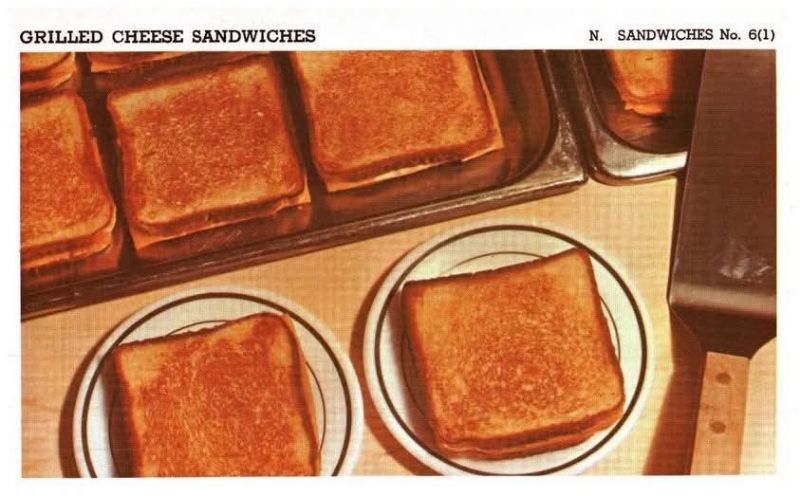
------------- If you are a visitor and like what you see, please http://foodsoftheworld.activeboards.net/registration_rules.asp?FID=0" rel="nofollow - click here and join the discussions in our community! |
 The modern grilled cheese sandwich is considered an American classic, with its origins traced to the United States in the 1920s. Its popularity grew with the availability of affordable sliced bread and processed American cheese, and it became a staple during World War II as Navy cooks prepared "American cheese filling sandwiches."
 Posted By: pitrow
Date Posted: 10 November 2025 at 10:01
|
Funny that you should bump this post now. I saw Tillamook Creamery just released this stuff last week. I'm not sure how I feel about it. 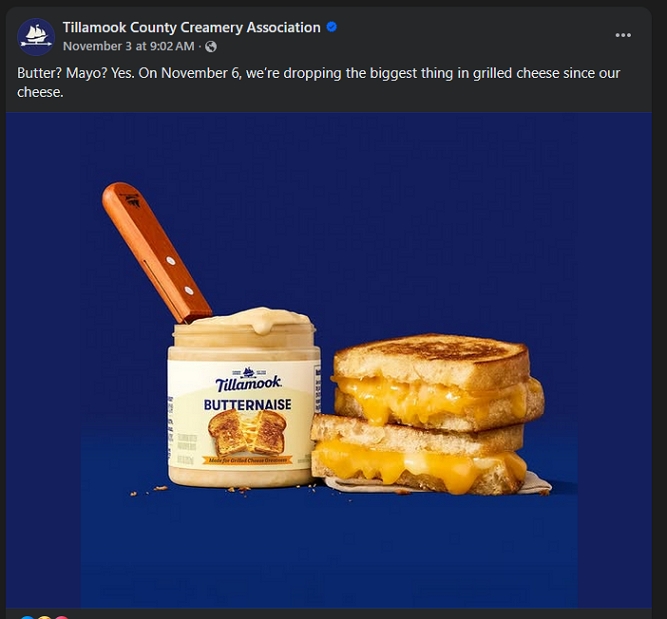 ------------- Mike http://lifeinpitrow.blogspot.com/" rel="nofollow - Life in PitRow - My often neglected, somewhat eccentric, occasionally outstanding blog |