Irish Soda Bread
Printed From: Foods of the World Forum
Category: Europe
Forum Name: The British Isles
Forum Discription: A lot more than just boiled beef!
URL: http://foodsoftheworld.ActiveBoards.net/forum_posts.asp?TID=333
Printed Date: 26 March 2026 at 18:45
Topic: Irish Soda Bread
Posted By: TasunkaWitko
Subject: Irish Soda Bread
Date Posted: 19 March 2011 at 12:44
|
Irish Soda Bread
One of the most well-known Irish foods is soda bread. Served warm out of the oven or lightly toasted, this is one of the most comforting and tasty breads you can eat.
Traditionally, soda bread is baked over a peat fire in a bastible pot, which allows it to be covered at least part of the time while baking. It is also one of the very easiest types of bread to make, making it a good choice for a beginning baker. To get you started, here are a few tips:
1) Make sure you have all the ingredients lined up before you begin.
2) Sift the dry ingredients together several times to ensure that the soda is well distributed.
Here's the recipe, from Time/Life's Foods of the World - The Cooking of the British Isles - 1969:
------------------------------------------------------------------------------------
alright, let's make some irish soda bread!
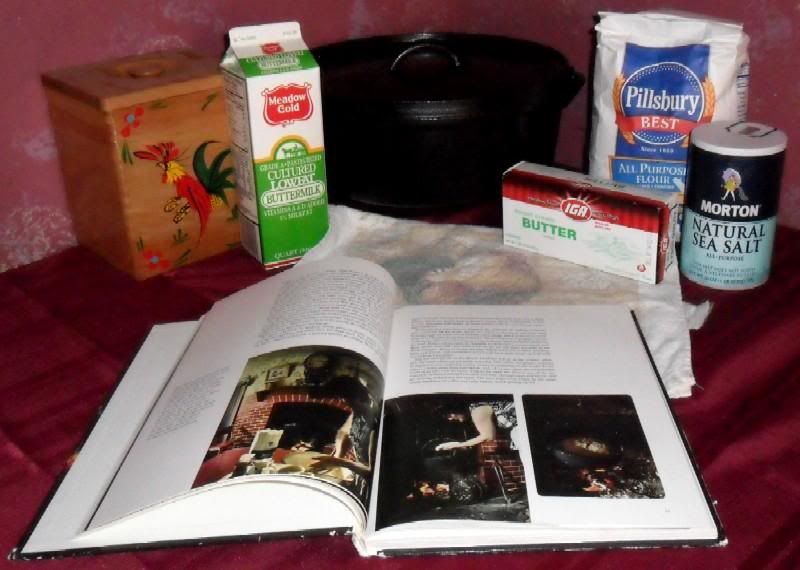
here are your ingredients - it's easy!
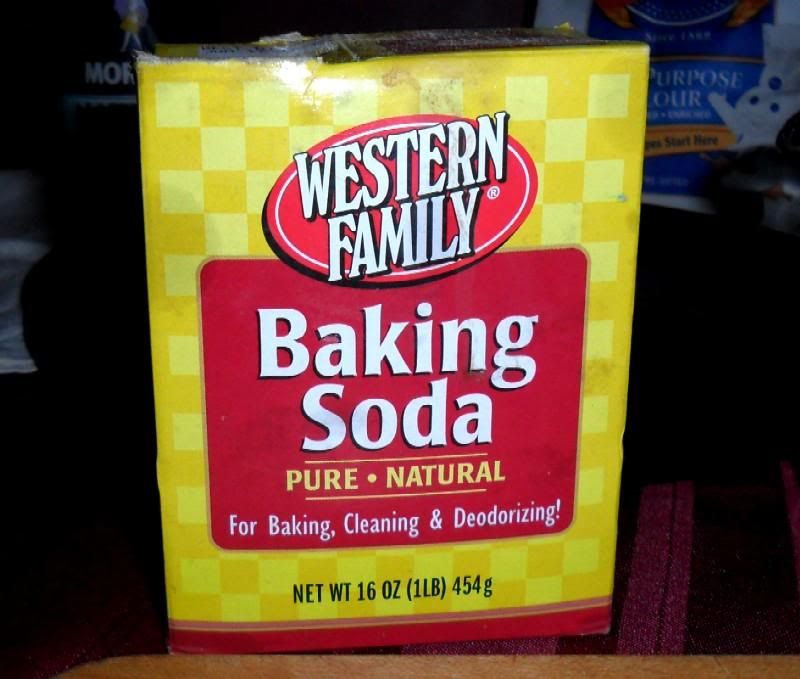
 whoops, almost forgot the thing that makes irish soda bread what it is ~
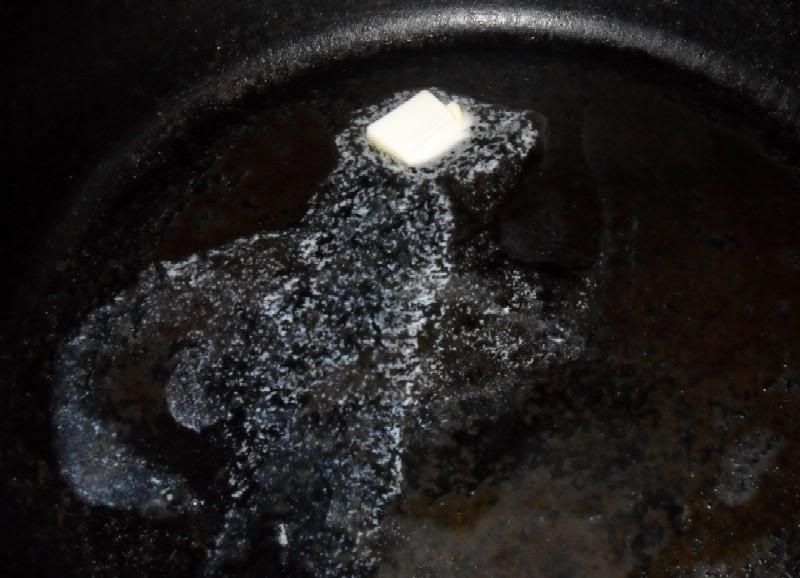
 i started out by melting a pat of butter in the bottom the dutch oven:
 then brushing it around the entire inside with a pastry brush.
next, i introduced the baking soda and salt to the flour:
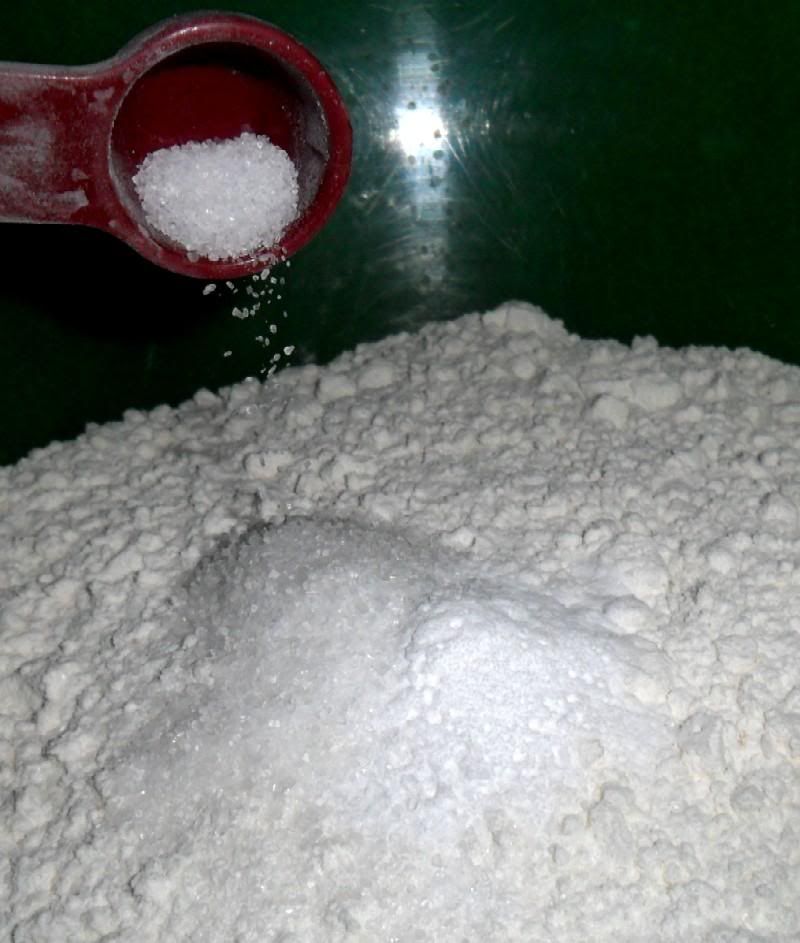 and stirred them around with a fork to blend them together.
as any high school chemistry student can tell you, baking soda, a base, reacts with acids; in this case, the acid was provided by buttermilk:
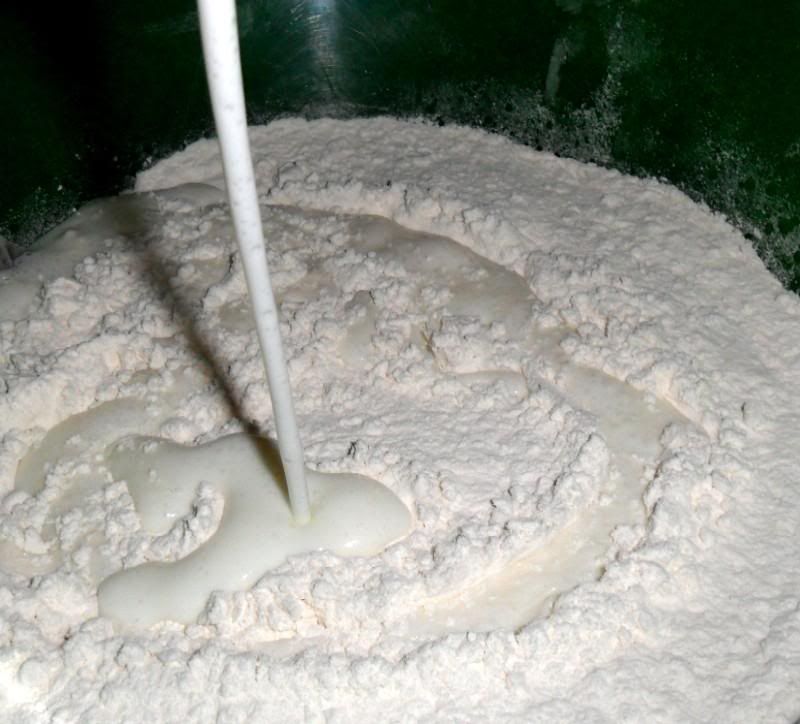 the ensuing reaction caused the bread to rise, without the help of yeast, while the bread is baking, a testament to the ingenuity of the irish peasants who developed this wonderful bread.
in spite of what the recipe says about using a cup of buttermilk initially, then adding up to another half-cup a little at a time, i found right away that, with this amount of flour, the full amount was indeed necessary, at least in my case, to get enough moisture to the flour.
after few short minutes of kneading (you do NOT want to over-do this, as it will inhibit the ability of the bread to rise), i had a dense, heavy, slightly-moist dough, which i pressed into the bottom of the mixing bowl, since it was exactly the right size and dimensions for what i needed to do next:
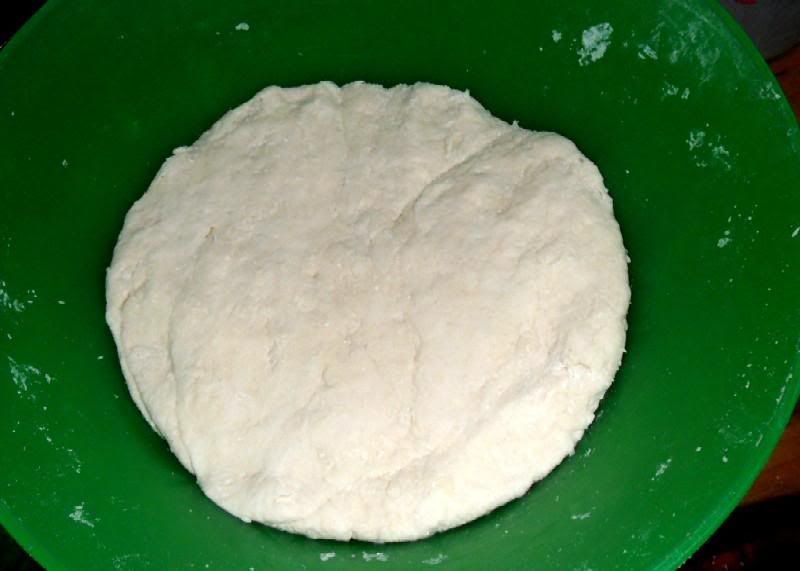 and turned the dough out onto my cutting board:
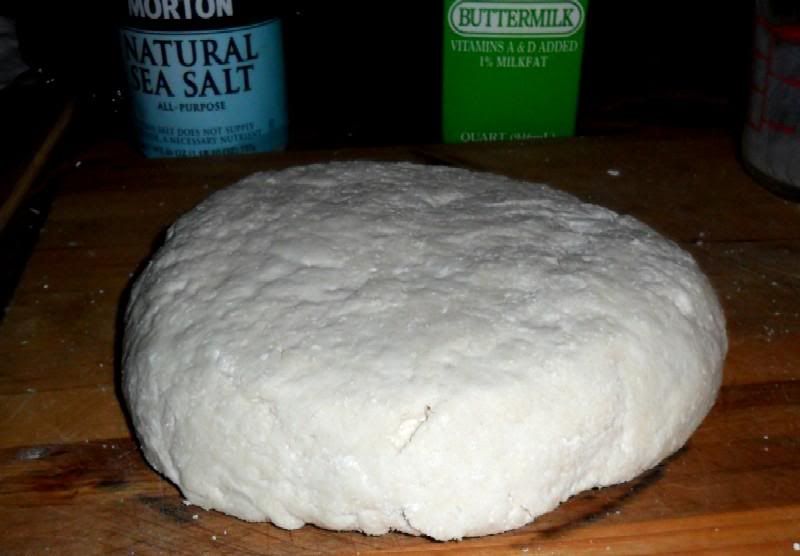 thanks to the bowl, it was just high and wide enough, pretty cool, huh?
i placed the dough into the bottom of the butter-brushed dutch oven and began to cut the cross into the top:
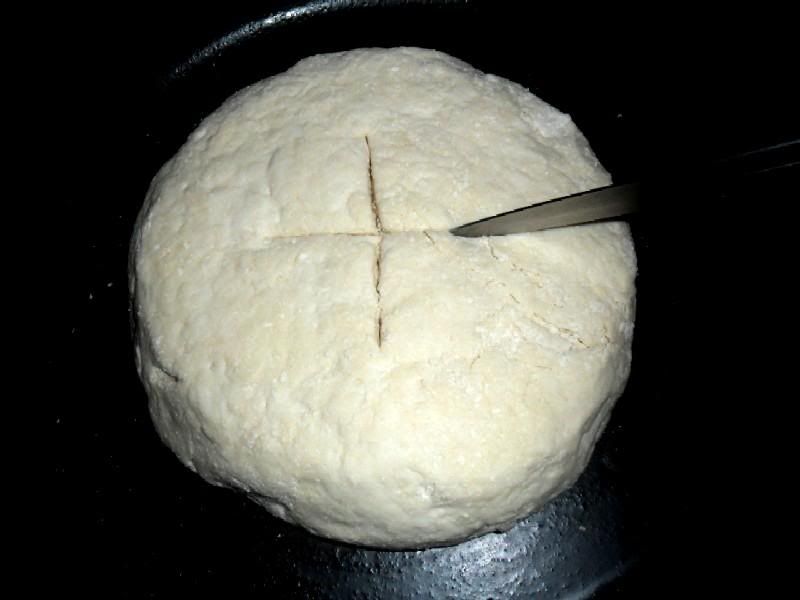 this step, according to irish legend, is to ward off demons; however, it also serves a practical purpose, which is to aid in breaking the bread for the meal.
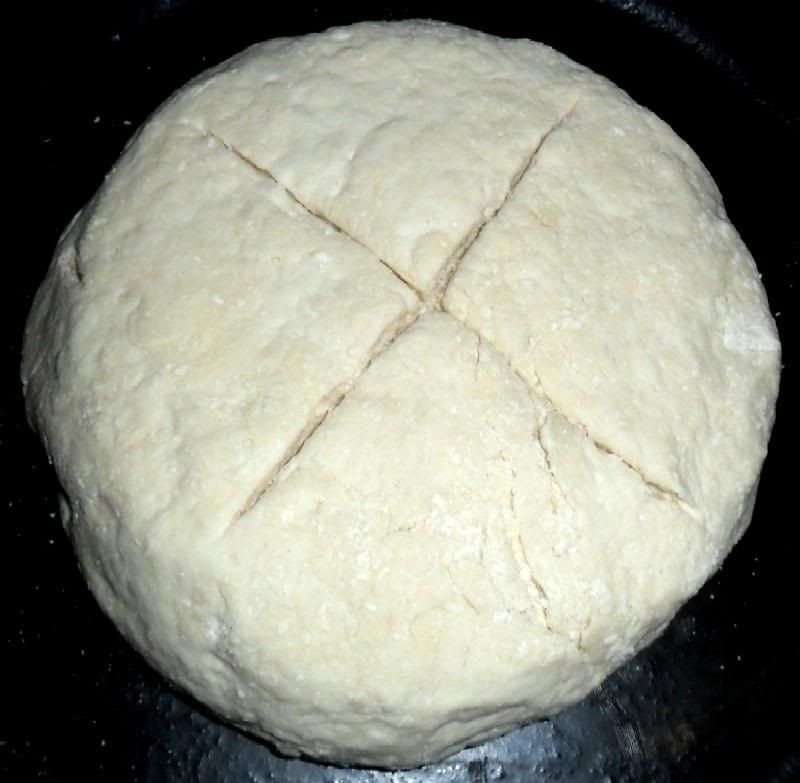 i have read of soda bread being baked both covered and uncovered; however, since i remembered the excellent success i had with forum_posts.asp?TID=1125&title=andys-noknead-bread" rel="nofollow - (which also uses a moist dough), i decided to cover the dutch oven in order to take advantage of the microclimate, which i figured might help with the rising and baking.
that decided, i put the dutch oven (unheated) into a pre-heated oven at 425 degrees with the lid on. after baking for half an hour, i removed the lid and let it bake another 15 minutes uncovered. at the end of the 45 minutes, here's what we had:
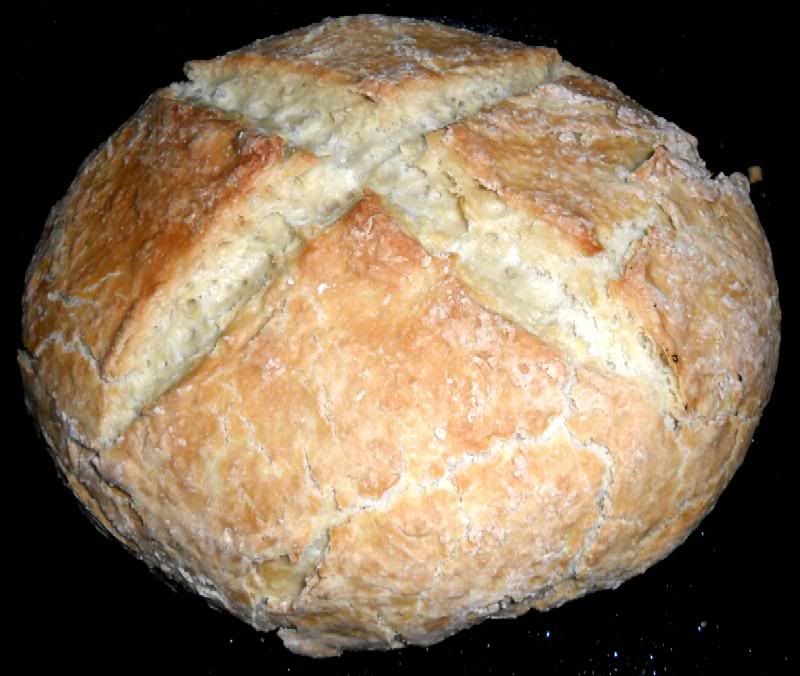 not bad, huh? i was pretty well impressed with what i had made - this bread had a nice rise and smelled like a piece of heaven:
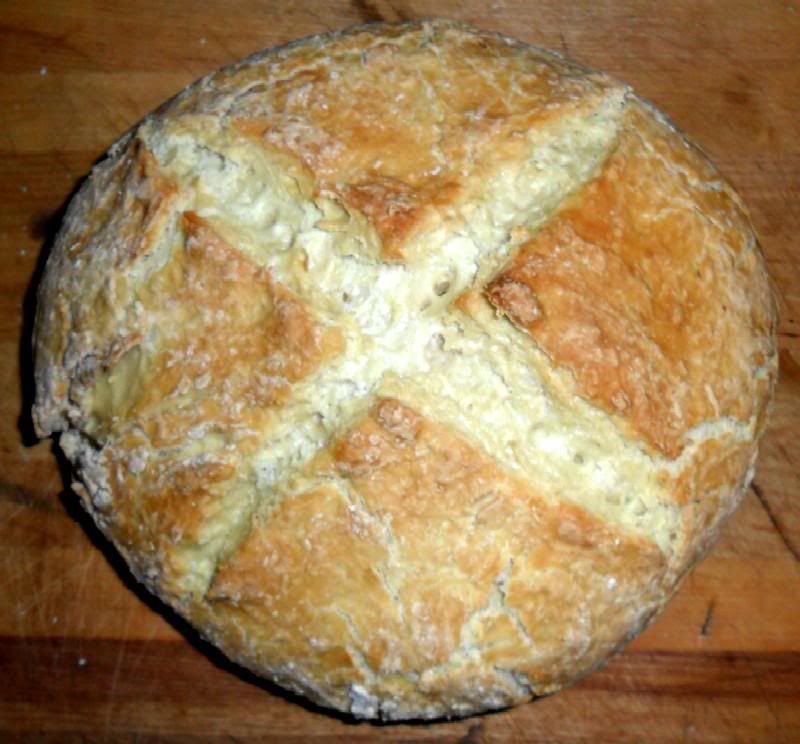 as you can see, the ingredients, method and timing all work together to create a very nice end product:
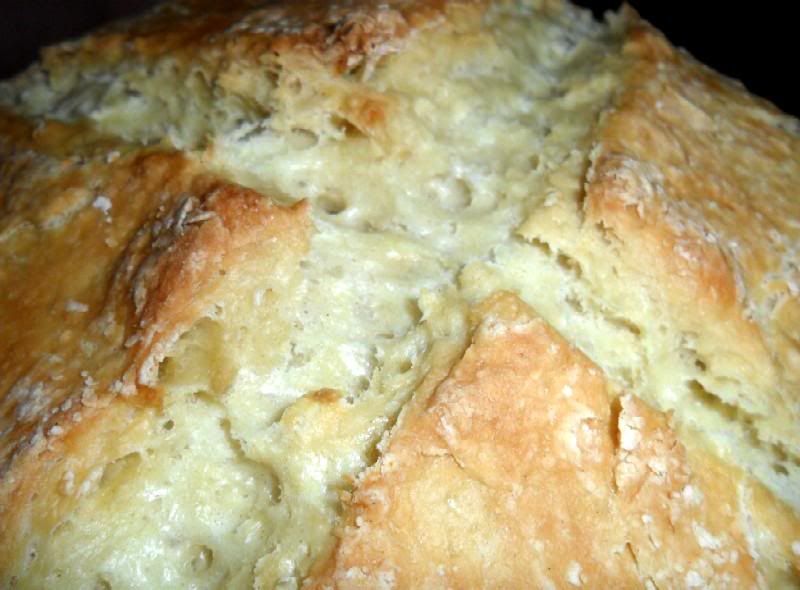 but seeing is only half the story - it had a flaky, crunchy crust and a nice, hollow thump when tapped on the bottom, and as far as i can tell was baked to near-perfection. as mentioned above, the aroma was fabulous, reminding me a bit of home-made biscuits, only much richer and deeper.
eager to try it, i cut the loaf open to see how the crumb looked:
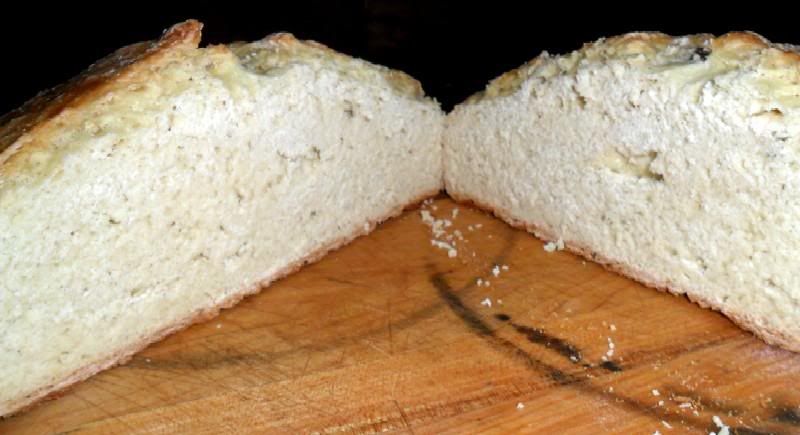 for a yeast-less bread, i have to say this turned out looking just like it should, and was impressed with how easy (and quick) the entire process was.
as far as taste, irish soda bread has a unique flavour all of its own, which must be experienced to be appreciated. it is a truly warm and satisfying taste that really speaks of peasant cooking in a cottage during a simpler time; i can only imagine how good this would have been had it been baked over the traditional peat fire. the rest of the family was quite impressed, although there were some comments about it having a slightly dry or crumbly texture. this is to be expected, since there was no extended rising time to develop the elasticity of the gluten etc, but no worries at all - it is perfect for sopping up meat or pan juices - or gravies or stews - and will be a regular bread at our table, any time of the year. ------------- If you are a visitor and like what you see, please http://foodsoftheworld.activeboards.net/registration_rules.asp?FID=0" rel="nofollow - click here and join the discussions in our community! |
 Irish Soda Bread
Replies:
Posted By: Guests
Date Posted: 19 March 2011 at 12:55
Very nice looking bread! I am surprised at yours, and Debb's since I've never seen Irish Soda Bread made into domes like you all made. Nothing wrong with that, just used to flatter, thinner loaves with more crackle than dough. Looks beautiful though, and that close up shot of the crust was magazine-perfect!  Looks so good, one just wants to reach through the screen and tear of a piece! Looks so good, one just wants to reach through the screen and tear of a piece!------------- |
Posted By: TasunkaWitko
Date Posted: 19 March 2011 at 12:59
|
thanks, john - i know you mentioned before that you had tried soda bread using a pre-packaged mix, but i really must insist that you give it a try with those few simple ingredients above ~ irish soda bread is so easy and inexpensive that it truly belongs among the signature peasant dishes that we like to highlight here at FOTW - give it a shot!
------------- If you are a visitor and like what you see, please http://foodsoftheworld.activeboards.net/registration_rules.asp?FID=0" rel="nofollow - click here and join the discussions in our community! |
Posted By: Guests
Date Posted: 19 March 2011 at 13:21
|
A few minutes ago Mrs Rivet and I were discussing the soda bread posts, and she says her's are always "domey" too....though she has never made it for me apparently since I've never seen it that way. You and she are right, I do have to make some from scratch and try something other than the packaged mixes. ------------- |
Posted By: TasunkaWitko
Date Posted: 21 March 2011 at 11:25
|
hey, john - just caught your reply here - i definitely agree that you need to try this! as you can see, the ingredients are such that you should have everything on hand, except perhaps the buttermilk. i think you will find that you will definitely need 1.5 cups as well.
my main admonition to you is to be careful not to over-knead the dough! this will indeed adversely affect the rising of the loaf while it is baking. you should only need to knead it for a minute, three at most, no more than 5. enough to gather all the flour together into a ball and get it moistened by the buttermilk is all you need - the less the better! ------------- If you are a visitor and like what you see, please http://foodsoftheworld.activeboards.net/registration_rules.asp?FID=0" rel="nofollow - click here and join the discussions in our community! |
Posted By: MomInAnApron
Date Posted: 22 March 2011 at 07:04
|
Beautiful photos and beautiful bread! I'm going to have to try this. NICE post! ------------- ~ Good Friends, Good Food, Good Times ~ |