Okonomiyaki
Printed From: Foods of the World Forum
Category: Asia
Forum Name: Japan
Forum Discription: Japan
URL: http://foodsoftheworld.ActiveBoards.net/forum_posts.asp?TID=3674
Printed Date: 26 March 2026 at 18:10
Topic: Okonomiyaki
Posted By: gracoman
Subject: Okonomiyaki
Date Posted: 11 August 2013 at 07:55
|
Okonomiyaki History From the Okonomiyaki World website Let's start with the name - it basically means "what you like, grilled". Yaki means grilled or cooked Okonomi means "what you want" or "what you like" So, of course, this means that there is no "one" way to make Okonomiyaki and no "one" recipe that defines it - it is very much up to the chef or customer what it ultimately looks like - just like no two American meatloaf or Italian tomato sauce recipes are quite the same. History Okonomiyaki was invented in Japan prior to World War II and evolved and became popular during and after the war. The earliest origins of a basic crepe-like pancake date back to the Edo period (1683-1868) period where these were a special desert served at Buddhist ceremonies called Funoyaki. This then evolved during the Meiji period (1868-1912) into a sweeter dish called Sukesoyaki. During the 20's and 30's the dish continued to evolve with more emphasis put on the sauces added and the name Yoshokuyaki began to be used. The name Okonomiyaki started in the late 30's in Osaka. In Hiroshima at this time a similar crepe-like food was popular - it was topped with onions, folded over, and served to children as a snack item. Okonomiyaki, in it's different variations, started to become more popular during the war when rice became scarce and residents had to be creative in using other more readily available ingredients. The simple wheat pancake fit the bill and during and after the war, people started to add more ingredients such as eggs, pork, and cabbage. A restaurant from Osaka claims to have been the first to add Mayonnaise in 1946.
Main Variations There are two significantly different types of Okonomiyaki. First, the Kansai or Osaka style, in which the ingredients are all mixed into a batter and then grilled. Second, the Hiroshima style, in which a small crepe-like pancake is grilled and then other ingredients are layered on top. The Hioshima style uses much more cabbage than the Osaka style. Kansei / Osaka Style All the ingredients are mixed into a batter which is grilled on both sides and then has various topping added. At some restaurants this is just served up, with a couple variations to choose from, sometimes grilled in a huge sheet and an individual portion cut out, and you add your own condiments. At other restaurants you choose exactly the ingredients you want and the Okonomiyaki is cooked right in front of you, either by the chef or by yourself.
Hiroshima Style In the Hiroshima Style Okonomiyaki, a small thin pancake is grilled and then other ingredients are layered on top, starting with a large amount of shredded cabbage. Other ingredients are added in layers, and then the pancake is flipped onto fried eggs on one or both sides before serving. Hiroshima style also often include fried noodles. Okonomiyaki Nikudama or Nikutama includes noodles and pork. (Nikutama-soba with thin yakitori noodles or Nikutama-udon with thicker udon noodles)
Tokyo Style - Monjayaki Monjayaki or Monja-Yaki is a variation of Okonomiyaki that is also called Tokyo-style. The main ingredients are grilled first, moved into a ring, and the batter is added to the middle. It ends up being much runnier than the other styles and is eaten directly off the grill using the Okonomiyaki spatula Takoyaki Takoyaki is not really an Okonomiyaki, but is similar and often served at the same restaurants. It is a batter with Tako (Octopus) that is cooked into a ball and served in a similar way, with the same condiments (sweet sauce, mayonnaise, bonito flakes, seeweed flakes). The Okonomiyaki I made are Osake Style and fried on my kamado griddle The Recipe I Used Sauce 1/2 cup mayonnaise 2 tablespoons soy sauce 2 teaspoons sriracha, more or less to taste Pancakes 5 large eggs 1 teaspoon soy sauce 1 teaspoon fish sauce 1 teaspoon sesame oil 2 teaspoons minced garlic 1 teaspoon sea salt 1/3 cup AP flour 2 cups cabbage, shredded with a mandoline or finely chopped 1 bunch scallions, trimmed and chopped 3/4 cups (roughly) baby or chopped shrimp - I used chopped smoked pork canola oil for frying 1-2 tablespoon toasted sesame seeds bonito flakes (optional)
The batter http://s1293.photobucket.com/user/gracoman/media/TheBatter_zps5032fd3b.jpg.html" rel="nofollow">  On the griddle http://s1293.photobucket.com/user/gracoman/media/a7849f65-5754-414c-b8ec-8b0ac48d5af6_zps3ccd636e.jpg.html" rel="nofollow">  Flip them over http://s1293.photobucket.com/user/gracoman/media/5ce0cf74-723a-4049-99be-6493b544361f_zps1e1c6884.jpg.html" rel="nofollow">  Looking good http://s1293.photobucket.com/user/gracoman/media/b17ee770-b3b9-432d-8fd4-90dee546228e_zps9c8079ed.jpg.html" rel="nofollow">  Plated with dipping sauce and toasted sesame seeds http://s1293.photobucket.com/user/gracoman/media/Plated_zpsc423b77e.jpg.html" rel="nofollow">  Delicious and addictive
|
Replies:
Posted By: HistoricFoodie
Date Posted: 11 August 2013 at 08:07
|
One question Gracoman: How are you possibly going to top this first post? Incredible job! And precisely the sort of thing we're trying to do here. We're not just looking for recipes, but for the history and cultural hooks that go with it. In short, ya done good. |
Posted By: gracoman
Date Posted: 11 August 2013 at 08:21
|
Great! Glad you liked it. Okonomiyaki have been on my "to do" list for quite some time. They moved to the top of this list (along with a number of other things) when I joined the forum. I put these together last night and was not disappointed. They were fantastic and the myriad of ways to customize them only sweetens the deal. They come together simply and quickly. I will be making these again and again! Cheers
|
Posted By: TasunkaWitko
Date Posted: 12 August 2013 at 09:22
I must try this! Ive heard a little about it, but it seemed intimidating; seeing it here, I am able to visualise it better and realise that this is something that I could probably do! All the necessary ingredients are within reach, except bonito flakes, and a quick trip to Amazon can cure that: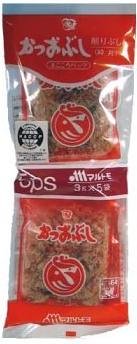 http://www.amazon.com/Nishimoto-Shaved-Bonito-Flakes-Packets/dp/B000F5DRVO/ref=cm_cr_pr_product_top" rel="nofollow - http://www.amazon.com/Nishimoto-Shaved-Bonito-Flakes-Packets/dp/B000F5DRVO/ref=cm_cr_pr_product_top Awesome first post, GM - I think you struck gold!
------------- If you are a visitor and like what you see, please http://foodsoftheworld.activeboards.net/registration_rules.asp?FID=0" rel="nofollow - click here and join the discussions in our community! |
Posted By: gracoman
Date Posted: 12 August 2013 at 09:45
|
Do not be intimidated. Nothing could be simpler. The bonito flakes are standard but added for umami. I didn't have any so opted for fish sauce (my contribution) in the recipe. I also went for quite a bit more sriracha in the dipping sauce.
|
Posted By: Margi Cintrano
Date Posted: 12 August 2013 at 10:13
|
Exemplary and finely penned history ... Fascinating to read. Of course, a beautiful pictorial to accompany too ... Shall definitely give this shrimp Okonomiyaki a try when I return home to Madrid. I shall have to sub the Soy, I am highly allergic to it since childhood. However, a 1 teaspoon indicates it is not a dominating flavor. Have great summer. Margaux. ------------- Volamos a Mediterraneo, un paraiso que conquista su gente u su cocina. |
Posted By: Quahaug
Date Posted: 21 August 2013 at 19:14
|
Hey gracoman, I just found this great website and saw your post about Okonomiyaki. As you know, when I saw your post on another website I decided to give it a try. They were fun to make and even better to eat. So, to those who never had Okonomiyaki, you have to give it a go, you will not be sorry. Next time I make these I will mix some sriracha sauce with the kewpie mayo to give it a little kick. I also made a tangy "Okonomiyaki" sauce from a recipe I found online. I thought it had a strong ketchup taste so I added "a little more of this and a little more of that" and some Wasabi Fumi Furikake (rice seasoning). The wasabi and seaweed in the seasoning gave the sauce a very good taste. It is going to be hard to make the sauce again because I did not write down what I added to the recipe. My bad. Also on the plate is Spatchcock Jerk Chicken and Sweet Potato fries. Plate presentation is lacking pop, sorry. I am attempting to insert pictures, hope all goes well.     |
Posted By: gracoman
Date Posted: 22 August 2013 at 07:47
|
Great to see you here Quahaug. I'm glad you've found this wonderful place. My horizons are expanding as I type. Your Okonomiyaki looks fantastic. The bacon addition and sauce presentation are a more traditional approach. I'm glad you liked them. How could you not? I'm looking forward to seeing more of your posts.
|
Posted By: TasunkaWitko
Date Posted: 22 August 2013 at 08:44
|
Welcome to the FotW Forums, Quahaug! Looks like you've jumped right in with a delicious interpretation of some great Japanese food, and looking forward to seeing more of your creations! ------------- If you are a visitor and like what you see, please http://foodsoftheworld.activeboards.net/registration_rules.asp?FID=0" rel="nofollow - click here and join the discussions in our community! |