Speculaas
Printed From: Foods of the World Forum
Category: Europe
Forum Name: The Low Countries
Forum Discription: Belgium and the Netherlands.
URL: http://foodsoftheworld.ActiveBoards.net/forum_posts.asp?TID=3684
Printed Date: 26 March 2026 at 20:33
Topic: Speculaas
Posted By: Effigy
Subject: Speculaas
Date Posted: 13 August 2013 at 02:04
|
I was amazed to find that these divine biscuits have not been documented here yet! I don't have photos yet, because I just make up a batch of dough and keep it in the fridge for baking when needed. I will in time add pictures. My son told me with the authority that only a 16 year old boy can have that I need never make any other type of biscuit ever again. To be fair they are hard to top and I searched for a good recipe for a long time. I have been making this one for about a year now. So I will share with you. Speculaas is a type of shortcrust, thin, crunchy biscuit which is
slightly browned. The biscuit is often made in the shape of St Nicholas, widely
known in the west as the patron saint of children. In fact, St Nicholas is a
traditional children’s celebration in early December in the Netherlands and
Belgium, where “good” kids receive gifts and Speculoos cookies. The German
Spekulatius is primarily traditional in Westphalia and the Rhineland,
especially around Christmas time, and is very similar to its counterparts. Where does the Speculoos come from? Actually, its origin is quite
controversial. For some, it comes from the Latin word “species”, which simply
means spices. It may also derive from the Latin “speculum” (mirror) which refers
to the fact that the images are cut as a mirrored bas-relief into a wooden
stamp which is then used to decorate the cookie. It could refer to the Latin “speculator” which refers to a “bishop”,
probably the St Nicholas figure so popular in Belgium and the Netherlands. But
Speculoos might originate from Sweden! In 1100, a farmer called Henirk Mörch
inadvertently let some brown sugar and flour cook together for hours. It
resulted in a big, crunchy biscuit which he then tried to improve by
instructing his son to watch the oven, in order to find the best baking time.
If we believe this story, the word “speculoos” would originate from the word
“speculor”, which means to “watch” or “observe”. It was only 300 years later that a rich, Belgian entrepreneur would
take the recipe and makes it into a popular sweet biscuit in the region. The dough does not rise very much. Dutch and
Belgian versions are baked with light brown (beet) sugar and baking powder. This is my recipe
*Speculaas spice:
This combination of spices can be found in recipes dating back to the fifteenth centuryPreheat oven to 350 degrees F Cream butter, vanilla, and both kinds of sugar until light
and fluffy. Add both eggs and blend well. Whisk all of the dry ingredients together and slowly add to
the butter mixture, combining until the dough pulls from the side of the bowl.
Divide the dough in half. Wrap each half in plastic wrap and refrigerate for
several hours or overnight. I actually kept the dough in the fridge for several
days. (Tip : take care that the dough
does not get warm too fast). Originally created for children to celebrate Saint Nicholas’ day
in December, the traditional Speculoos recipe has evolved into more
“contemporary” variants which may include new ingredients such as cranberry,
chocolate chips or almonds, making it a sophisticated and indulgent treat to be
enjoyed all year round. Connoisseurs dip the cookie into their coffee before
eating! Sources http://www.innotaste.de/docs/Speculoos.pdf" rel="nofollow - http://www.innotaste.de/docs/Speculoos.pdf http://www.thedutchbakersdaughter.com/2009/12/speculaas.html" rel="nofollow - http://www.thedutchbakersdaughter.com/2009/12/speculaas.html ------------- Resident Peasant |
Replies:
Posted By: Margi Cintrano
Date Posted: 13 August 2013 at 07:33
|
Anne, Good Afternoon, I love the spice profile for your biscuits. Surely sound wonderful and not too excessively sweet ... Thanks for posting. I would like to try these in October when the weather cools down just a bit, and it is beautifully INDIAN SUMMER, yet a crispness in the air ... I am 646 metres above sea level in the High Sierra ... Centre exactly of Spain. Perfect fragrant aromas of the exotic filling the apartment .. I love caradamom ... ginger .. vanilla ... nutmeg and cinammon ... Fanstastic profile ... SPECULAAS: I have Access to international market, EL CORTE INGLÉS which houses sections by countries ... They have THE NETHERLANDS ... so, I shall explore --- HOWEVER, NEED TO KNOW, WHAT TO LOOK FOR EXACTLY ? Thanks in advance. LOOK FORWARD TO YOUR PICTORIAL ... Kind regards. Margaux. ------------- Volamos a Mediterraneo, un paraiso que conquista su gente u su cocina. |
Posted By: TasunkaWitko
Date Posted: 14 August 2013 at 08:55
|
I love the back story for this treat, and the spices in it promise to be amazing! Looking forward to the pictorial, and am strongly considering making these during the Holidays! ------------- If you are a visitor and like what you see, please http://foodsoftheworld.activeboards.net/registration_rules.asp?FID=0" rel="nofollow - click here and join the discussions in our community! |
Posted By: pitrow
Date Posted: 14 August 2013 at 09:21
|
Mmmm. good stuff. I've been waiting to do a tutorial on these until I found a proper speculaas cookie mold (speculaasplank), but alas so far I've had no luck and my Oma won't give up hers yet! I may just break down and buy a new one. Traditionally speculaas cookies are shaped in wooden cookie molds, as seen on this website (http://www.cookiemold.com/cookiemoldsspeculaas.html) . Windmills are the most popular from what I've seen, but Sinterklaas (St. Nicholas) and Dutch boys and girls are also seen quite often. I haven't been able to locate one of my own yet, but my Oma has a nice mold that has several different shapes together, so you can make several varieties at once. BTW, I've also recently found a Speculoos spread, that's similar to peanut butter, but tastes exactly like a speculaas cookie. It's wonderful stuff. ------------- Mike http://lifeinpitrow.blogspot.com/" rel="nofollow - Life in PitRow - My often neglected, somewhat eccentric, occasionally outstanding blog |
Posted By: TasunkaWitko
Date Posted: 14 August 2013 at 09:24
|
>>>Traditionally speculaas cookies are shaped in wooden cookie molds, as seen on this website.....<<< I saw some of these once at a garage sale a couple of years ago, but had no idea what they were or what they were for!  I could have had them for a dollar, if I remember correctly....  ------------- If you are a visitor and like what you see, please http://foodsoftheworld.activeboards.net/registration_rules.asp?FID=0" rel="nofollow - click here and join the discussions in our community! |
Posted By: Margi Cintrano
Date Posted: 14 August 2013 at 12:54
|
Mike, These are gorgeous. Thank you so much. Here is the one I want to order. These are perfect, as I am going to prepare these for my grandchildren for the Christmas Holidays, and they resemble THE 3 WISE MEN or THE 3 KINGS as they are called in Spanish. THANK YOU VERY MUCH Mike. img://i1265photobucket.com http://s1265.photobucket.com/user/Margcata/media/StNickONhorsewoodencookiecutter.jpg.html" rel="nofollow">  ------------- Volamos a Mediterraneo, un paraiso que conquista su gente u su cocina. |
Posted By: Effigy
Date Posted: 14 August 2013 at 18:07
|
I just make plain round biscuits, I form the dough into a log which I store in the fridge, come baking time I just slice it into 5mm rounds, easy peasy. A mould would be nice, but it doesn't affect the taste. The cat one is pretty though..... 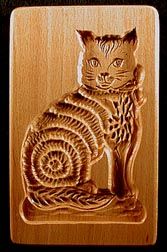 ------------- Resident Peasant |
Posted By: Margi Cintrano
Date Posted: 14 August 2013 at 18:10
|
Anne, Yes, the feline is quite lovely too ... Thank you. I shall check the prices when I return to Madrid. Thanks. Great récipe. Margaux. ------------- Volamos a Mediterraneo, un paraiso que conquista su gente u su cocina. |
Posted By: Hoser
Date Posted: 15 August 2013 at 02:47
|
We always had these in the house when I was a child....just called them "windmill cookies"...they sure were good dipped in a glass of milk as an afternoon snack. ------------- Go ahead...play with your food! |
Posted By: AK1
Date Posted: 15 August 2013 at 03:31
|
 Margi Cintrano wrote:
Posted By: Margi Cintrano
Date Posted: 15 August 2013 at 09:36
|
AK1, Thank you so much for checking the prices ... That is truly kind of you. Appreciate it greatly. Well, Now I have to convert into Euros ... Have a wonderful summer, Margi. ------------- Volamos a Mediterraneo, un paraiso que conquista su gente u su cocina. |