Congee
Printed From: Foods of the World Forum
Category: Asia
Forum Name: China and Mongolia
Forum Discription: China and Mongolia
URL: http://foodsoftheworld.ActiveBoards.net/forum_posts.asp?TID=3754
Printed Date: 26 March 2026 at 20:34
Topic: Congee
Posted By: gracoman
Subject: Congee
Date Posted: 06 September 2013 at 14:24
|
Let me begin by stating this post belongs in every Asian country's forum as it is a universally accepted Asian dish. It is the rice porridge called Congee, Shi-fan or Jook in China, Okai or Okayu in Japan, Jott Jook in Korea, Chao Bo in Vietnam, Tukpa in Bhutan, Kanji in southern India and so on and so on and so on.... Congee is served everywhere as a breakfast dish but it is much more than that. One is served the basic porridge and may then add whatever he or she likes to the soup in order to customize it to personal preference. Various meats and/or fish and/or vegetables and/or eggs may be added almost always with sliced green onions and perhaps a drizzle of sesame oil. A favorite is a thousand year or hundred century egg which is a preserved duck egg. Congee is more than a bowl of rice porridge as it is served whenever one is ailing as it is easily digestible. Jook is a universally accepted Asian comfort food adored by billions of people daily. Okai is so universally enjoyed my Japanese Zojirushi rice cooker has a rice porridge setting on it and that is how I always prepare it because it's just too easy. I use a mixture of Japanese favored medium grain and sweet rice. You can see the different grain types in the bowl. http://s1293.photobucket.com/user/gracoman/media/Mixofmediumgrainandsweetrice_zps5b21b226.jpg.html"> 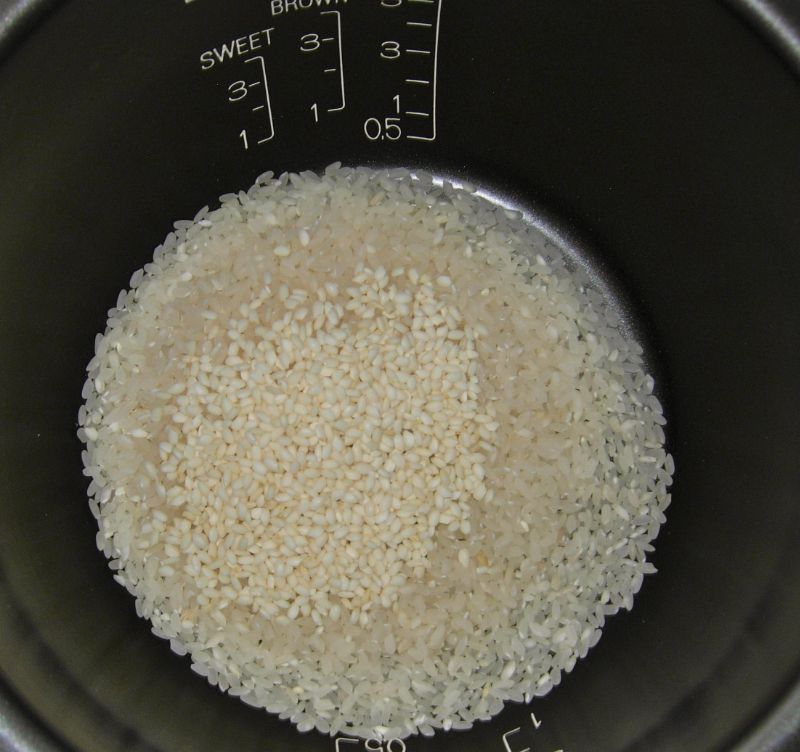 A closer look for those unfamiliar with sweet rice http://s1293.photobucket.com/user/gracoman/media/Ricegrains_zpsc279a4fc.jpg.html"> 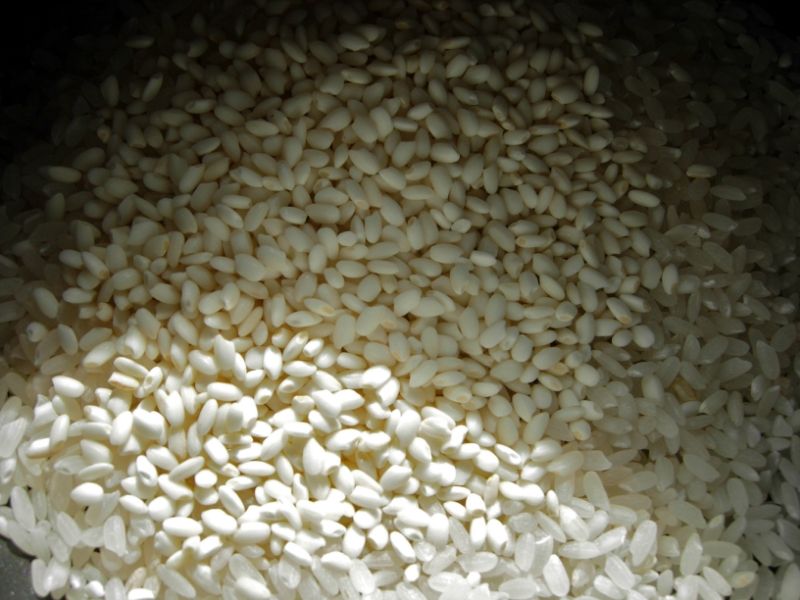 Here I've added chopped white sweet potato to the washed rice. This is a Japanese ingredient. http://s1293.photobucket.com/user/gracoman/media/Addchoppedsweetpotato_zps83ed5475.jpg.html"> 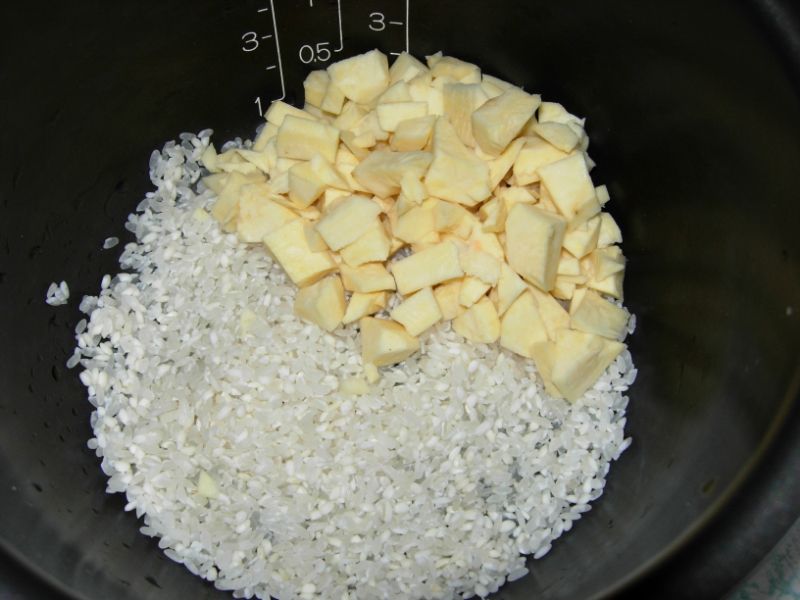 Set to the porridge cycle. http://s1293.photobucket.com/user/gracoman/media/Porridgesetting_zps492a92ec.jpg.html"> 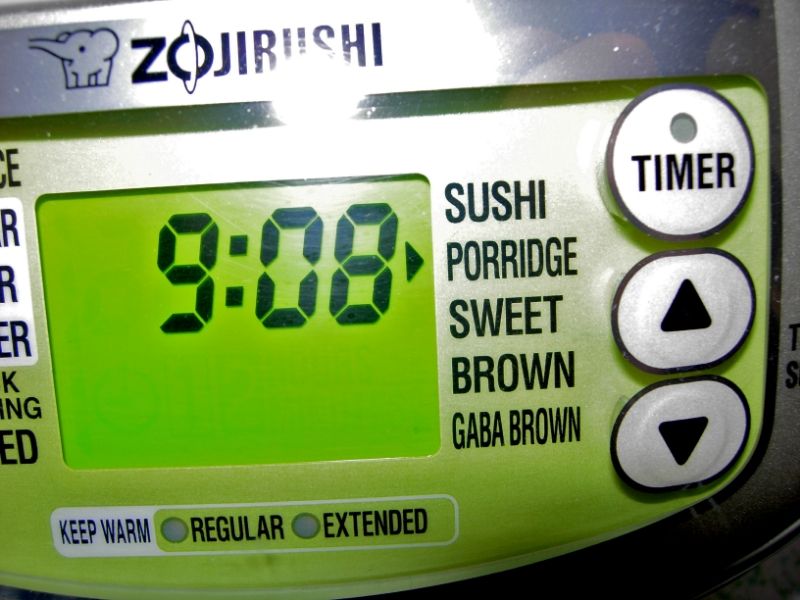 Ladle finished porridge with sweet potato into a bowl. This came out a bit thicker than I usually like it but no matter. It's all good. http://s1293.photobucket.com/user/gracoman/media/Done_zpsd87c5245.jpg.html"> 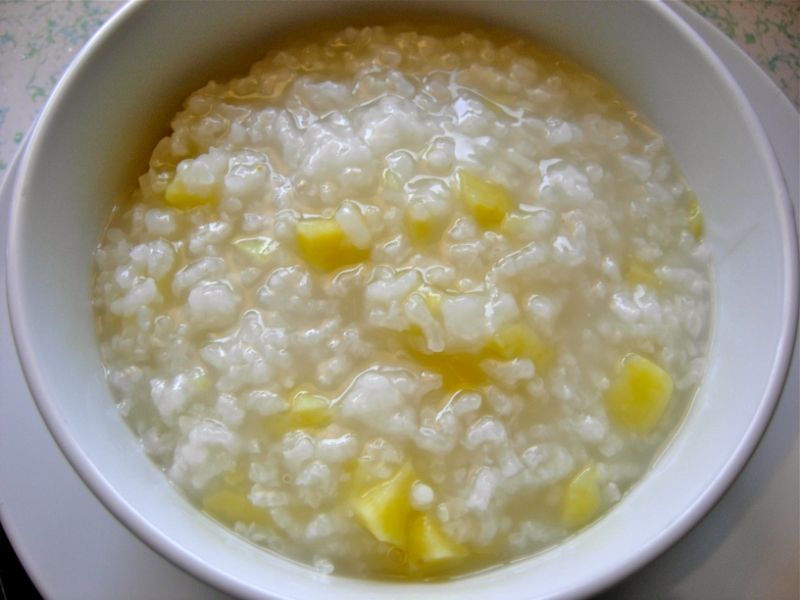 Because this is breakfast congee, I've topped it with chopped scrambled egg, chopped sautéed fresh shiitake mushrooms, sliced green onions (always sliced green onions), toasted sesame seeds and a drizzle of toasted sesame oil. http://s1293.photobucket.com/user/gracoman/media/Platedwithcustomisedadditions_zps45eb0032.jpg.html"> 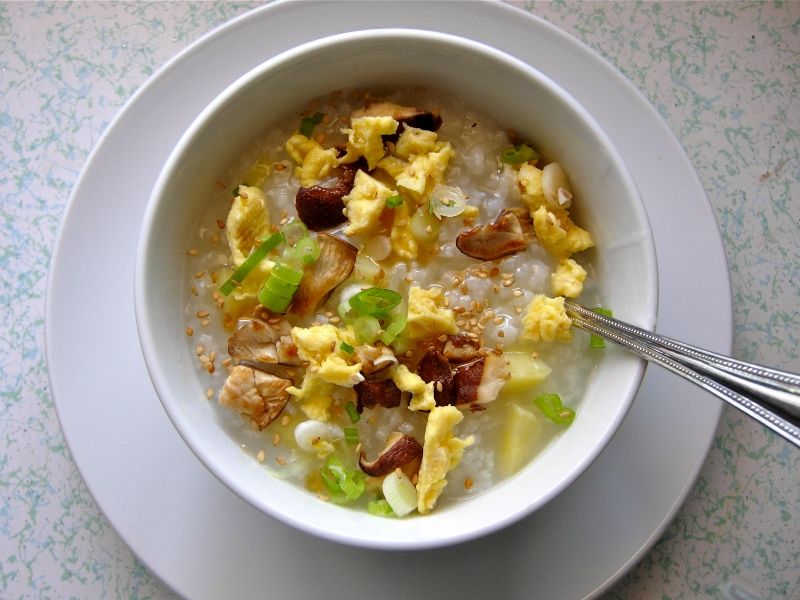
|
|||||
Replies:
Posted By: Effigy
Date Posted: 06 September 2013 at 14:46
|
My first thought is - Rice Pudding. My Gran loved the stuff and it was always her cure-all food. The other two were... Tapioca and Semolina. I might give this a try, not sure about the sweet potato, but I won't judge until I have tried. Thanks GM. I will need to find out how to do it without a rice cooker however  ------------- Resident Peasant |
Posted By: gracoman
Date Posted: 06 September 2013 at 15:15
|
I'm afraid congee is nothing like rice pudding, tapioca or semolina. This is the first time I used sweet potato and it threw the entire recipe off a bit. I added extra water before cooking but not enough. The rice should actually almost disintegrate and the whole thing should be soupier than the photo's I posted. Congee is easy to make if you really want to give it a try. There must be 1000 YouTube videos showing how to make congee on the stove top. It really just "boils down" to overcooking rice in more water than you would ever think to use otherwise. There is a standard Asian-American Thanksgiving joke where they only cook the holiday's required turkey so they can make jook with it afterward. The type and number of toppings are only limited by your imagination.
|
Posted By: HistoricFoodie
Date Posted: 06 September 2013 at 17:21
|
Great write up and pix, Gracoman. Most of the congee I've had was about the consistency shown in your photos. Personally, I don't think I'd want it any soupier. But, of course, tastes differ. I can see the flavor profile of the white sweet potato. But I think I'd have partially pre-cooked it first. |
Posted By: gracoman
Date Posted: 06 September 2013 at 18:56
|
 HistoricFoodie wrote:
Posted By: Effigy
Date Posted: 07 September 2013 at 00:39
|
On my comment regarding Rice pudding... I should mention at this point that my Gran's method and what you have described are identical. One of her best friends was a Chinese lady. Both of them were born in 1890. As a result I was taught to appreciate Asian food long before most New Zealanders. I think this is a case of semantics - Rice pudding (after Googling) - is not something I am familiar with. When I flippantly said "Rice Pudding" which is what I grew up knowing it as, I in fact meant "Rice Porridge" which is precisely what you are referring to. ------------- Resident Peasant |
Posted By: gracoman
Date Posted: 07 September 2013 at 09:24
I see. Interesting. The rice pudding you googled is the rice pudding I grew up with. It is a cheap and delicious dessert that is relegated to the area of comfort food for me ... as long as raisins are involved
 |
Posted By: HistoricFoodie
Date Posted: 07 September 2013 at 17:11
|
Gracoman, I noticed in the congee history you provided a reference to making it will millet instead of rice. Are you familiar with that at all? I'm not. But I'd like to be, cuz I love millet. I wonder how common that was/is, and what the difference in approach might be. |
Posted By: gracoman
Date Posted: 07 September 2013 at 17:54
|
I thought congee was made only with white rice until I researched it and my research was far from extensive. Congee can, and is, made from a number of different grains. Brown rice, quinoa and barley popped up quite a bit. Millet is quite a different story. Millet is an ancient grain and, if memory serves, may be the first grain to be cultivated by human beings. There is evidence of it being used in China 10,000 years ago. The Chinese were eating millet far before the cultivation of rice. Millet is a highly nutritious grain and was once prevalent in Africa before westernization began replacing it with nutritionally inferior corn. But I digress. Recipes for congee vary in grain to water proportions. 1 part rice to 5 parts water is as common as 1 part rice to 10 parts water. I would assume the same of all grains, millet included. For fun I checked for recipes. The few I saw all included sugar. This one is from the Bob's Red Mill website:
|
|||||
Posted By: HistoricFoodie
Date Posted: 07 September 2013 at 19:11
|
Wow, that one sounds awfully sweet for a porridge. More akin to rice pudding, I'd say. I mean look at it. Brown sugar, honey, plus both sweet potatoes and apple. Sounds more like a dessert. But, on the other hand, a fair number of folks load up their breakfast oatmeal with all sorts of sweeteners. So maybe I'm wrong. |
Posted By: gracoman
Date Posted: 07 September 2013 at 19:41
|
No disagreement here. I remember the first time I went the vegetarian route, some 20 years ago, I started in on with a millet foundation and I remember I didn't really like it much but then again my tastes ran in different directions back then.
Perhaps this is more along the lines of what you are looking for. http://www.sxdongfangliang.com/news.php?id=194://" rel="nofollow - http://www.sxdongfangliang.com/news.php?id=194:// |
Posted By: Melissa Mead
Date Posted: 08 September 2013 at 13:44
|
Is savory oatmeal a type of congee/jook?
------------- Melissa http://carpelibris.wordpress.com/ - http://carpelibris.wordpress.com/ |
Posted By: Effigy
Date Posted: 08 September 2013 at 22:37
|
This is a fascinating topic GM I am finding myself drawn to it because it is ringing my living history bells. I think most cultures at some point developed a grain soaked and boiled porridge. Considering the number of people who suffered from bad teeth and or lack of teeth - a soft mush with as much nutrition contained within it as possible, makes sense. Also I know from living history camps that porridge set by a carefully banked fire overnight is the 'best' breakfast ever, mainly because it is there, cooked and ready, even before you need to build up the fire and put the water on for those who wake later. I have done quite a bit of looking into this as you have set me on a path to write an article and demonstrate grain porridge at my next camp in October... So do any of you have insights into what porridge techniques were around in the Twelfth century (1100's) ? I have a Russian millet recipe, and oat gruel, and of course pease porridge. On another note In my researching - I discovered the use of Goji berries in Congee, which is interesting because I randomly bought some Goji berry seeds and now have two healthy seedlings.... ......A great ongoing topic ------------- Resident Peasant |
Posted By: HistoricFoodie
Date Posted: 08 September 2013 at 23:10
|
Considering the number of people who suffered from bad teeth and or lack of teeth There was a group of dishes called "mumbles" that addressed this very issue, Anne. If you care I'll provide the details of how I came to research it. Suffice it to say (this should pique your interest), I got to one-up the OED as a result. And how often does that happen?
|
Posted By: Effigy
Date Posted: 08 September 2013 at 23:59
|
Please feel free to PM me - or we can start a thread that deals with feeding the toothless, your call. Mumbles sounds interesting, sourcing it to the C12th will be tricky, but sounds like fun. ------------- Resident Peasant |
Posted By: gracoman
Date Posted: 09 September 2013 at 08:37
Here are a couple of recipes for oatmeal congee: http://chowhound.chow.com/topics/678922" rel="nofollow - http://chowhound.chow.com/topics/678922
|
Posted By: TasunkaWitko
Date Posted: 10 September 2013 at 14:09
|
Great photos and write-up, GC - I especially like the one of the congee right out of the cooker with the swet potatoes - the colours are really nice. I'll need to read again to digest the history etc., but very impressive! ------------- If you are a visitor and like what you see, please http://foodsoftheworld.activeboards.net/registration_rules.asp?FID=0" rel="nofollow - click here and join the discussions in our community! |
Posted By: gonefishin
Date Posted: 22 October 2013 at 21:12
|
WOW gracoman! Thanks for the very informative post...lots of information here for us to digest. I'll have to give this a try...it looks and sounds delicious! Thanks! Dan ------------- Enjoy The Food! |
Posted By: gracoman
Date Posted: 23 October 2013 at 07:09
|
Thanks Dan. Millions of people can't be wrong. Please excuse my absence. The incredible amounts of damage caused by the recent flooding here in Colorado has made personal time scarce. I am involved in residential and commercial construction and have been racing from one flood damaged property to the next trying to get folks moved back in to their homes. This may go on for a while. I have only completed 2 cooks of note, since this started, and neither really had a place here so I did not post. I also have not been following the online cooking course and hope it will remain accessible after it has ended. The certificate is not important but I'd like to go through it for grins and giggles.
|
Posted By: gonefishin
Date Posted: 23 October 2013 at 07:20
|
No problem about your busy schedule, we all have things that come up from time to time. It's certainly nice of you to be doing what you can to help people get back into their homes. Going through and cleaning/rebuilding after bad flood damage is painstakingly slow. My heart goes out to all the victims. If my understanding is right, your thinking is spot on for the course. After the course, homework turn in, etc has ended the course will stay open and in the archive section. You can still go through and complete the course without the being eligible for the certificate. The discussion groups and photo/video turn in will also be closed. I think you should be good! ------------- Enjoy The Food! |
Posted By: Percebes
Date Posted: 28 October 2014 at 12:13
|
Congee was a regular breakfast dish for me while working as a chef for Delta Hotels. I worked with an all Asian crew for over 6 years The version that I am used to is quite spicy and has heavily peppered thin sliced chicken as the main garnish and is served with a handful of cilantro and thai basil on top. ------------- I am a wine enthusiast. The more wine I drink, the more enthusiastic I become. |