Suya
Printed From: Foods of the World Forum
Category: Africa
Forum Name: West Africa
Forum Discription: West Africa
URL: http://foodsoftheworld.ActiveBoards.net/forum_posts.asp?TID=3763
Printed Date: 26 March 2026 at 19:04
Topic: Suya
Posted By: gracoman
Subject: Suya
Date Posted: 09 September 2013 at 10:59
|
Suya is a Nigerian dish. Though the expert "Malam's" are from the Northern Nigeria you will find them all over the country. Usually every areas has a "suya spot" with it's "Malam", the name for the owner or controller of the joint. Suya is thinly sliced beef or chicken threaded onto wooden skewers, covered with "Yaji" (suya spice) and grilled over smoky fires. Yagi ingredients vary from place to place and recipes are a closely guarded secret. It is served on the stick or removed and wrapped in newspaper along with tomatoes, onions and cucumbers to take home. This pairing makes perfect sense as suya is one spicy "meat-a-ball" and the vegetables are cooling. My first attempt at suya was pronounced a success but I will make a few changes next time. One spice, African Negro Pepper, is unavailable to me as it is not exported much. At one time it was uses as pepper in European countries but fell out of favor when the types we use now grew in popularity. African negro pepper or "Uda" has a distinctive aftertaste that black pepper we enjoy now does not. I also took the lazy man's route in my preparation of the Yaji by not first preparing "Kuli Kuli" as an ingredient fir the Yaji. Kuli Kuli is made by grinding roasted ground nuts (peanuts), squeezing the oil from the mixture and frying it into chunks. The chunks are then allowed to dry and they are ground again to a powder in a mortar and pestle. I ground the peanuts for my Yaji to a crumbly consistency, not a paste, and used that. It's ok because that's exactly what Nigerians do when they are feeling lazy. Yanji (suya spice) ingredients. Garlic, paprika, black pepper, onion powder, cayenne, ginger and ground beef bouillon cubes. Ground bouillon is a major spice in Nigeria. http://s1293.photobucket.com/user/gracoman/media/Yajiingredientscopy_zpsb9189357.jpg.html"> 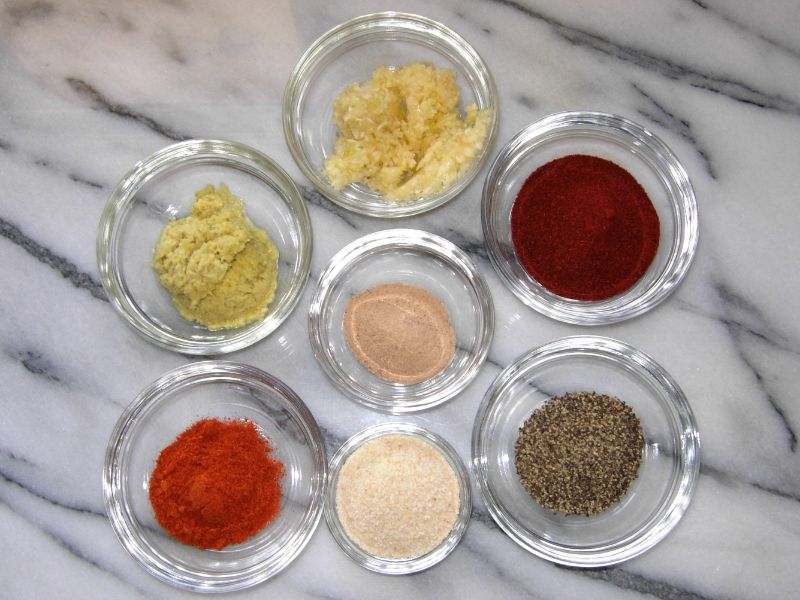 Ground peanuts http://s1293.photobucket.com/user/gracoman/media/Grindpeanutsinprocessorcopy_zps53a9dc49.jpg.html"> 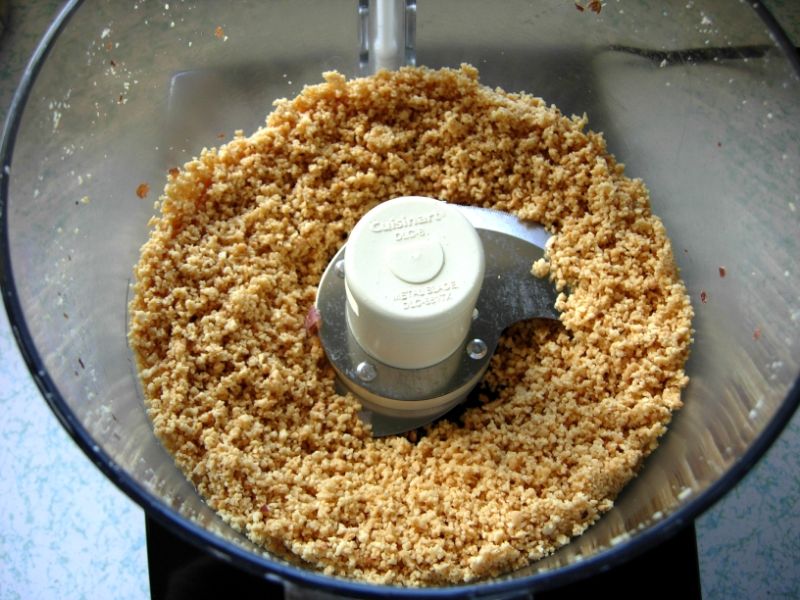 Spices added to ground groundnuts http://s1293.photobucket.com/user/gracoman/media/AddYajicopy_zpse9a48bad.jpg.html"> 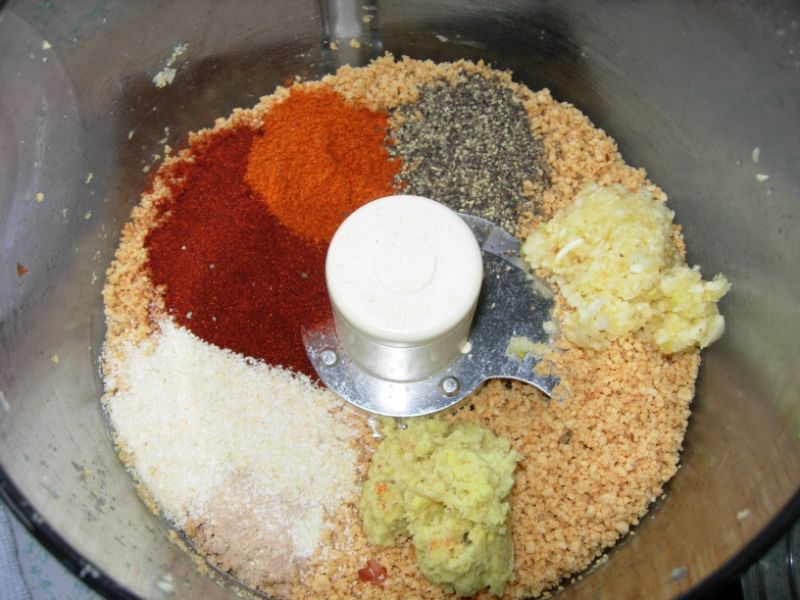 Pulse to combine http://s1293.photobucket.com/user/gracoman/media/Pulsetoincorporatecopy_zps6b087a7d.jpg.html"> 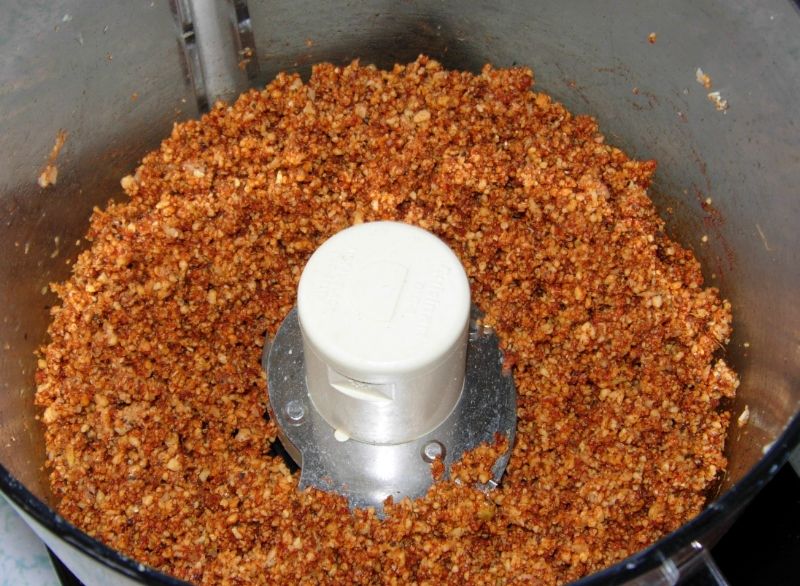 Thinly slice beef (I used flatiron steaks) and thread onto sticks. Force the Yanji into the meat with your hands and leave to marinate several hours to infuse the meat with all kinds of wonderfulness. A Nigerian would never refrigerate but I think I will. http://s1293.photobucket.com/user/gracoman/media/Forceyajiintoskeweredmeatandmarinatecopy_zps87cfeb11.jpg.html"> 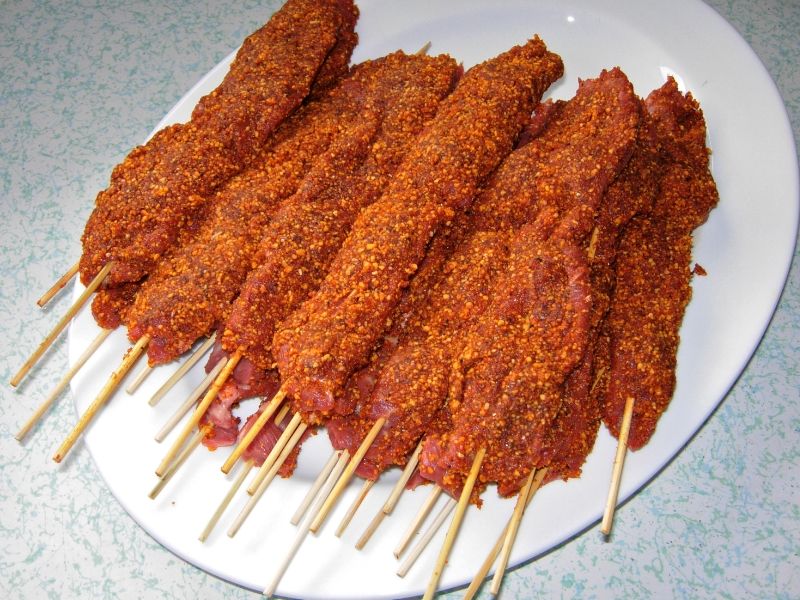 Grill over a medium hot fire smoking with coffee wood. Coffee wood is tropical wood. http://s1293.photobucket.com/user/gracoman/media/OnthehotsmokyPrimocopy_zps74c6e9dd.jpg.html"> 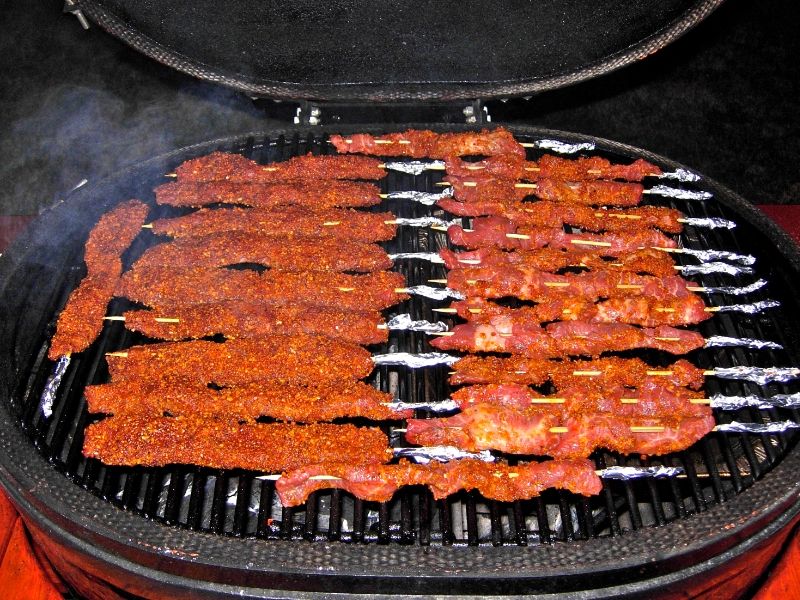 Serve with tomato, onion and cucumber slices. http://s1293.photobucket.com/user/gracoman/media/Servedwithtomatoonionandcucumbercopy_zps9a087404.jpg.html"> 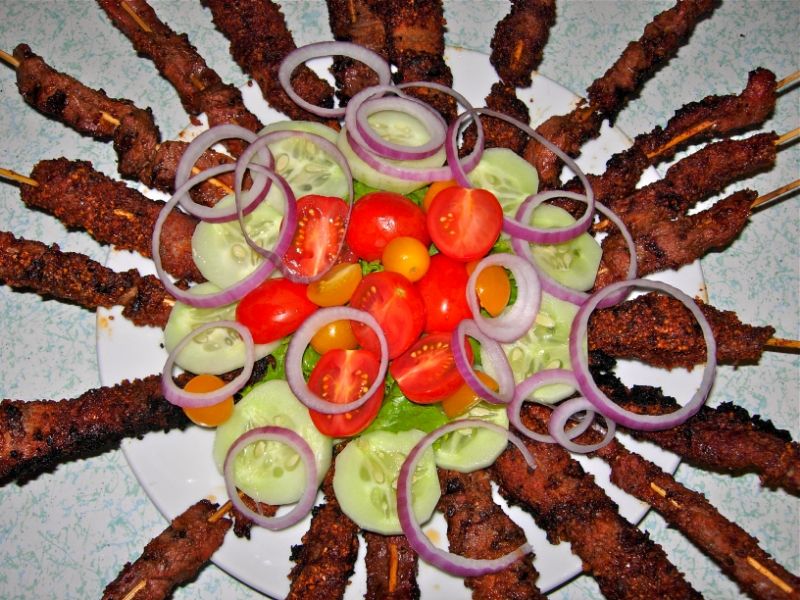 This was unbelievably good. Next time I will double the amount of cayenne and be sure to make the kuli kuli. |
Replies:
Posted By: HistoricFoodie
Date Posted: 09 September 2013 at 12:08
|
Gracoman, Peanuts were adapted by the slaves as a substitute for the African groundnut, which won't grow in most of the U.S. One particular type, now very rare, is the black peanut. Those with access to them---primarily in North Carolina---found them even more acceptable, because the African groundnut is black. If you'd like to try growing them (and, with your interest in African cuisine, why not?) send me your mail address via PM, and I'll get you out some starter seed. Something else you might find of interest is the Boer White pumpkin. Pumpkins are an integral part of virtually all sub-Saharran cuisines, and this white one is particularly popular. It's said to be the sweetest culinary pumpkin available. Although not common, you can find seed for it. |
Posted By: pitrow
Date Posted: 09 September 2013 at 15:20
|
wow, that looks fantastic!
------------- Mike http://lifeinpitrow.blogspot.com/" rel="nofollow - Life in PitRow - My often neglected, somewhat eccentric, occasionally outstanding blog |
Posted By: gracoman
Date Posted: 09 September 2013 at 16:26
| Thanks Mike. It was very good and very different. Just the sort of thing I'm after. |
Posted By: gracoman
Date Posted: 09 September 2013 at 16:50
Thank you for that excellent post HF. Every website I have visited describes African groundnuts as peanuts with no mention of African Bambara groundnuts at all. Perhaps because peanut cultivation has largely displaced Bambara and with good reason, for now. Here is what I’ve found What are ground nuts? Groundnuts are a staple food in many developing countries. Also called peanuts, groundnuts are a protein rich tuber that grows well in semi-arid regions. There are two main types of groundnuts: the American groundnut (Arachis hypogaea), and the African groundnut, the Bambara nut (Voandzeia subterranea). Both are grown in Western Africa as a protein source. Groundnuts also contain sufficient quantities of carbohydrates and fats. After drying and roasting the groundnut it can be used to make flour, soup, porridge, and milk. Groundnuts are often grown by small farm holders and is considered a woman's crop in Western Africa. From http://forest.mtu.edu/pcforestry/resources/studentprojects/groundnut.html" rel="nofollow - Women, Groundnuts and Development in West Africa .
The American ground nut (peanut) is a South American groundnut that has largely displaced the African bambaba groundnut which is considered an underutilized crop. It has less oil and more protein than the peanut. From http://www.youtube.com/watch?v=hW_re4Lgx1g" rel="nofollow - African Bambara Groundnut When Africans came to America as slaves peanuts came with them. From http://www.goodearthpeanuts.com/historyworld.htm" rel="nofollow - |
 HistoricFoodie wrote:
Posted By: Hoser
Date Posted: 10 September 2013 at 06:13
Great looking dish Graco....I'll probably have to tone it down a bit for the wife, but this one is going on my short list for sure.  ------------- Go ahead...play with your food! |
Posted By: Rod Franklin
Date Posted: 10 September 2013 at 07:23
|
This looks good to me. It has been saved for future reference. I think it would be interesting to find out if there was even one country or region that doesn't have some sort of meat on a stick marinade or spice mix or method that defines it in some way. I feel confident that an entire book full of recipes could be collected. ------------- Hungry |
Posted By: HistoricFoodie
Date Posted: 10 September 2013 at 12:00
|
I couldn't agree more, Rod. And what a great book it would be. Dare I suggest that you...... |
Posted By: TasunkaWitko
Date Posted: 10 September 2013 at 14:18
|
I love this ~ it looks delicious and certianly must have a complex flavour profile. I might have missed it, but what are the amounts on the spices - or if it is more of a "to taste" thing, do you have any suggestions as to where a person could start? Teaspoon of each? Tablespoon? Cloves of garlic? I assume that if I made it with chicken, I'd use chicken bouillon? I'd love to try this, as it looks easy and would make for a great grilled lunch with some garden-fresh produce. ------------- If you are a visitor and like what you see, please http://foodsoftheworld.activeboards.net/registration_rules.asp?FID=0" rel="nofollow - click here and join the discussions in our community! |
Posted By: Rod Franklin
Date Posted: 10 September 2013 at 15:09
Brook, I would have to travel to the farthest reaches of the globe with my entourage to locate and research this fascinating subject properly. Hmmm, how would I fund this most worthwhile of projects?.... Dare I suggest that you.... Nah. Nah.I would certainly buy the book if it existed though. The subject resonates in my primitive nature. Fire, meat on a stick, whatever little extras you could gather or had collected and preserved to spice it up. A most ancient cooking concept and method. I would wager it goes back to the very beginnings of using fire. I am a caveman, and I am ------------- Hungry |
Posted By: Rod Franklin
Date Posted: 10 September 2013 at 15:34
|
Gman, do you have a plan for pressing the oil from the peanuts or groundnuts to make the kuli-kuli?
------------- Hungry |
Posted By: gracoman
Date Posted: 10 September 2013 at 16:19
|
Rod & Ron this should answer both your questions. For my first attempt at suya I used this recipe
3 lbs Beef, chicken, or fish (I used flatiron steaks) 2 tsp black pepper I will make several changes next time. First I will double the cayenne. The most authentic recipes have all dry ingredients so I will switch to powdered ginger and garlic . This makes sense as the ground peanut mixture had a tendency to crumble off where it was heaviest. Rod, My thought was to make the kuli kuli which is a method of drying out the peanuts but I have since discovered http://www.amazon.com/PB2-Powdered-Peanut-Butter-6-5/dp/B002GJ9JWS/ref=sr_1_2?ie=UTF8&qid=1378848532&sr=8-2&keywords=powder+peanutbutter" rel="nofollow - which is ground roasted peanuts that have had most of the oil removed. It is essentially the same thing as kuli kuli, just not fried, so out with the ground peanuts/kuli kuli and in with the powder. Ron, definitely go with chicken bouillon if using chicken. There is plenty of salt in bouillon so use unsalted peanuts if you decide to grind them. Brush the meat with peanut oil or any vegetable oil before forcing the spice mixture into the meat to help it adhere. Pack it on over and over to get as much into the meat as possible. Sprinkle more onto the meat just before serving. The spice is nice |
Posted By: Rod Franklin
Date Posted: 10 September 2013 at 17:52
|
Powdered peanut butter. Who'd a thunk it? That certainly smooths out that kuli-kuli bump in the road.
------------- Hungry |
Posted By: gracoman
Date Posted: 10 September 2013 at 18:44
|
FWIW here's how to remove the oil from ground peanuts when making kuli kuli. First grind them a bit more than I did in the photo above. Stop processing when pasty but not peanut butter. Place the peanut paste onto a clean kitchen tea towel and roll up tightly. Apply force with a weighted object several times. Unwrap and repeat several times with new clean towels. The paste will dry and is now ready for frying.
This process must create a different flavor than powdered peanut butter but the powder is what I will try next. |