Baked Beans and Brown Bread
Printed From: Foods of the World Forum
Category: The US and Canada
Forum Name: New England and the Northeast
Forum Discription: Where the Melting Pot began.
URL: http://foodsoftheworld.ActiveBoards.net/forum_posts.asp?TID=3784
Printed Date: 26 March 2026 at 18:16
Topic: Baked Beans and Brown Bread
Posted By: gracoman
Subject: Baked Beans and Brown Bread
Date Posted: 15 September 2013 at 12:14
|
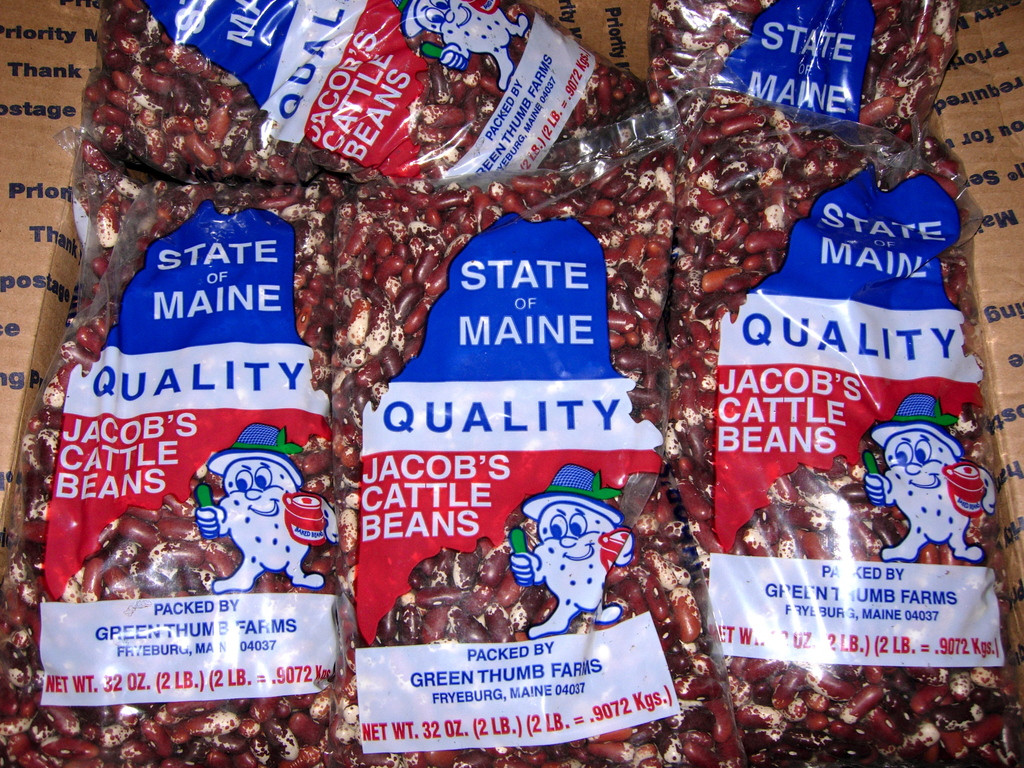
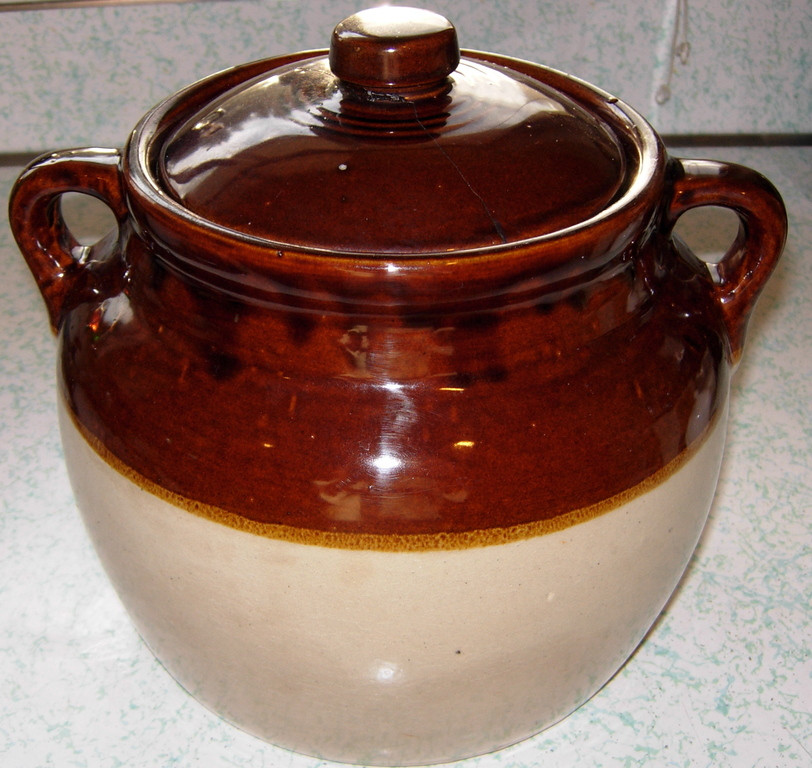
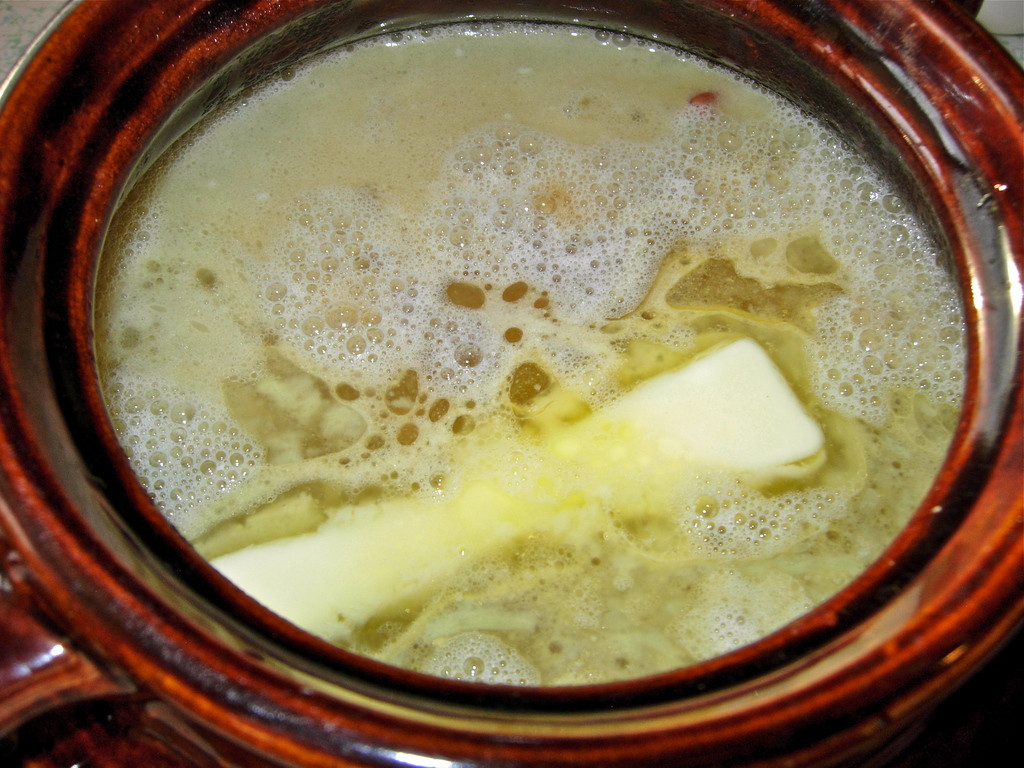
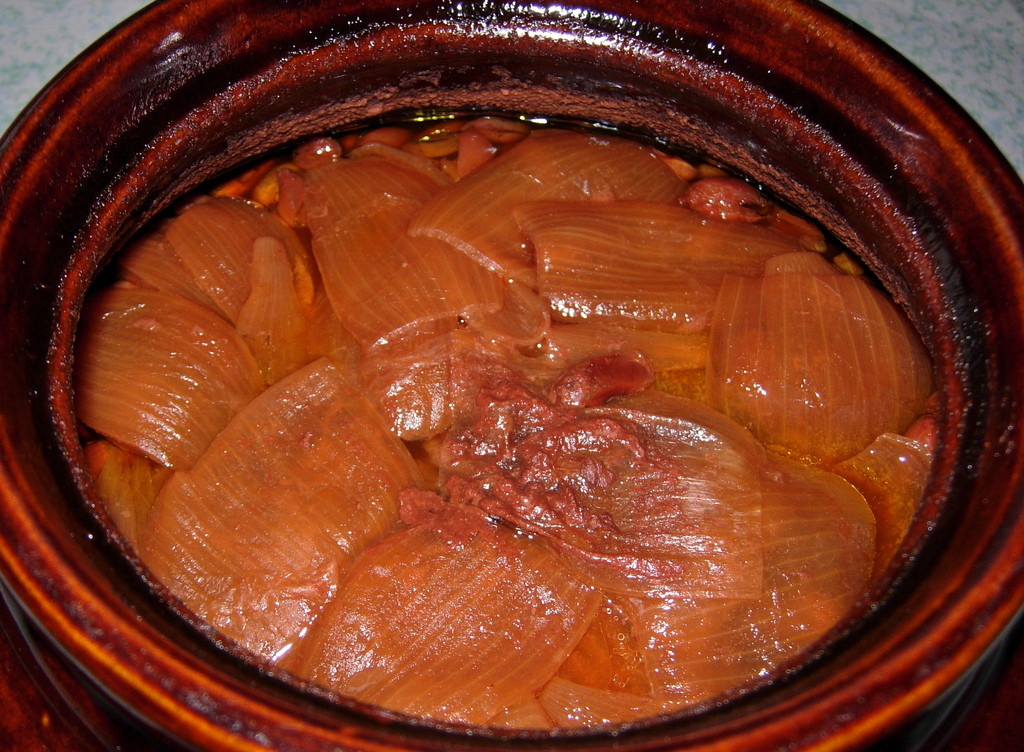
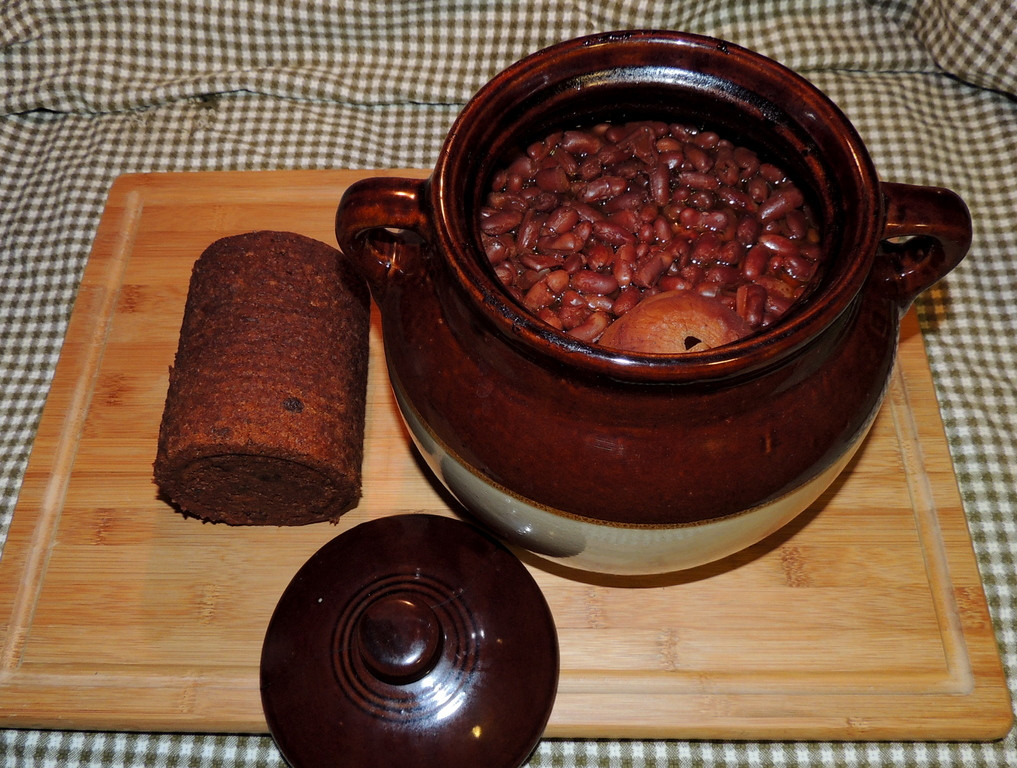
Baked beans and brown bread are a part of me. My entire family hails from the great State of Maine and almost all of them still live there. Mainers don’t leave the state much, or at all, because the rest of the world isn’t Maine. It may as well be another country. My parents moved to Connecticut before I was born in search of work so that is where I was raised but Summers and holidays were all spent in Maine. My roots are there. Baked beans are in my blood. As a boy I participated in apple picking, haying, chicken farming, maple taps and syrup boils and Maine Bean Hole Bean suppers. Dig a pit, build a fire, let it burn to coals, put in the beans, cover them over with hot coals and dirt and come back tomorrow for the finest bean dish in the world. At least to my way of thinking. Saturday night bean suppers are a tradition in Maine. Brown bread has been mostly overshadowed by hotdogs (odd looking neon red dogs found only in Maine as far as I know) but for me brown bread is where its at. Almost every household has a bean pot and everybody knows bean pots make the best beans if you’re not cooking in a hole. It’s narrow neck and wide shoulder minimize evaporation and there’s just something about the ceramic or glazed clay that works magic. A Bit of History Maine Native people today still make a traditional bean and corn dish known as hull corn soup. Corn which has been soaked in ashes and water and had the skin removed is added to yellow-eye beans and sometimes bits of meat. Water is added and the mixture is cooked into a hearty soup. In years gone by, Natives also baked beans with maple syrup and bear fat in ceramic pots in the ground. Englanders adapted their own versions of the corn soup (succotash) and the baked beans. Across New England, and certainly throughout Maine, a tradition of baked bean suppers takes place in community institutions such as churches, granges, and firehouses. The tradition of baked beans for Saturday night supper seems to have originated with the pilgrims, who would cook enough so that they would not have to cook on the Sabbath. The eating of beans extends to Sunday morning as well, and many Mainers speak of eating beans for Sunday morning breakfast. Today, bean suppers are often used as fundraisers. For example, the Caribou Lions Club holds three or four bean-hole bean suppers annually to raise money for their service organization. While Boston is known as bean-town, only in Maine can you ever really get to know beans. B&M (Burnham and Morrill) baked beans of Portland still bakes beans in huge iron pots in brick ovens before they can them for distribution around the country. The Kennebec Bean Company in North Vassalboro packages a range of Maine-grown beans under the “State of Maine” label and also sells many of them prepared to an old Maine lumber camp formula. They cook varieties of beans only known in Maine. There are other, smaller canning companies who can traditional Maine beans as well. - From the http://umaine.edu/folklife/research-and-exhibits/research/foodways-research-a-taste-of-maine/ - History of Bean-hole Beans Many America foods originated in America and were passed on to early settlers by Native Americans. It is difficult to imagine a meal without Native American foods–corn, potatoes, squash, and beans, of course, but also peanuts, pumpkins, pineapple, tomatoes, cocoa, and avocados. These American foods were adopted and transformed by immigrant communities, who added their own traditions, recipes and ingredients to the melting pot. Regional foods developed using available resources. In New England, clam and fish chowders made with milk and baked beans are as ubiquitous as black-eyed peas and fried chicken in the south. The bean was an integral part of the Native American diet. Often called the “poor man’s meat” beans are rich in protein, supplying a third of the essential amino acids to the corn, bean and squash trinity. In the northeast, Boston would not be called “Bean-town” if it weren’t for the beans adopted from the Native American custom of cooking beans and maple syrup with bits of venison or fish and corn. New Englanders replaced the maple syrup with molasses and salt pork replaced other meats, and Boston baked beans became the Saturday night staple for most New Englanders. These might be served with brown bread (a steamed bread made with wheat flour, molasses and sometimes raisins), biscuits or corn bread. Later, hot dogs or frankfurters were added. Beans could cook all day Saturday and be eaten Saturday night, then simply reheated on Sunday so as to allow Sabbath day rest for the cooks. Many Mainers talk about eating beans for Sunday breakfast, or making sandwiches of cold beans on Sunday. Beans baked in cast iron pots buried in the ground became a lumber camp specialty and remain popular in Maine to this day, particularly for public suppers and other special events. The variety of beans used in bean-hole beans are usually heirloom Colonial types such as Yellow Eye, Jacob’s Cattle and Soldier beans. These are large beans (about 1/2 inch long when dry). Lumber Camp Menu Foods high in calories and other fats, like pies and doughnuts, and high in proteins, like meats and beans, were needed to feed the hungry hard-working men in the Maine lumber-woods camps. The food was usually good, the men agreed, and there was plenty of it. “Fresh beef and all kinds of roast beef and potatoes. And beans, always had beans on the table every meal. And they had molasses gingerbread and sugar cake. . . .Always had bowls of applesauce or prunes. . . .Plenty of beef and potatoes and brown gravy. And on Fridays they had fish, cod or haddock. . . .Then they had pea soup and pie—mince pie, apple pie. . . .[Sunday] we always had a big meal–meat, beef, most generally and onions. . . .And clam chowder. They’d have a clam chowder, and probably beans.” [Ernest Kennedy, quoted in "Argyle Boom," Northeast Folklore 17 (1976); 120] Songs were made about lumber-camp food. Larry Gorman, a Prince Edward Islander who came to Maine to work in the woods and later lived in Brewer, Maine. He made up songs about many things, including the lumber-woods work. One song, “The Good Old State of Maine” has two stanzas about lumber camp food: Now for the grub, I’ll give it a rub, and that it does deserve, [Edward D. Ives, Larry Gorman: The Man Who Made The Songs (Fredericton, New Brunswick: Goose Lane Editions, 1964, 1977, 1993), 105 From http://umaine.edu/folklife/research-and-exhibits/exhibits/bean-hole-beans/history-of-bean-hole-beans/ - The big three for baked beans in Maine are all heirlooms. Soldier, Yellow Eye and Jacob’s Cattle. Me? I’m a Jacob’s Cattle guy. A good friend of mine shipped a case of these beauties last week. I now have 24 beautiful pounds of these lovelies that should last me for the better part of a year. https://imageshack.com/i/pmYdO3duj">
|
Replies:
Posted By: MarkR
Date Posted: 15 September 2013 at 12:27
|
Now that is just plain cool! Thank You! Now I just gotta order some beans. ------------- Mark R |
Posted By: Rod Franklin
Date Posted: 15 September 2013 at 16:26
"In the beginning, there were beans..."
------------- Hungry |
Posted By: TasunkaWitko
Date Posted: 15 September 2013 at 19:56
|
Completely outstanding, Gman. This is truly a "signature post" for this forum! Thank you for sharing, and also for the inspiration for a wonderful meal sometime this fall or winter! ------------- If you are a visitor and like what you see, please http://foodsoftheworld.activeboards.net/registration_rules.asp?FID=0" rel="nofollow - click here and join the discussions in our community! |
Posted By: HistoricFoodie
Date Posted: 16 September 2013 at 00:09
|
Really great write-up, Gracoman. Been years since I attended a bean-pot dinner, and you reminded me how much fun they are. A note on the beans. Yellow-Eye, which are all but unknown outside of New England, deserve to be more popular. A delicious, meaty bean. Soldier's are more well known, but never achieved the national popularity of the Jacob's Cattle. This may be because there are so many beans similar to the JCs, such as the Anasazi, that people were already familiar with, and more accepting of, that color and pattern? Soldier beans are named because the pattern surrounding the eye is said to look like an old-time European soldier (the kind tin soldiers were modeled on). There is also a Southern Soldier bean; the only difference being the color of the image. Graham flour is, unfortunately, not that easy to find in much of the country. But some really good brown bread can be made using whole wheat and rye flours. I can post a recipe if anyone is interested. |
Posted By: HistoricFoodie
Date Posted: 16 September 2013 at 00:24
|
I thought I had posted a recipe for Boston Brown Bread in the past, but it didn't show up when I did a search. But on a whim I refined the search parameters, and there it was---part of the multi-part bread making primer I'd written. For those looking for an alternate recipe, go to http://www.foodsoftheworld.activeboards.net/the-staff-of-life-a-primer-on-baking-bread_topic3089_page3.html?KW=Boston+Brown+Bread" rel="nofollow - http://www.foodsoftheworld.activeboards.net/the-staff-of-life-a-primer-on-baking-bread_topic3089_page3.html?KW=Boston+Brown+Bread
|
Posted By: gracoman
Date Posted: 16 September 2013 at 08:02
|
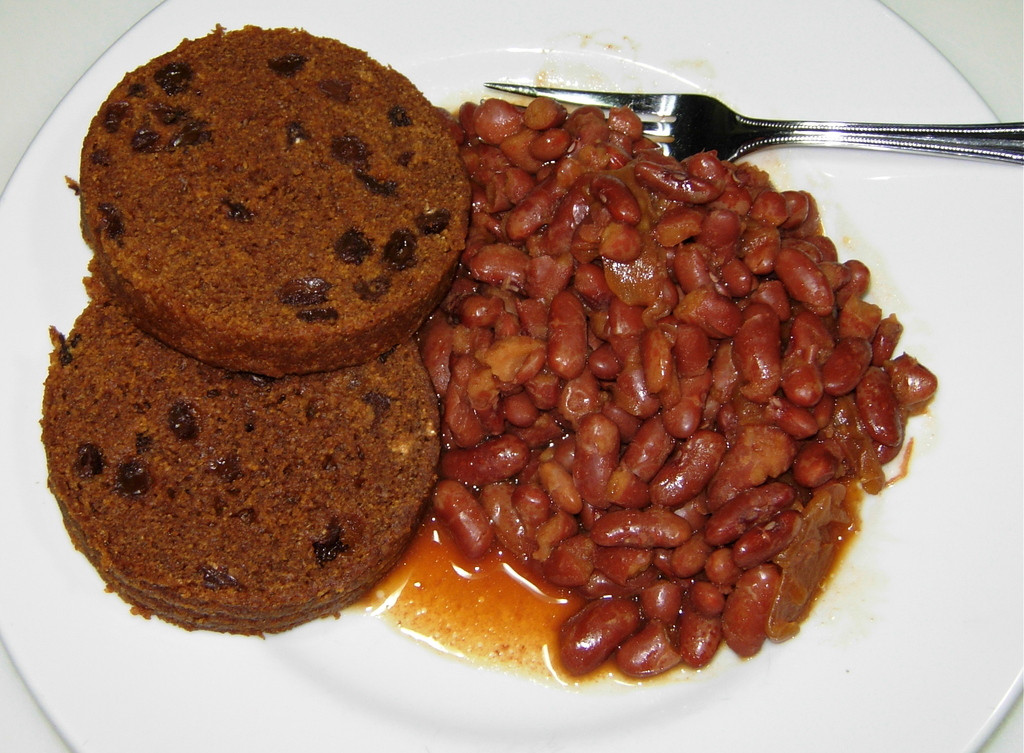
A few additional points on this topic. Upon re-reading my post I noticed my recipe for Maine Baked Beans includes a step only I use, and I use it only because I am cooking at altitude. That step is the overnight soak. Folks I know in Maine never soak their beans first. It simply is not required. "Soak the beans? Oh, I don't botha with that." Cooking beans at altitude is a different animal. Not only do I need to presoak the beans, I'm cooking them for 10 -12 hours as opposed to the 5-6 required at sea level for to get them where they need to be. I do cook them on occasion in a crock pot when I can't be around to monitor the water level but they are not quite the same. Some of the magic is gone. Baked beans the next morning http://s1293.photobucket.com/user/gracoman/media/Nextdaybeans_zps6fa2c2f5.jpg.html">  I purposly photographed these beans cold, directly out of the fridge, because they are frequently eaten that way in Maine. Cold bean and hot bean sandwiches are a norm. You can see from the photo how they have changed from what they were fresh out of the pot. The beans and gravy are now a more homogeneous color and the texture has softened a bit which brings us to the subject of texture which I somehow neglected to mention earlier. Home beans baked have a firmness, a bite, that is nonexistent in the canned distortions you find on your supermarket shelves. The brand coming closest to this is B&M. A note on commercially produced and canned baked beans Baked beans can be placed into 3 categories. Home baked, canned and B&M. B&M, while good, do not approach home baked in texture or taste but they are good enough to be in a category all their own. The brand I like the least is , oddly enough, the brand most favored by home "bbq experts" and self proclaimed "grill masters" who think of their bbq'd beans as extraordinary. The dreaded Bush Beaners. One can simply NOT produce a good product by starting out with inferior ingredients. Truly great bbq beans must be baked "from scratch" starting with a flavorful, textured, dried bean and correct sauce ingredients, not with mushy, sugary, tomatoey Bush abominations  If you want tomatoey beans, bake Fagioli Al Uccelletto (Tuscan Baked Beans) with dried Cannellini beans with sage, olive oil and tomatoes. But that, my friends, is a different post. |
Posted By: MarkR
Date Posted: 16 September 2013 at 12:55
|
Gman, you're holding back on us, How do you really feel about Bush's beans? ------------- Mark R |
Posted By: gracoman
Date Posted: 17 September 2013 at 10:17
|
The same thing can be said about a beautiful bowl of slow simmered home made brisket chili made with actual chili's and a bowl of canned Hormel evil chili nonsense which is not fit for man nor beast
|
Posted By: MarkR
Date Posted: 17 September 2013 at 11:21
Bush's Beans....maybe if I don't have a choice. Canned chile, no no no - not gonna happen! Yuck! ------------- Mark R |
 gracoman wrote:
Posted By: africanmeat
Date Posted: 17 September 2013 at 11:43
i will echo Mark worlds  ------------- Ahron |
Posted By: Boilermaker
Date Posted: 28 September 2013 at 14:46
|
Gracoman, Outstanding post. I am going to give your recipe try. I have a wonderful bean pot that we bought from a potter in Seagrove, North Carolina many years ago that will be perfect for the beans. We cannot get Jacob’s Cattle, Soldier or Yellow Eye dried beans here in the South. Can you suggest a substitute from among the more commonly available beans that will work? Many thanks, Andy |
Posted By: gracoman
Date Posted: 28 September 2013 at 15:28
|
Jacob's Cattle, Soldier and Yellow Eye can all be ordered online but common beans that will work include dried Navy, Pea or even Cranberry beans. No need to soak at sea level. Just rinse them off and pick them over looking for small stones, bad beans or whatever else may have found their way into the bag. Cut the recipe in half if you like and use 1 lb of beans instead of 2. It really depends upon the size of your bean pot. Make sure your bean pot is functional and not decorative. Check the inside of the pot for glaze.
|
Posted By: gracoman
Date Posted: 21 January 2020 at 14:52
|
The following information, diagram included, was borrowed from the book “The Complete Book of Dutch Oven Cooking” by J. Wayne Fears HOW TO BUILD A PERMANENT BEAN HOLE “Take a clean 55-gallon drum and cut it in half. Save the lid and discard the upper half. In a safe area, outside your cabin or camp, dig a hole a little deeper and wider than the half drum. Line the bottom and sides of the hole with firebricks. Next, drill several small holes in the bottom of the drum to allow water to drain, in the event water should ever get inside. Place about three inches of sand in the bottom of the drum to prevent it from burning out. Put the drum in the firebrick-lined hole and fill in the spaces between the bricks, and between the bricks and drum, with sand. Place the lid on top of the drum and you have a permanent bean hole. https://imageshack.com/i/pnuxx1dkp"> 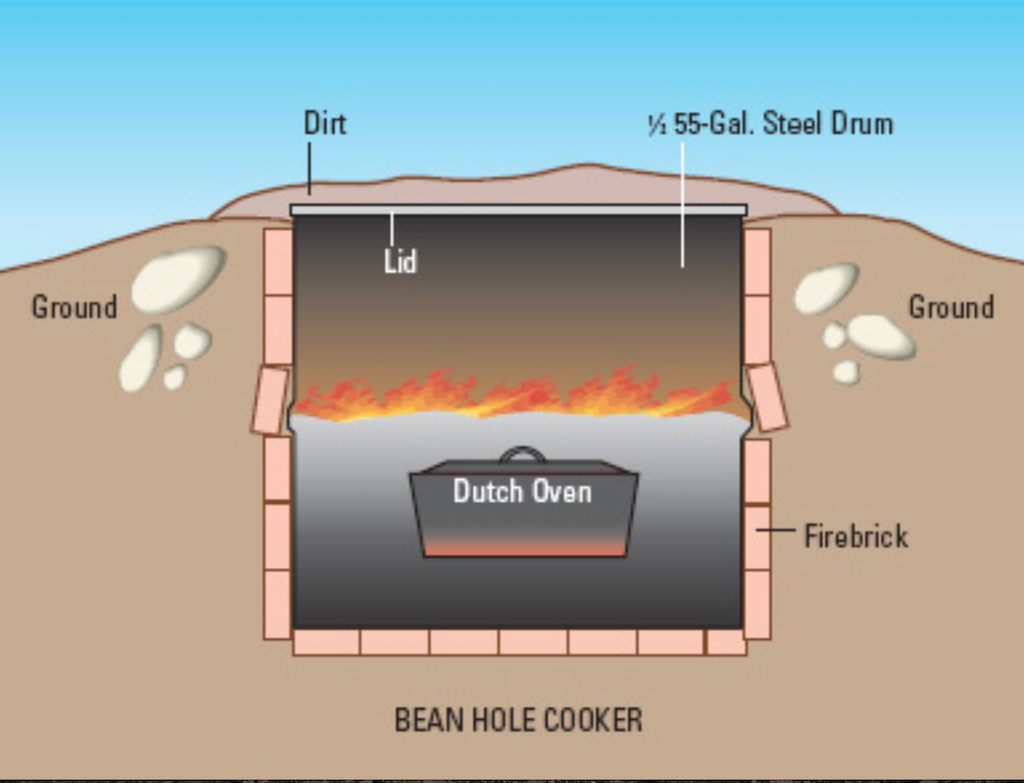 When you want to bake a pot of beans or any other dish, simply build a fire in the bean hole, and when a hot bed of coals is ready, take a shovel and remove half of them from the bean hole. Next, place a cast iron Dutch oven filled with beans into the bed of coals in the bean hole, and put a couple of shovelfuls of hot coals on top of the Dutch oven. Put the cover on top of the drum and cover with dirt or sand. This will keep the temperature even for a long period of time. Go hiking or fishing for the day and return to a hot meal. As with most methods of cooking, it will take a few trials to get the method perfected, but it is fun and, once it is worked out, will become a favorite method of baking in your camp.” Now that you have dug your permanent bean hole, http://www.youtube.com/watch?v=nAbzuN6kbdw - here's how to use it. |