Chokecherry Syrup
Printed From: Foods of the World Forum
Category: The US and Canada
Forum Name: The Midwest and Great Plains
Forum Discription: From the Land of 10,000 lakes to America's Breadbasket and from Beef Country to the Rocky Mountains
URL: http://foodsoftheworld.ActiveBoards.net/forum_posts.asp?TID=4193
Printed Date: 26 March 2026 at 20:33
Topic: Chokecherry Syrup
Posted By: TasunkaWitko
Subject: Chokecherry Syrup
Date Posted: 29 August 2014 at 16:06
|
Chokecherry Syrup
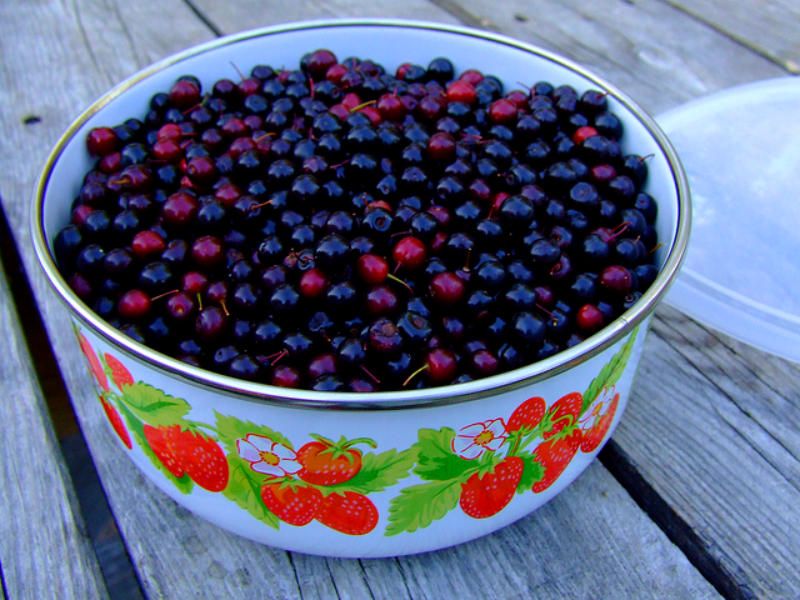
Late summer marks the return of a northern treasure - the chokecherry.
Photo Credit: https://c1.staticflickr.com/5/4107/4974600717_a5978af034_z.jpg - https://c1.staticflickr.com/5/4107/4974600717_a5978af034_z.jpg
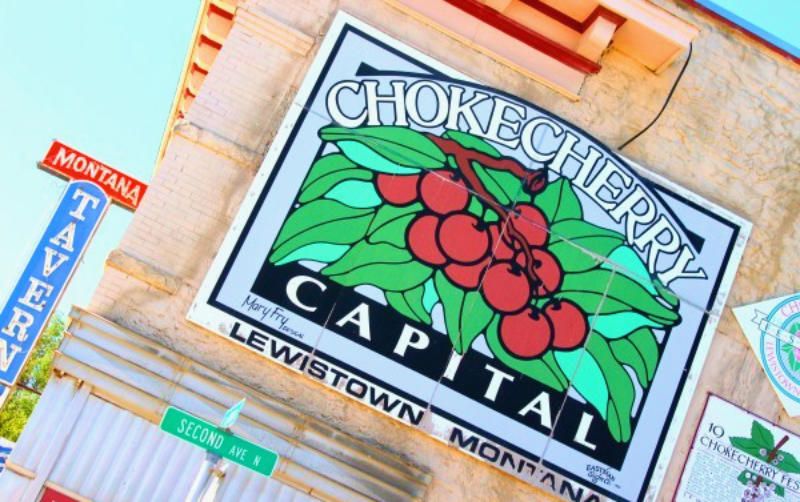
I love chokecherries, and have loved them for as long as I can remember. In fact, When I lived for a few years in Lewistown, Montana, one of my favourite times of the year was the Chokecherry Festival, held in early September.
Photo Credit: http://www.anauthenticlife.com/wp-content/uploads/2012/09/IMG_6899.jpg - http://www.anauthenticlife.com/wp-content/uploads/2012/09/IMG_6899.jpg
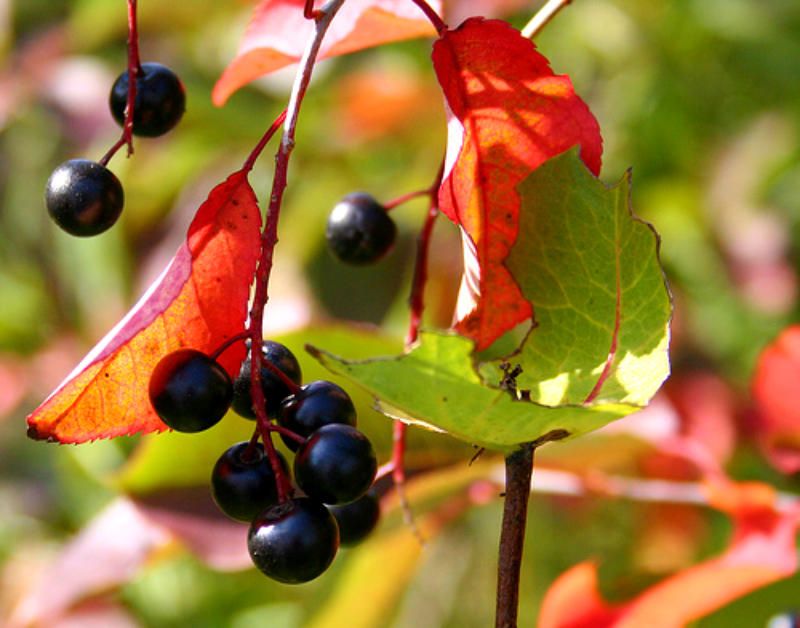
Those of you not living in the northern United States or southern Canada are probably asking, what is a chokecherry? Well, it’s hard to describe, even though I’ve lived with them all my life. The are small, dark-purple, berry-like fruits growing in clusters on bushes that can be found just about anywhere in the northern USA, east of the Rocky Mountains - or in southern Canada. Along roadsides, in meadows or even in back yards, these hardy shrubs are easily recognised by their white blossoms in the spring, and their locations are carefully marked against the day that the cherries ripen later in the year.
Photo Credit: https://www.flickr.com/photos/86953562@N00/237179619/sizes/m/in/photostream/ - https://www.flickr.com/photos/86953562@N00/237179619/sizes/m/in/photostream/
They are quite astringent when eaten fresh, but the addition of some sugar sugar (or other sweetener) transforms them into something wonderful and unique - a truly special treat that has everyone - from old grandmothers to twenty-something bachelors - buying canning jars in order to preserve chokecherries in almost any form imaginable: syrup, jam, jelly, wine...even mead.
Wikipedia provides a more scientific description:
------------- If you are a visitor and like what you see, please http://foodsoftheworld.activeboards.net/registration_rules.asp?FID=0" rel="nofollow - click here and join the discussions in our community! |
 Prunus virginiana, commonly called bitter-berry, chokecherry, Virginia bird cherry and western chokecherry (also black chokecherry for P. virginiana var. demissa), is a species of bird cherry (Prunus subgenus Padus) native to North America; the natural historic range of P. virginiana includes most of the continent, except for the far north and far south.
Chokecherry is a suckering shrub or small tree growing to 16 feet tall. The leaves are oval, 1.25–4 in. long, with a coarsely serrated margin. The flowers are produced in racemes of 15-30 in late spring (well after leaf emergence). The fruit are about [4/10 of an inch in] diameter, range in color from bright red to black, with a very astringent taste, being both somewhat sour and somewhat bitter. The very ripe berries are dark in color and less astringent and more sweet than the red berries…. Chokecherries are very high in antioxidant pigment compounds, such as anthocyanins….
For many Native American tribes of the Northern Rockies, Northern Plains, and boreal forest region of Canada and the United States, chokecherries were the most important fruit in their diets. The bark of chokecherry root was once made into an asperous-textured concoction used to ward off or treat colds, fever and stomach maladies by native Americans The inner bark of the chokecherry, as well as red osier dogwood, or alder, was also used by natives in their smoking mixtures, known as kinnikinnick, to improve the taste of the bearberry leaf. The chokecherry fruit can be used to make a jam, jelly, or syrup, but the bitter nature of the fruit requires sugar to sweeten the preserves….
Chokecherry is also used to craft wine in the western United States mainly in the Dakotas and Utah as well as in Manitoba, Canada.
http://en.wikipedia.org/wiki/Prunus_virginiana - http://en.wikipedia.org/wiki/Prunus_virginiana
Prunus virginiana, commonly called bitter-berry, chokecherry, Virginia bird cherry and western chokecherry (also black chokecherry for P. virginiana var. demissa), is a species of bird cherry (Prunus subgenus Padus) native to North America; the natural historic range of P. virginiana includes most of the continent, except for the far north and far south.
Chokecherry is a suckering shrub or small tree growing to 16 feet tall. The leaves are oval, 1.25–4 in. long, with a coarsely serrated margin. The flowers are produced in racemes of 15-30 in late spring (well after leaf emergence). The fruit are about [4/10 of an inch in] diameter, range in color from bright red to black, with a very astringent taste, being both somewhat sour and somewhat bitter. The very ripe berries are dark in color and less astringent and more sweet than the red berries…. Chokecherries are very high in antioxidant pigment compounds, such as anthocyanins….
For many Native American tribes of the Northern Rockies, Northern Plains, and boreal forest region of Canada and the United States, chokecherries were the most important fruit in their diets. The bark of chokecherry root was once made into an asperous-textured concoction used to ward off or treat colds, fever and stomach maladies by native Americans The inner bark of the chokecherry, as well as red osier dogwood, or alder, was also used by natives in their smoking mixtures, known as kinnikinnick, to improve the taste of the bearberry leaf. The chokecherry fruit can be used to make a jam, jelly, or syrup, but the bitter nature of the fruit requires sugar to sweeten the preserves….
Chokecherry is also used to craft wine in the western United States mainly in the Dakotas and Utah as well as in Manitoba, Canada.
http://en.wikipedia.org/wiki/Prunus_virginiana - http://en.wikipedia.org/wiki/Prunus_virginiana 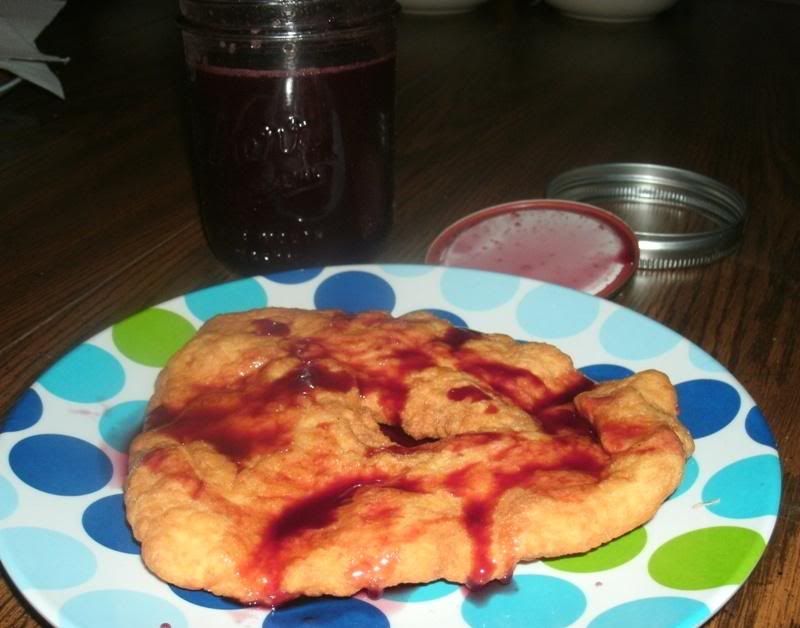 http://foodsoftheworld.activeboards.net/native-american-frybread_topic2472.html - http://foodsoftheworld.activeboards.net/native-american-frybread_topic2472.html
While going through some old clippings and recipes, I found instructions for making chokecherry syrup written by my father - who was born and raised in Killdeer, North Dakota; this recipe came from his mother - my grandmother - and lays out the procedure pretty well:
http://foodsoftheworld.activeboards.net/native-american-frybread_topic2472.html - http://foodsoftheworld.activeboards.net/native-american-frybread_topic2472.html
While going through some old clippings and recipes, I found instructions for making chokecherry syrup written by my father - who was born and raised in Killdeer, North Dakota; this recipe came from his mother - my grandmother - and lays out the procedure pretty well:
Replies:
Posted By: AK1
Date Posted: 30 August 2014 at 19:53
| You have my interest piqued. I don't think I've ever seen choke cherries here. Prunus Virginiana sounds familiar though, so I may have seen them but not known what they were. |
Posted By: TasunkaWitko
Date Posted: 01 September 2014 at 13:22
Darko - this is indeed good stuff. The photo above is pretty much what they look like; I am guessing they should be in your area? My youngest son and I picked a bunch of chokecherries on Saturday when we went to do some driving around and hiking in the mountains; I didn't have a camera, but they looked just like the un-picked ones pictured above, right down to the colours of the leaves. We picked about 12 cups altogether, which are currently in the freezer in a gallon-sized ziplock bag with all the air squeezed out. I think this should be enough to make at least 12 half-pints of syrup (if anyone knows or suspects otherwise, please let me know), so I will see about doing that this week. If we need more, I'll wait until I can pick some more somwtime in the next few days. ------------- If you are a visitor and like what you see, please http://foodsoftheworld.activeboards.net/registration_rules.asp?FID=0" rel="nofollow - click here and join the discussions in our community! |
Posted By: TasunkaWitko
Date Posted: 05 September 2014 at 20:36
|
Kasharahmdungis Chokecherries & Cream 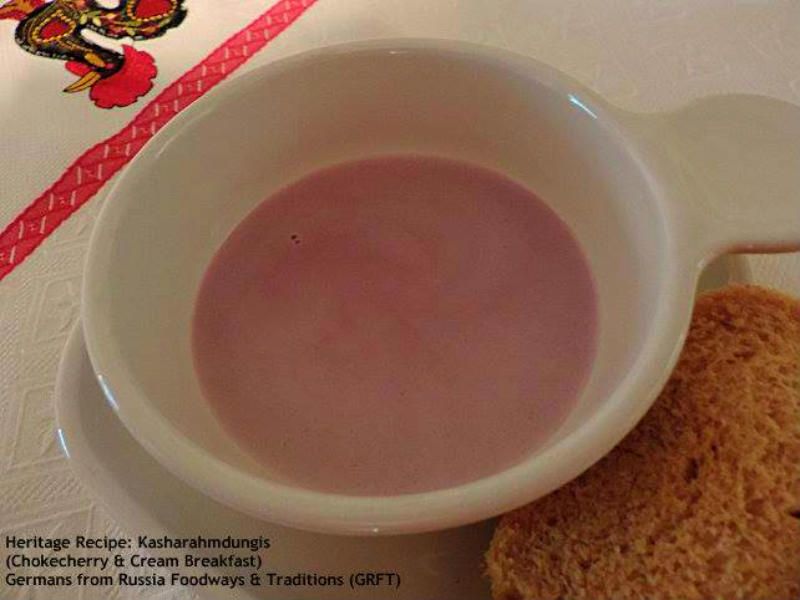 Photo Credit: Germans from Russia Foodways and Traditions Facebook Page
------------- If you are a visitor and like what you see, please http://foodsoftheworld.activeboards.net/registration_rules.asp?FID=0" rel="nofollow - click here and join the discussions in our community! |
Posted By: TasunkaWitko
Date Posted: 06 September 2015 at 18:37
|
my youngest son and I gathered up a bunch of chokecherries yesterday, while out in the mountains. We notices a couple of helpful things, and I'll relate them here: The chokecherries - at least in our latitude - seem to be "best" right around now, the first full weekend in September. Of course, I am sure that this varies by a week or so on either side. The bigger, plumper, darker ones seem to be slightly more sweet and slightly less astringent, although I am not sure how much this matters once they are boiled off for juice, syrup or jelly, especially with sugar added. When fully ripe and ready to pick, they are easier to squeeze between the thumb and forefinger, and the pulp covering the stone (which will pop out when squeezed) will be lighter in colour. When not-quite ready, they will be harder to squeeze, with the pulp and stone being more reddish. Finally, we noticed that the "best" chokecherries seemed to come from bushes where the leaves had turned (or had begun to turn) reddish. Even with chokecherries in the same immediate area, with bushes right next to each other, this difference was apparent. The ones from bushes with leaves that were still green tasted just fine, but the ones from bushes with reddish leaves were indeed "better." Again, I am not sure how much this matters, as long as the chokecherries are close to being ready; however, if one is seeking the "best" chokecherries, these guidelines can be helpful. As for the chokecherries that we picked yesterday, a small portion will go into a "chokecherry wheat" beer that I will be brewing, hopefully within the week. Another portion will be used to make a gallon of chokecherry wine, and the rest will become chokecherry syrup, which I find to be very versatile - moreso than jelly - with many applications. More as it happens, etc. & c.... ------------- If you are a visitor and like what you see, please http://foodsoftheworld.activeboards.net/registration_rules.asp?FID=0" rel="nofollow - click here and join the discussions in our community! |
Posted By: drinks
Date Posted: 06 September 2015 at 20:47
|
In this area we have black cherries, Prunus serotina. Depending on the tree, the fruit vary from nicely sweet to very sour. I have made some very nice jelly with them The trees get up to 100 ' in the woods and 50x50 ' or more when in the open. I saw one trunk that made 6 tie cuts, a tie cut is 9' long and 12" at the small end. |
Posted By: TasunkaWitko
Date Posted: 07 September 2015 at 15:47
|
Those definitely sound closely-related to our chokecherries, Don; except our chokecherries are shrubs, rather than actual trees. I imagine the uses are very similar. Alrighty - for future reference, after setting aside the required chokecherries for my beer (1 generous cup) and my wine (3 pounds), I had exactly 6.5 pounds of chokecherries left for syrup. Being as careful as I could be with the process, I ended up with 5 pints, 1 half-pint and 1 quarter-pint (luckily, I had one such jar on-hand to use) of syrup, all of which are being processed now, as per the recipe above. There was just enough left over to sample a taste, and I must say that it turned out very well! We may or may not make more chokecherry syrup this year, depending on how things go, but we will, at least, have some to get us through the winter.
------------- If you are a visitor and like what you see, please http://foodsoftheworld.activeboards.net/registration_rules.asp?FID=0" rel="nofollow - click here and join the discussions in our community! |