Msir (Moroccan Salted, Dried Lemons)
Printed From: Foods of the World Forum
Category: Africa
Forum Name: North Africa
Forum Discription: Where Mediterranean and Arabic cuisines were married.
URL: http://foodsoftheworld.ActiveBoards.net/forum_posts.asp?TID=479
Printed Date: 26 March 2026 at 20:33
Topic: Msir (Moroccan Salted, Dried Lemons)
Posted By: TasunkaWitko
Subject: Msir (Moroccan Salted, Dried Lemons)
Date Posted: 24 April 2012 at 11:57
|
Msir
Moroccan Salted, Dried Lemons
From Time/Life's Foods of the World - a Quintet of Cuisines, 1970:
ok, here we go ~ this one is so easy, it really doesn't need much elaboration.
note: these moroccan dried lemons are different than preserved or pickled lemons, which are kept in a liquid for the duration of the process and storage. for an outstanding pictorial on those, http://foodsoftheworld.activeboards.net/forum_posts.asp?TID=438&title=preserved-lemonsa-tutorial" rel="nofollow - click here . also, keep in mind that this is at least a two-week process, so plan your menu accordingly, if you want to use these for a specific dish or occasion.
for this pictorial, i used 4 good-sized lemons, which were just the right amount for a single quart-sized canning jar:
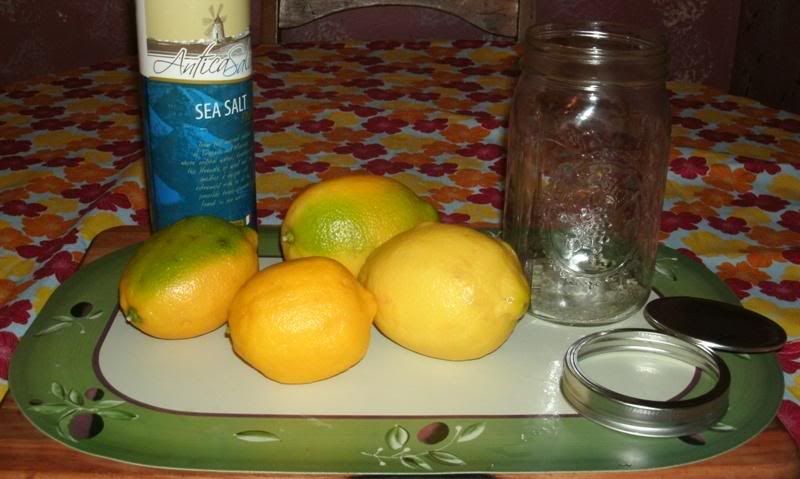 i'd recommend a wide-mouthed canning jar, to make it easy when inserting (and also retrieving) the lemons).
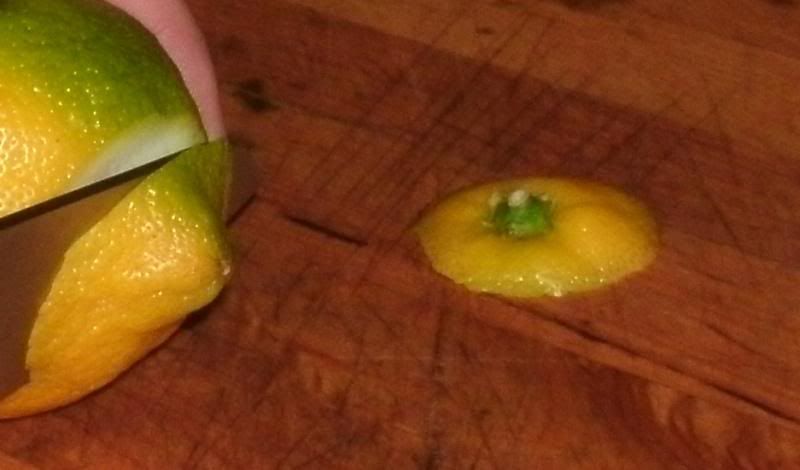
the first step was to cut off the ends - easy enough:
 next, i decided to go ahead and start out by cutting the lemons as described in the recipe:
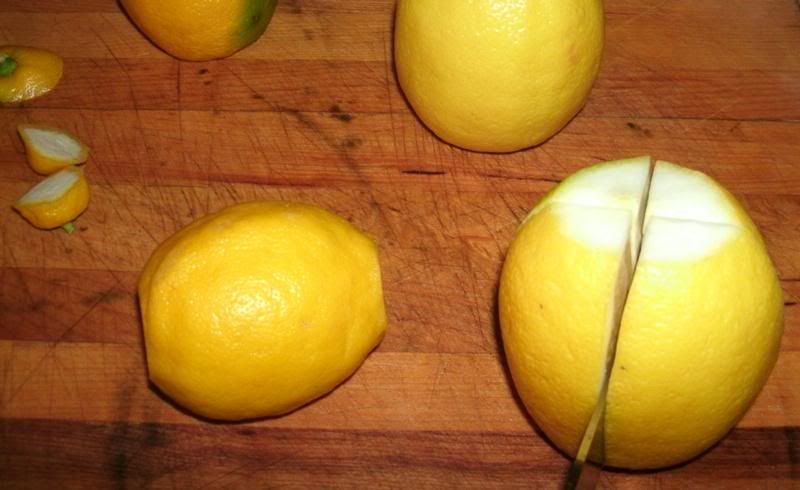 i was careful not to cut all the way through, just enough so that the wedges are connected at the bottom and can be opened up like a flower. this is a traditional way to do it, and makes good enough sense, so i did it that way; however a person could probably just as easily cut them all the way through into wedges, as well.
next, i opened up the "petals" and carefully applied the salt to the flowered lemons:
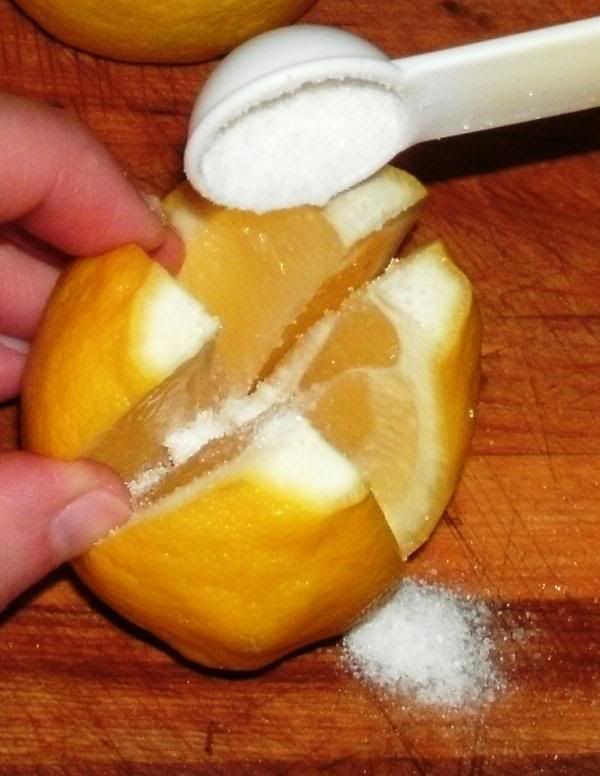 for this project, i used sea salt, since that is what most likely would have been used historically; having said that, any non-iodized salt would be fine. as you can see, there was a bit of a learning curve; but with my youngest son helping, we eventually got pretty good at it:
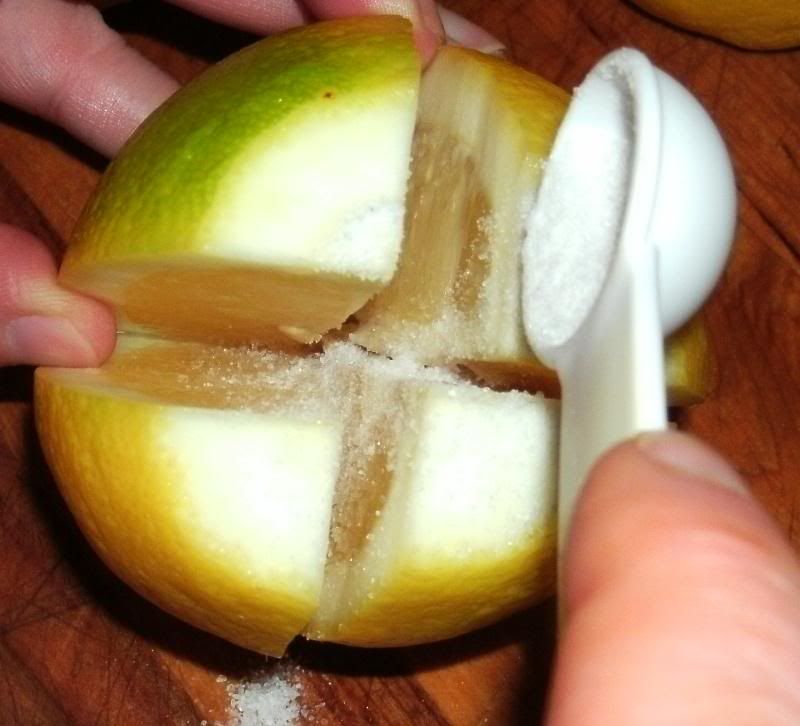 NOTE - we used a little more salt that the recipe called for - probably 1 teaspoon per lemon; this may or may not have been necessary, but i figured it probably wouldn't hurt, since the majority of the salt will be removed along with the juice, as per the instructions.
as soon as the salt is applied, it starts pulling the juice out of the lemons, so we closed up the "lemon flowers" and proceeded to the next step. some of the lemons were pretty big, so it was a chore to get them into the jar:
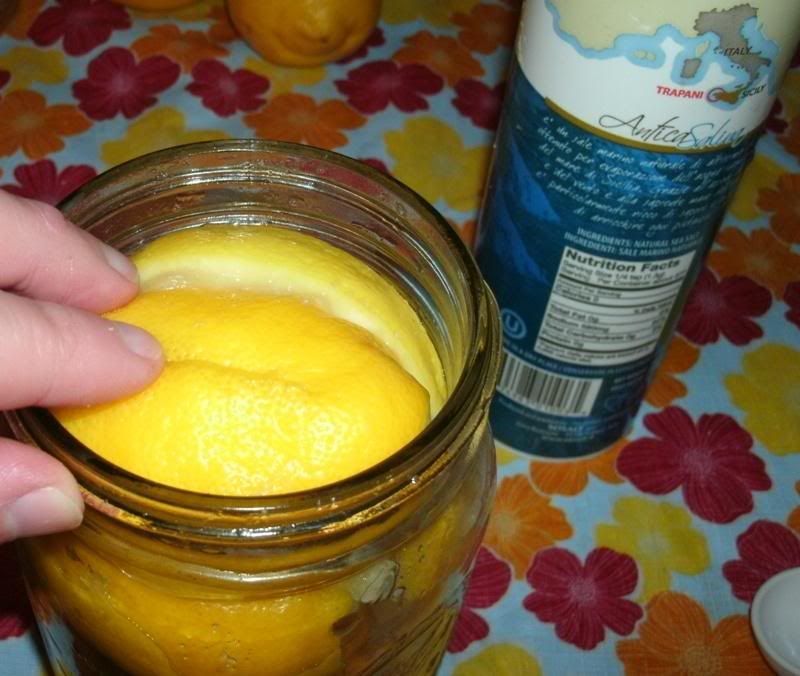 we also gathered up any spilled salt to add to the jar, to make sure there was enough to do the job.
because of the shape and size of the lemons, we actually ended up cutting one "lemon flower" all the way through, inserting the wedges into the odd spaces here and there throughout the jar - no worries. as you can see, the juice started to flow immediately:
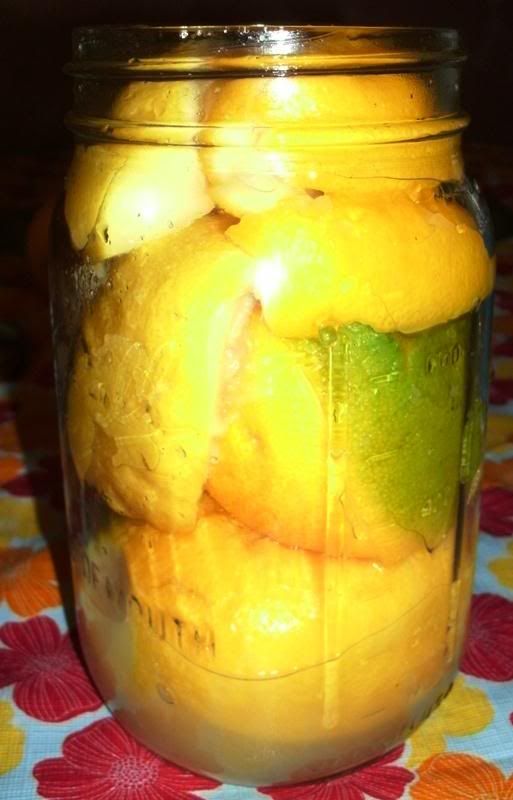 in the quintet of cuisines book, the recipe did not call for any added liquid, so i followed that method. by this process, the lemons will dry themselves out, to a certain point, over the passage of time. the recipe specifies discarding any juices after two weeks, and i am assuming also as it accumulates during subsequent storage.
one thing i would recommend (which i neglected to do here) is to put a piece of saran wrap between the lid of the jar and the jar, as the salt and lemon juice does corrode metal lids somewhat.
we then put the lemons up at room temperature, where they will remain for two weeks:
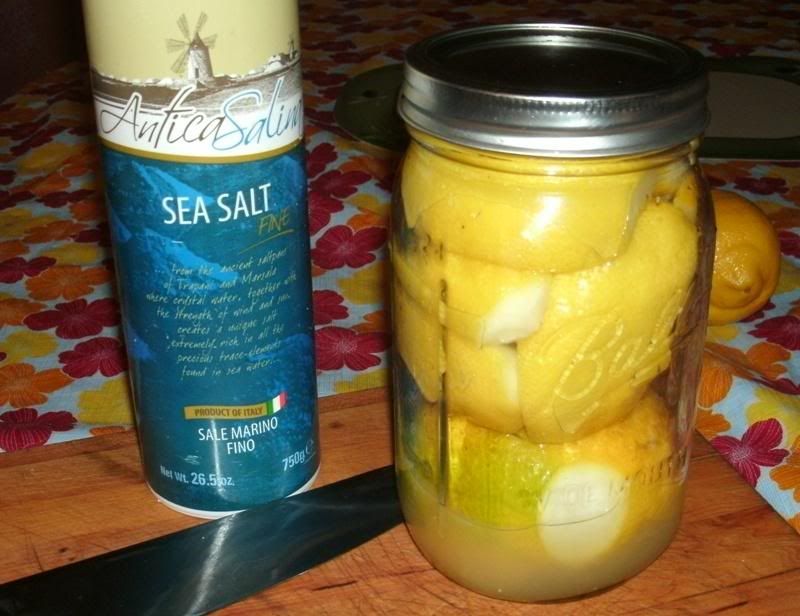 i've been inverting the jar each day, so that the juice and salt rotate throughout the entire jar. i've also been cracking open the jar lid periodically to allow the escape of any gasses and prevent them from bulging the lid too much. it's been a little over a week, and the juice is almost halfway up the jar.
Two weeks is a good minimum time for allowing your msir to formulate, but they will keep for a very, very long time - refrigerated or not, due to the high acid and salt content - until you are ready to prepare a dish such as http://foodsoftheworld.activeboards.net/tajine-msir-zitun_topic2566.html" rel="nofollow - tajine msir zitum and http://foodsoftheworld.activeboards.net/forum_posts.asp?TID=669&title=el-lahm-el-mqali" rel="nofollow - el lahm el m'qali . Here they are, ready to use, on the left:
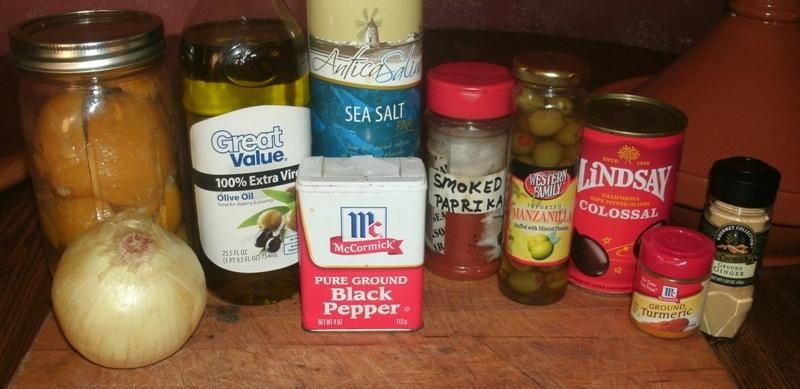 A dish such as tajine can be made without them, but I will say that these are, in my opinion, essential if one really wants to experience it, and there is no reason to go without them, especially since they are so easy to make. Anyway, here is how to prepare the msir so that they will be ready to be used. Take as many lemons or lemon quarters as the recipe requires; if they are not already separated, go ahead and do so. Next, run a good, sharp, thin-bladed knife such as a fillet knife between the pulp and the peel, thusly:
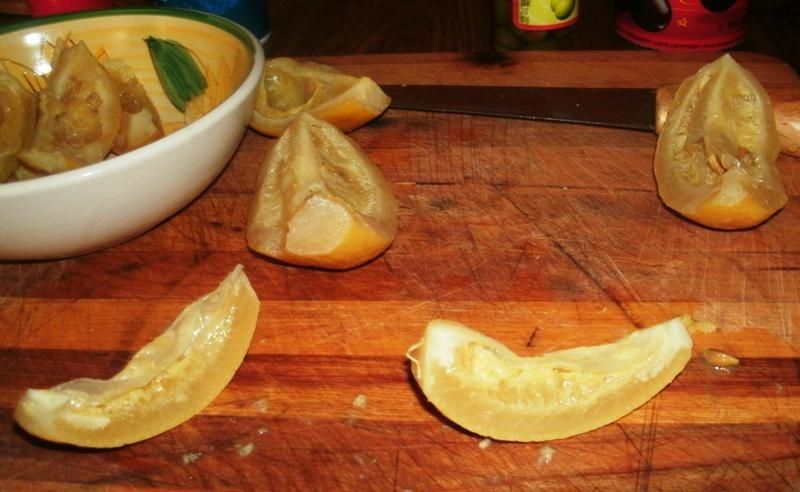
This will leave you with a segment that is composed primarily of peel:
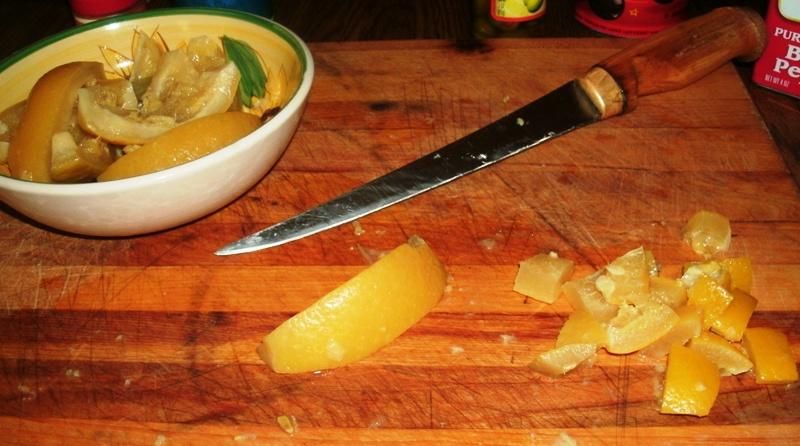
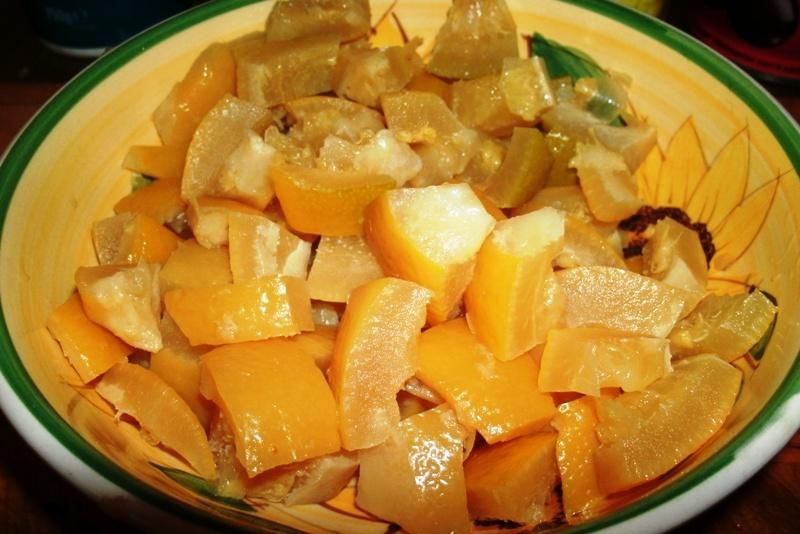
Then, simply dice the segments into small pieces:
Leaving you with this:
This dicing step is not mentioned in all recipes; however, for me, it makes intuitive sense to do so. One can leave the quarters whole, or cut them up for even distribution, as preference or whim dictates. I tried one of the pieces and was amazed at the truly unique flavour that it had. It was had a fresh, acidic, intensely-lemony taste, with a slightly salty accent and just a suggestion of bitterness from the peel to balance everything out. Impressive, to be sure; as I said above, it really transports you to the Maghreb, and even though you can use fresh, "unpreserved" lemons, I strongly believe that your tajine experience is somewhat incomplete with msir. ------------- If you are a visitor and like what you see, please http://foodsoftheworld.activeboards.net/registration_rules.asp?FID=0" rel="nofollow - click here and join the discussions in our community! |
 To make 4 preserved lemons: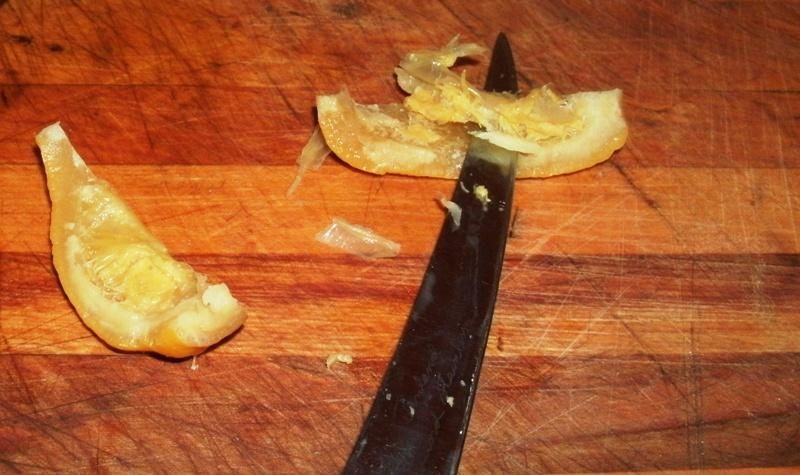
Replies:
Posted By: Margi Cintrano
Date Posted: 25 April 2012 at 11:27
|
I would love to try this out ... Considering, I do not live too far from Tangier, perhaps I can get over to the Moroccan Market here in Madrid, and enquire, how I can get some Moroccan Lemons !!!
I am off next week May 1st - 5th for Labor Day --- I´ll have some free time to think !
Kindest.
Margi. ------------- Volamos a Mediterraneo, un paraiso que conquista su gente u su cocina. |
Posted By: TasunkaWitko
Date Posted: 24 July 2012 at 09:23
|
Definitey worth a try, especially since they are so easy ~ my own msir have been patiently waiting in the refrigerator (i just can't bring myself to leave them at room temperature), so i do believe i'm ready to give them a try in a dish. i'm looking at making http://foodsoftheworld.activeboards.net/tajine-msir-zitun_topic2566.html" rel="nofollow - Tajine Msir Zitun - wish me luck!
------------- If you are a visitor and like what you see, please http://foodsoftheworld.activeboards.net/registration_rules.asp?FID=0" rel="nofollow - click here and join the discussions in our community! |
Posted By: Margi Cintrano
Date Posted: 24 July 2012 at 11:27
|
Tas,
These lemons would work wonderfully in my Greek Chicken with Lemon Marmalade ...
Aromatic and fragrant surely.
Wow, I am impressed !
Thanks for posting the photos and your recipe.
Margi. ------------- Volamos a Mediterraneo, un paraiso que conquista su gente u su cocina. |
Posted By: TasunkaWitko
Date Posted: 24 September 2012 at 11:53
margi - were you able to give this a try, yet? all you need are 4 lemons and some salt, both of which should be quite avaialble where you are! 
a jar to put them in and you should be ready to go. just remember to turn the jar over every other day or two, in order to make sure the salt reaches all areas, then drain the liquid off every 2 weeks or so, as well. the drained-off juice would probably be good as a seasoning, also.
one thing i would recommend is to put a piece of saran wrap between the lid of the jar and the jar, as the salt and lemon juice does corrode metal lids somewhat (added to instructions above).
these lemons are essential, in my opinion, for north african cooking, but they do have other uses. as i recall, dave found some good uses for them when making margaritas, and i am thinking they should be good for other middle-eastern foods as well, including greek. i don't know this for a fact, since i haven't tried them yet with those foods; their unique properties might not sit right with the cuisine, but the only way to know is to try them, i guess ~ ------------- If you are a visitor and like what you see, please http://foodsoftheworld.activeboards.net/registration_rules.asp?FID=0" rel="nofollow - click here and join the discussions in our community! |
Posted By: Margi Cintrano
Date Posted: 25 September 2012 at 02:34
|
Tas,
Back in May, I had made a medium size jar following your instructions and had used them in a chicken lemon Moroccan tagine dish, and we had invited a couple of interntl friends to taste test, and they were absolutely amazed ...
I am planning to prepare them again, and take photos this time !
Sorry, I had forgotten to tell you. Mine looked the same as in your Click Pictorial except I had used a smaller antique heavy glass Jar ( depression glass with lid ) and yes, do use saran wrap on interior of lid to cover metal.
In some recipes for same, Parchment has been used instead of Saran Wrap; however, I used the Plastic Wrap. I had no difficulties, and I used Sea Salt.
Sometimes I spend 3 or 4 hrs. on FOW at different time intervals, and just have so much to read, absorb, learn, and answer + the discussion, I am a Resident dweller here.
 Marge.
------------- Volamos a Mediterraneo, un paraiso que conquista su gente u su cocina. |
Posted By: TasunkaWitko
Date Posted: 08 March 2016 at 14:37
I had some spare time and some spare lemons today, so I made some misr today, anticipating the possibility of making a few tajine dishes this spring. It is evidently a sorry time of year for getting lemons in Montana, as the ones I had were smallish in size; however, I was able to get 6 of them into a dark-coloured quart jar. I am still stuck without a decent camera, so this is the best photo that I could get: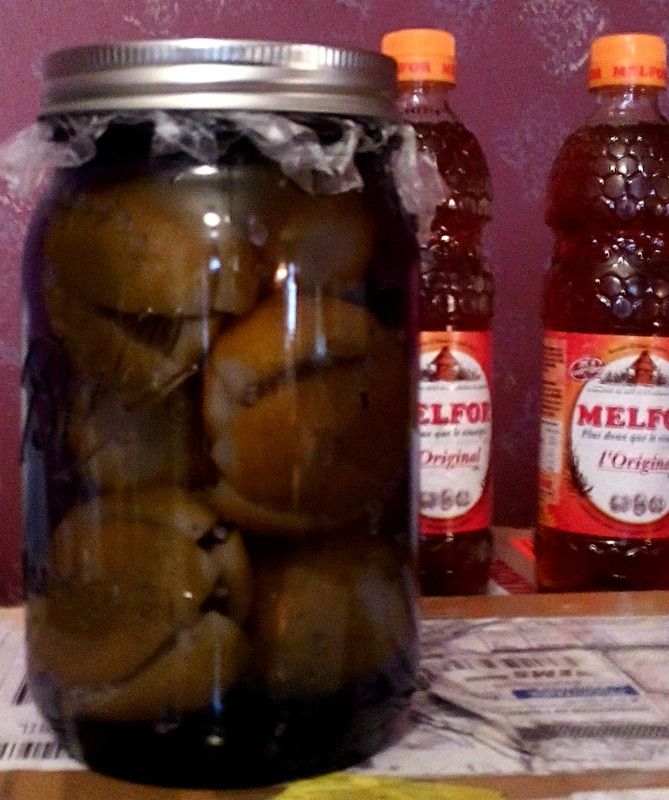 I made them according to the directions above, using 1/2 teaspoon of coarse sea salt per lemon. I would have used fine sea salt, but I didn't have any on hand. I'll rotate the jar (top to bottom) once each day, and loosen the lid to de-gas as needed. In two or three weeks, I'll have some nice lemons that will last two days longer than forever. The important thing about msir is that the peels are what one adds to the dish when cooking; the pulp inside is scraped out with a knife, then used as either part of any marinade that is part of a recipe, or simply discarded. These reserved lemons add a wonderful, unique element to Maghreb dishes, and can be used for many other purposes, I am sure. Oh - and the jars that say "Melfor" in the background? That's a different project, for a different day....
 ------------- If you are a visitor and like what you see, please http://foodsoftheworld.activeboards.net/registration_rules.asp?FID=0" rel="nofollow - click here and join the discussions in our community! |