
|
Thank you, from the Foods of the World Forums! |
Progressive Dinner for Aug 22 |
Post Reply 
|
| Author | |
HistoricFoodie 
Admin Group 
Joined: 21 February 2012 Location: Kentucky Status: Offline Points: 4945 |
 Post Options Post Options
 Thanks(0) Thanks(0)
 Quote Reply Quote Reply
 Topic: Progressive Dinner for Aug 22 Topic: Progressive Dinner for Aug 22Posted: 16 August 2013 at 05:49 |
|
Meal three is on for August 22.
One situation is that Dave is unable to continue. After examining several alternatives it seems the best approach this week is to just drop the appy. Doing so leaves everyone else in their proper order. So here are the assignments: First course: Dan Main course: Brook Side dish: Ron Dessert: Anne Perhaps somebody else will step in, in which case we'll reinstitute the appetizer course. |
|
 |
|
| Sponsored Links | |
|
|
|
HistoricFoodie
Admin Group
Joined: 21 February 2012 Location: Kentucky Status: Offline Points: 4945 |
Post Options
Thanks(0)
Quote Reply
Posted: 16 August 2013 at 08:34 |
|
Despite the attempts of many celebrity chefs, the offal thing has not really taken off in America. Which means, of course, that soft-tissue and organ meats are still relatively inexpensive. That’s one of the appeals of this main dish.
The other is that it’s delicious. So here is this week’s Main Course, in plenty of time for everyone else to plan around it. CHICKEN LIVERS IN MADEIRA ON PANELLE 1 1/2 lbs chicken livers 1 onion, finely chopped ¼ lb butter, divided use Flour for dusting Salt & Pepper to taste 1 tbls flour 1 cup chicken stock ½ cup madeira Fried panelle wheels Parmesan crisps for garnish Prep the chicken livers by removing all tendons, fat, and other connective tissue. Combine the flour, salt and pepper. Working in batches, melt 2 tablespoons of butter in a heavy skillet. Sauté some of the onions until almost tender. Dust chicken livers with the seasoned flour and sauté them until browned on all sides. Set aside and keep warm (I use the oven set at 250F). Stir a tablespoon of flour into the pan drippings. Gradually add the chicken stock and Madeira and cook the sauce, stirring constantly, until it is smooth and slightly thickened. Season with salt and pepper to taste. Return the liver mixture to the pan and cook over low heat, covered, until livers are cooked through, about ten minutes. Serve on panelle wheels, garnished with parmesan crisps. FRIED PANELLE WHEELS Panelle is a Sicilian specialty similar to polenta. Rather than cornmeal, however, panelle uses chickpeas and chickpea flour. 2 cups chickpea flour 4 cups water Salt and peppers to taste 1 cup cooked chickpeas, coarsely chopped ½ cup grated Parmesan ¼ cup finely chopped parsley Olive oil for frying Bring water, salt and pepper to boil in a heavy pot. Slowly whisk in the chickpea flour, whisking out any lumps. Lower heat. Cook until thickened, stirring constantly. Add the chopped chickpeas, parmesan, and parsley. Continue cooking, stirring often, until very thick, 15-20 minutes. Pour the mixture into a sheet pan. Using a metal spatula dipped in cold water, level and smooth the paste in a sheet about ¼-3/8 inch thick. Let cool and put in the fridge, uncovered, at least an hour or up to overnight. The paste will set up and a crust will form on the surface. Unmold the panelle. Using a cookie cutter or ring mold cut large rounds out of the panelle. Set them aside, with what had been the bottom side up, for an hour or more so that surface dries. Heat the olive oil in a heavy skillet and fry the panelle wheels until golden brown on each side. PARMESAN CRISPS 1/3-1/2 cup finely grated Parmesan cheese 1/3-1/2 cup coarsely grated Parmesan cheese Preheat oven to 350F. To prep the cheese a box grater works best. Grate half the cheese on the fine-toothed surface, the other half using the cutters that produce longish strings. Put a Silpat in a sheet pan, or line a sheet pan with parchment paper. Drop the cheese mixture by tablespoonsful, leaving at least two inches between them. Bake for six to eight minutes, until cheese has melted and is turning brown. Remove from oven and, with a metal spatula, lift the crisps gently and transfer them to a rack to cool and set. For service: Set a fried panelle wheel on a plate. Mound with chicken livers. Garnish with the parmesan crisps. |
|
|
|
|
gonefishin
Master Chef

Joined: 20 September 2012 Status: Offline Points: 1778 |
Post Options
Thanks(0)
Quote Reply
Posted: 16 August 2013 at 09:14 |
|
Nice recipe brook...and I hadn't thought about the cost issue being low because it hasn't become accepted (yet)...good point!
Am I just missing it in your ingredient list, what quantity of chicken livers is this dish for? Thanks! Dan |
|
|
Enjoy The Food!
|
|
|
|
|
gonefishin
Master Chef
Joined: 20 September 2012 Status: Offline Points: 1778 |
Post Options
Thanks(0)
Quote Reply
Posted: 16 August 2013 at 09:44 |
|
I was trying to take more time and think about what side I wanted to put with Brook's Chicken Livers. But once collard greens crossed my mind I couldn't get them out of my head...then I focused in on Gumbo Z'Herbs. I'm just going with it.
Only change I think I would make is using a brown Jasmin Rice instead of a white rice. I use Cajun Grain Brown Jasmin Rice. The last pack we ordered had a mill date less than a week before we received it! This rice is much heartier and has a distinctive flavor, aroma and tooth to it. We've found it's best to cook this rice like pasta, in a large pot of seasoned water. Keep an eye on it while it cooks pulling it off heat and straining it once it is al dente. Please do not rinse. How about serving this with some grilled garlic bread. Heat a few garlic cloves in some olive oil, strain out the garlic and brush the oil onto the uncut baguette. Grill over a charcoal fire until lightly colored and crusty...pull off. sprinkle some good salt on top, cut and serve with the Gumbo Z'herbs! Gumbo Z’Herbes recipe from Leah Chase [Dooky Chase, New Orleans, Louisiana];linked from Ladels and JellySpoons website Jadin loin, gombo gaté. (Jardin loin, gombo gâté) “When the garden is far, the gumbo is spoiled.” An old Creole saying. Given the large number of green ingredients in this dish it is definitely one to make after a trip to the local farmers’ market. Leah Chase’s gumbo is so steeped in history and folklore it’s a shame to keep it to just one day of the year and remember – always use an odd number of greens. 1 bunch mustard greens Tabasco to taste! Serves 8 to 10 over steamed rice. 1. Clean greens under cold running water, making sure to pick out bad leaves and rinse away any grit. Chop greens coarsely and place in a 12-quart stockpot with the onions and garlic. Cover with water (about 1 1/2 gallons), bring mixture to a boil, reduce to simmer, cover and cook for 30 minutes. 2. Strain greens and reserve liquid. 3. Cut all meats, except the chaurice, into bite-size pieces (about 1 inch pieces) and place in 12 quart stockpot with 2 cups of the reserved liquid. Steam over a high heat for 15 minutes. 4. Meanwhile cut the chaurice into bite size pieces and place in a skillet over high heat to render, about 10 minutes. Remove chaurice, keeping the grease in the skillet and set aside. 5. Blend greens in a food processor until puréed. 6. Heat the skillet of chaurice grease over a high heat and add flour. Cook roux until flour is cooked, about 5 minutes (does not have to be brown). Pour roux over meat mixture and stir to combine. 7. Add pureed greens to the meat in the stockpot and 2 quarts of the
reserved liquid. Let simmer over a low heat for 20 minutes. Add
chaurice, thyme and cayenne, stir well. Season and add some rough chopped assortment of greens to the pot and simmer for
|
|
|
Enjoy The Food!
|
|
|
|
|
HistoricFoodie
Admin Group
Joined: 21 February 2012 Location: Kentucky Status: Offline Points: 4945 |
Post Options
Thanks(0)
Quote Reply
Posted: 16 August 2013 at 10:49 |
|
Whoops! Is my face red.
Good catch, Dan. I've edited the post to include the missing chicken livers in the ingredients list. |
|
|
|
|
Effigy
Chef 

Joined: 17 June 2013 Location: New Zealand Status: Offline Points: 633 |
Post Options
Thanks(0)
Quote Reply
Posted: 17 August 2013 at 01:12 |
|
Yay Dessert!
I get to kill two birds with one stone. Posting tomorrow night.
|
|
|
Resident Peasant
|
|
|
|
|
HistoricFoodie
Admin Group
Joined: 21 February 2012 Location: Kentucky Status: Offline Points: 4945 |
Post Options
Thanks(0)
Quote Reply
Posted: 17 August 2013 at 04:30 |
|
Dessert based on a stoned bird? Hmmmmmmmm?
|
|
|
|
|
Effigy
Chef
Joined: 17 June 2013 Location: New Zealand Status: Offline Points: 633 |
Post Options
Thanks(0)
Quote Reply
Posted: 17 August 2013 at 19:29 |
|
Pavlova
Forget duelling over Russell Crowe, Crowded House or Jane
Campion, it’s the origins of the pavlova that really piques the interests of
Aussie and Kiwis feuding over stolen cultural 'treasures'. What is pavlova? Pavlova (pronounced pav-low-vah) is made of a sweet
meringue-like crust stuffed full of whipped cream and finished with fresh
fruits such as kiwis, strawberries and other colourful berries. The dessert is
overwhelmingly agreed to be an antipodean dish. Why the dispute? Australia and New Zealand have long been at battle over
which country is ‘the best’, and any opportunity to claim an advantage is
usually seized upon by eager patriots wanting to prove their nation’s
superiority. In the case of the pavlova, both countries claim to have
invented this dessert. But proving ownership has proved difficult since it
appears in history (and in cook books) at around the same time in both nations.
So who invented it? Anna Pavlova Food historians agree that the dessert is named after
Russian prima ballerina, Anna Matveyevna Pavlova (1881-1931), who toured both
Australia and New Zealand in 1926 and Australia again in 1929. On her second
visit to Australia, in 1929, Pavlova stayed at the Hotel Esplanade in Perth (an
important detail we will come back to). Recipe origins But the dessert we know and love today can actually be
traced back to 1926, when the cookbook Home Cookery for New Zealand included
a recipe for "Meringue with Fruit Filling" (the name ‘pavlova’ is not
used but the recipe is similar). One year later, the sixth edition of Davis Dainty
Dishes is published in New Zealand, which carried the first known
recorded recipe using the named "Pavlova" but the recipe was for a
gelatine based dish (not meringue). Professor Helen Leach, a culinary anthropologist at the
University of Otago in New Zealand, said the earliest recipe that uses both the
correct recipe and the name ‘Pavlova’ was published in 1929 in a magazine
titled New Zealand rural magazine. In the same year, Mrs. McKay’s Practical Home
Cookery, Chats and Recipes, also published in New Zealand, included a
recipe for Pavlova Cakes. The ingredients were similar to those of today's
Pavlova, but the mixture was baked into three dozen little meringues. Professor Leach states in her book, The Pavlova
Story: A Slice of New Zealand’s Culinary History, that the first Australian
pavlova recipe was not published until 1935. But what about Anna Pavlova's stay at the Hotel Esplanade,
Perth in 1929? Yes, it is true that the Hotel invented a dessert in her honour,
but that recipe was not invented until 1935. On April 2, 1935 Herbert (Bert)
Sachse found a recipe for 'Meringue Cake' in the Women’s Mirror
Magazine (contributed by a New Zealander) and sought to improve it.
The resulting recipe he called ‘Pavlova’. The sweet became a much enjoyed
offering at the Hotel Esplanade high teas and won the hotel and Chef Sechse
national acclaim. And the icing on the cake (or the kiwi fruit on the whipped
cream) comes from Pavlova’s biography titled Anna Pavlova: Her Life and
Art (published 1982). The biographer, Keith Money wrote that during
Pavlova's tour of New Zealand in 1926, a chef at a hotel in Wellington, New
Zealand invented a dessert for her. Money goes on to explain that the chef was
inspired by Pavlova’s tutu which was draped in green silk roses. The dessert
pavlova was intended to be a metaphorical representation – light and frothy
with the soft meringue, cream and colourful fruit pieces representing the
splendour of the dancer’s costume and ‘lighter than air’ form. The verdict Given the developments outlined above it seems faily conclusive that New Zealanders first developed the recipe for a meringue cake — sometimes called Pavlova. However it wasn't until Perth chef Bert Sachse developed his Pavlova recipe that the name and recipe become more widely known around the world. One thing we can all agree on is that the Pavlova has become an important part of the national cuisine of both countries. Rosalind Scutt http://travel.ninemsn.com.au/airnewzealand/8435774/who-owns-the-pavlova-new-zealand-or-australia And my recipe...
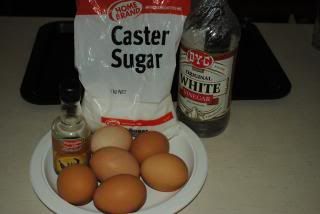
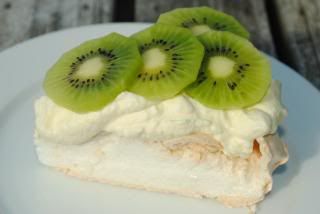
Beat the egg whites until they stand in stiff peaks 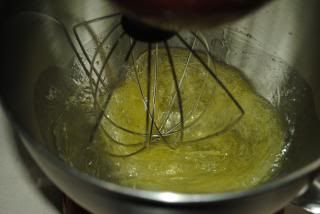 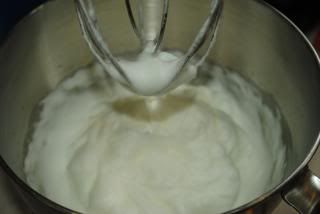 Add the sugar gradually, one tablespoon at a time, beating at high speed. When all the sugar has been thoroughly incorporated and a stiff glossy meringue has formed, fold in the vinegar and vanilla essence. 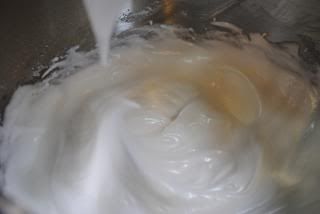  Draw a circle on a sheet of parchment. 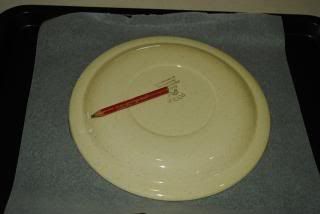 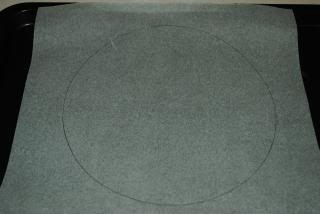 There is only one word for this next process...'Dollop' 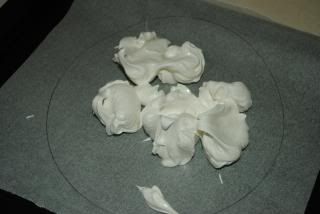 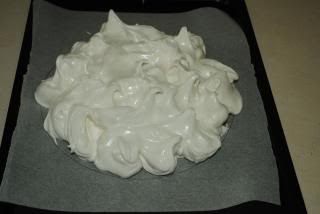 Keep on dolloping until you have all the mix within the circle piled quite high - 8 to 10 cm. Bake at a low temperature (150°C) for 45minutes then turn off the heat and leave for one hour. 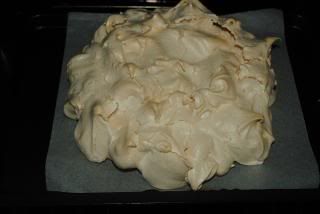 Cool completely. Pile whipped cream on to the Pavlova and decorate with fruit. Strawberries, kiwifruit or passion friut pulp are the traditional ones, my boys like canned black doris plums.
|
|
|
Resident Peasant
|
|
|
|
|
HistoricFoodie
Admin Group
Joined: 21 February 2012 Location: Kentucky Status: Offline Points: 4945 |
Post Options
Thanks(0)
Quote Reply
Posted: 17 August 2013 at 23:35 |
|
Great post, Anne.
I'd make one addition, though: For those who have never worked with inscribed parchment paper: remember, after drawing the circles or whatever, to put the paper on the pan ink (or pencil) side down! |
|
|
|
|
Effigy
Chef
Joined: 17 June 2013 Location: New Zealand Status: Offline Points: 633 |
Post Options
Thanks(0)
Quote Reply
Posted: 17 August 2013 at 23:51 |
|
Good point. Thanks.
|
|
|
Resident Peasant
|
|
|
|
|
Margi Cintrano
Master Chef

Joined: 03 February 2012 Location: Spain Status: Offline Points: 6362 |
Post Options
Thanks(0)
Quote Reply
Posted: 18 August 2013 at 09:33 |
|
Gentlemen, Wonderful Project and photos. Anne, A truly phenomenal job on the historial and pictorial. Thank you for posting the beautiful dessert. |
|
|
Volamos a Mediterraneo, un paraiso que conquista su gente u su cocina.
|
|
|
|
|
TasunkaWitko
Admin Group

Joined: 25 January 2010 Location: Chinook, MT Status: Offline Points: 9389 |
Post Options
Thanks(0)
Quote Reply
Posted: 21 August 2013 at 13:10 |
|
Beautiful choices, everyone - impressive so far! When I looked at Brook's ingredient list, in light of my assigned course, the side dish immediately jumped out at me. I believe that in terms of taste, it makes a great compliment whilst also creating an interesting foil - simultaneously providing great comparisons and contrasts vis a vis ingredients, flavours and textures. The dish hails from North Africa and is called Salat al-Jazaar: Due to my travels (and catching up at work afterwards), I must unfortunately forego an expanded write-up, but wanted to post some snippets from the link above, along with the full recipe and step-by-step photos of preparation. Please keep in mind that when I made and served it, it was in amounts that represented a stand-alone salad dish, but it also seems to me that it would be perfect as a side.
This recipe is everything that it is advertised to be, and much, much more; a stunning painting and a marvelous overture - it also has the virtue of being very, very easy to make. As per the recipe above, here are all the ingredients needed to transport you to the Maghreb: 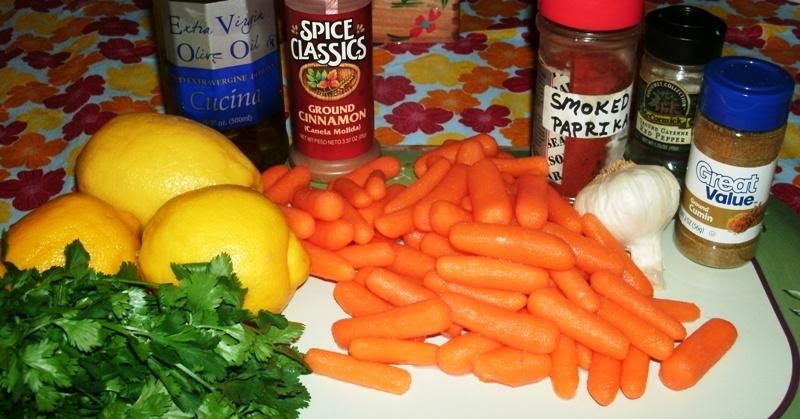 A note on carrots: for the sake of convenience, I used baby carrots, but "normal" carrots can be used with equal success; simply slice them to lengths the same size as baby carrots, and then halve them lengthwise. A note on cilantro: This herb has never, ever, set well with me, but I wanted to give it a try with this recipe, so I used it instead of substituting with flat-leafed parsley. I did, however, keep the amount modest: only a single tablespoon. The result, I believe, was just right, and kept everything in balance without any over-powering pungency; feel free to double the amount, if you choose. A note on spices: The beautiful Mrs. Tas is highly capsicum-intolerant, so I used only half the cayenne called for in the recipe; I was going to actually use chili powder instead (check the ingredients label, the flavours are all basically there), but we didn't have any on hand. Also, I made a spot decision and chose to try this recipe with Pimentón de la Vera - otherwise known as smoked paprika - rather than sweet paprika, in order to impart the warm, earthy dimension into the dish. Finally, based on a suggestion, I added just a hint of cinnamon - maybe a quarter teaspoon. The result, in my opinion, was very well balanced with the paprika, the cayenne and the rest of the flavours that make up this salad. As I said above, this recipe is very easy to prepare; first, I washed and halved the baby carrots lengthwise: 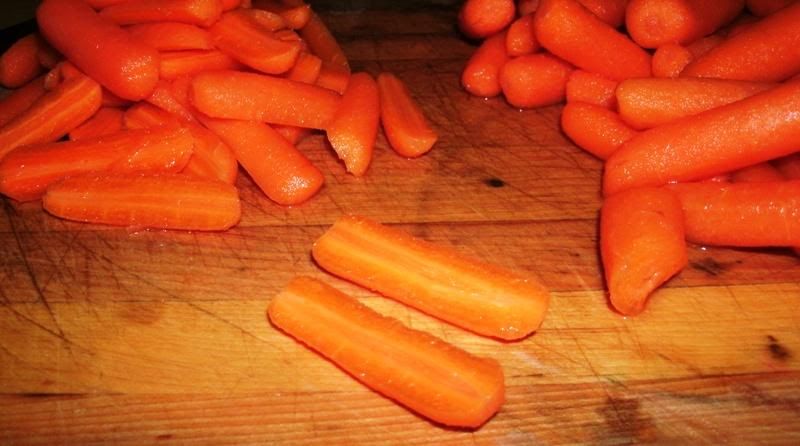 Next, I squeezed half a lemon over three good-sized cloves of crushed garlic, and gave them a whirl in the food processor: 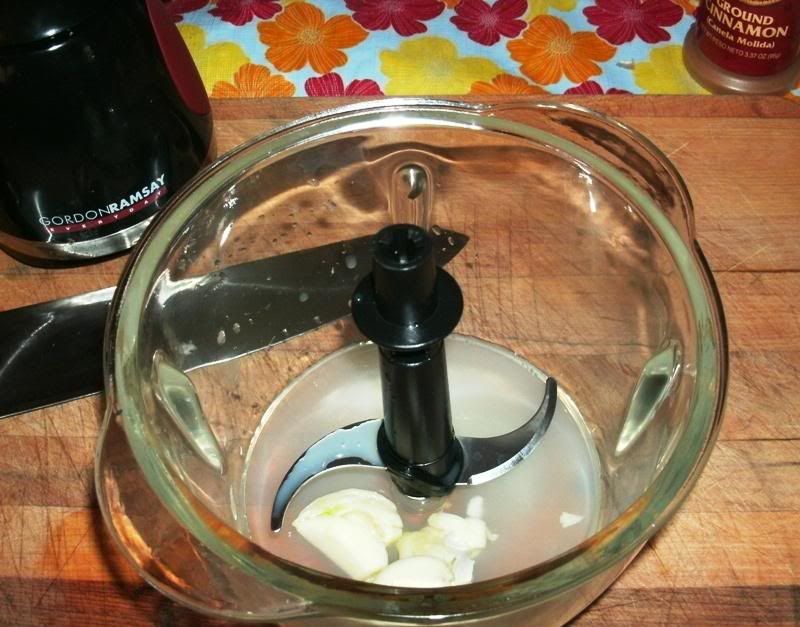 After this, I added the spices to the pulverised garlic and lemon juice: 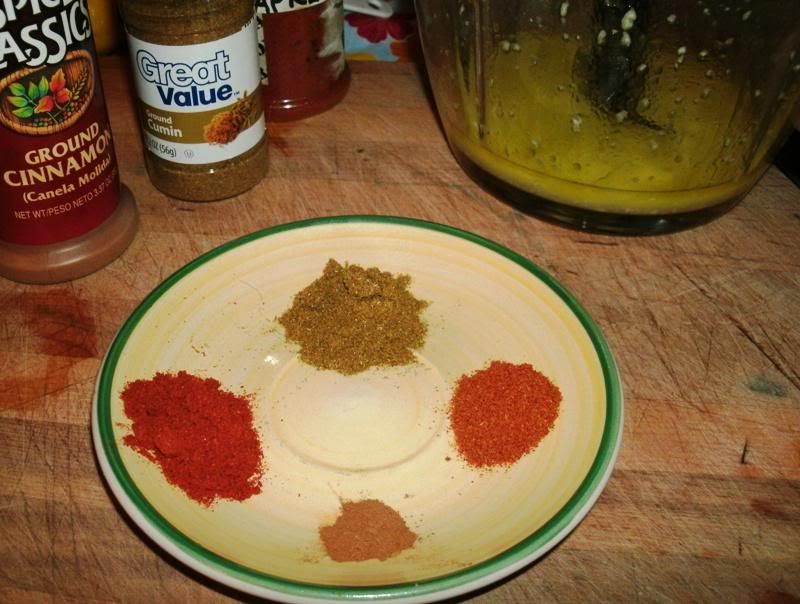 Clockwise from top: 1 teaspoon of cumin, 1/2 teaspoon of cayenne, 1/4 teaspoon of ground cinnamon and 1 teaspoon Pimentón de la Vera. I also added the juice of another two lemons, which totaled a quarter-cup. Next, I added a tablespoon of chopped cilantro: 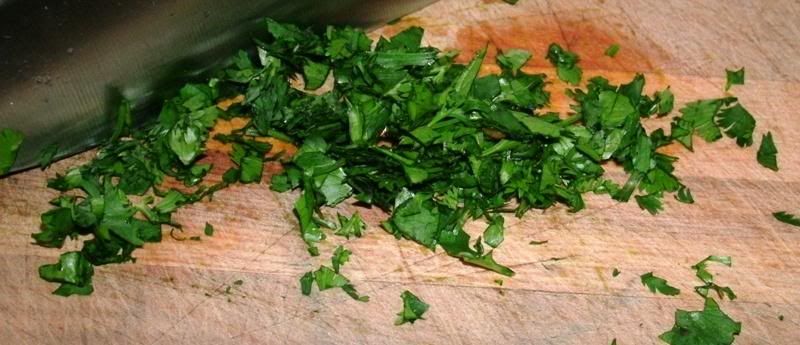 Finally, I drizzled in the olive oil and gave the entire mixture a few pulses in the food processor. Here's what we ended up with: 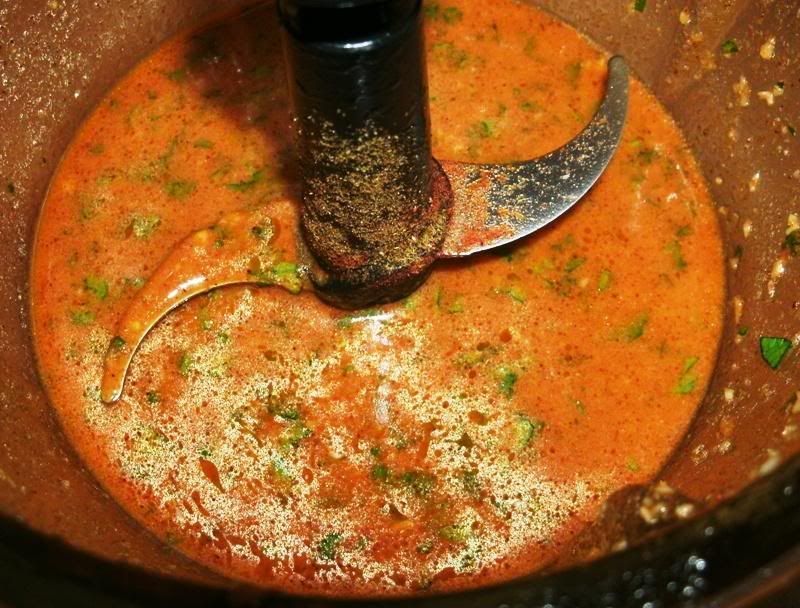 Now came the time to prepare the canvas that this work of art would be painted upon; I brought two cups of water to a boil: 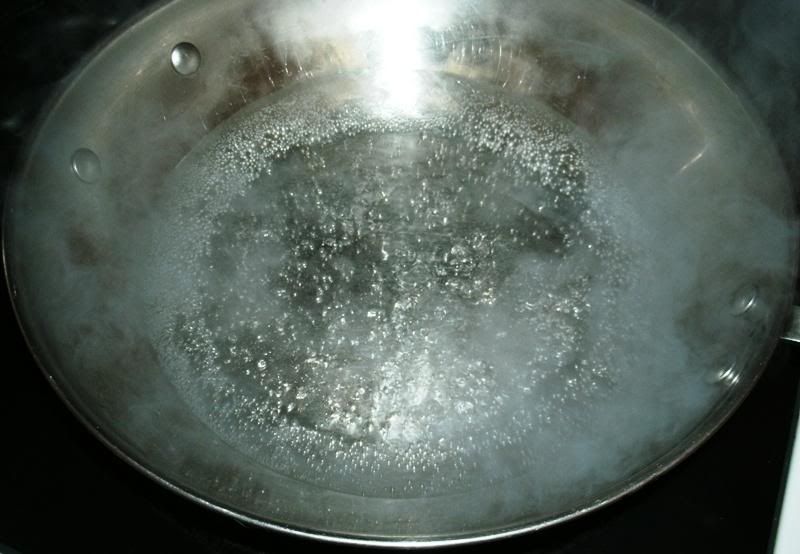 And added the halved carrots: 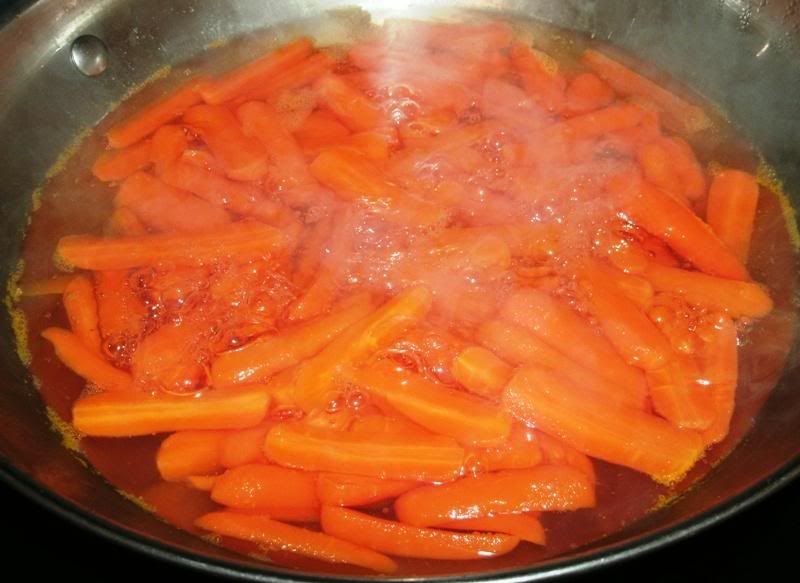 I covered them tightly and boiled them for 3 or 4 minutes. The idea here is to just cook them just halfway through or so, so that they are soft on the outside, yet still fairly firm inside. You do not want the crunchy-raw, nor do you want them to be mushy. When the carrots were just right, I drained them well: 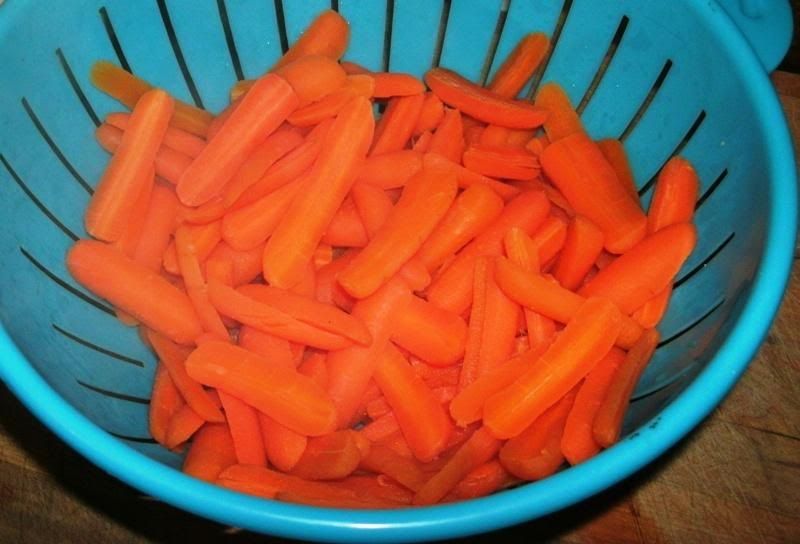 And then introduced them to the sauce that I created: 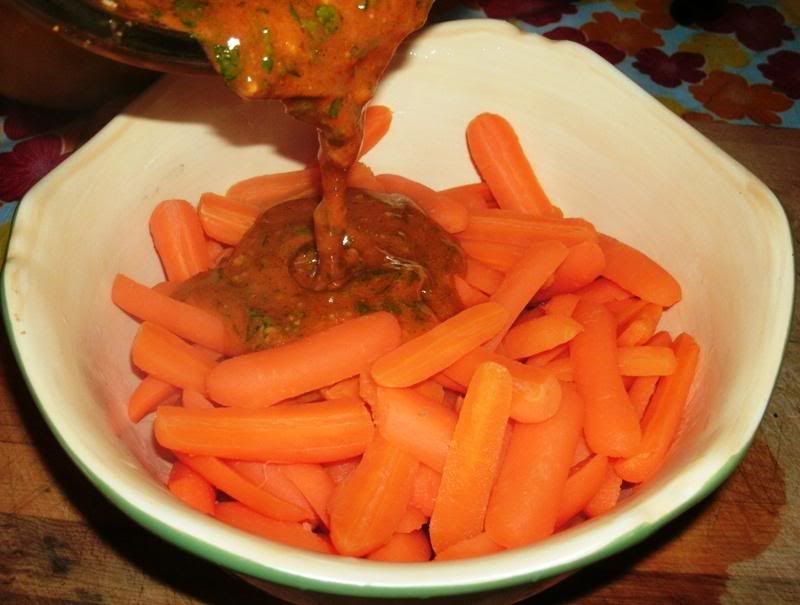 And stirred it all together: 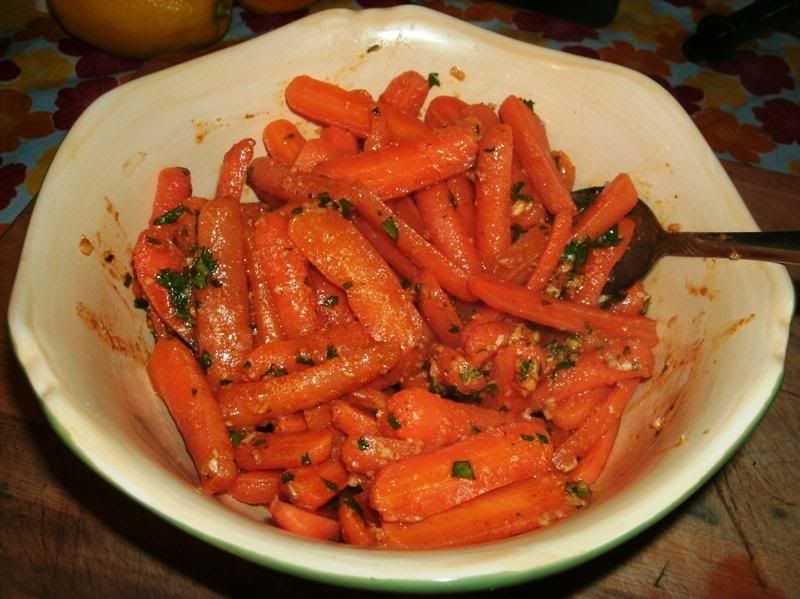 This dish is meant to be served simply, with just a bit of lemon or lime for squeezing and perhaps a dusting of additional chopped cilantro, if you are partial to that: 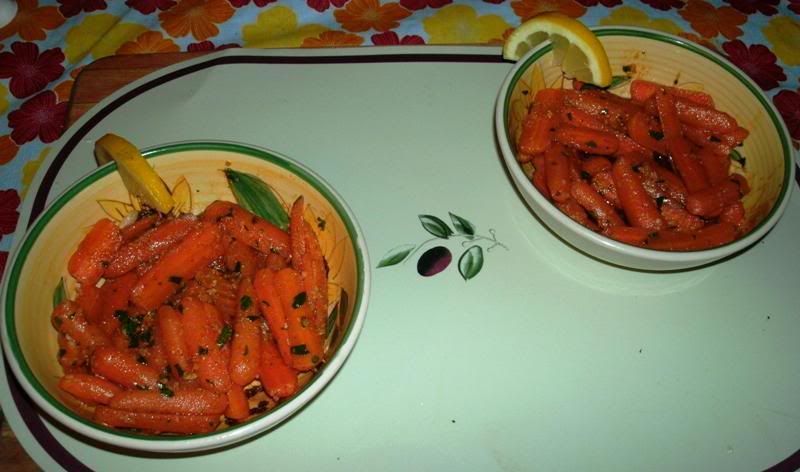 I was eager to try this, and wasn't disappointed in the slightest. The entire dish was a work of visual, aromatic and flavourful art. It smelled absolutely and perfectly exotic as the warm carrots opened up and mingled with the spices and garlic; the aromas wafting up were wonderful, stretching from the dusky, earthy cumin and pimentón to the heights of refreshing crispness characterised by the bright lemon, carried by the cinammon and cayenne. Visually, it sure looked incredible to me, with the deep, rich, orange of the carrots beautifully accented by the bits of green from the cilantro and yellow from the garlic, all enhanced by the sheen of the olive oil: 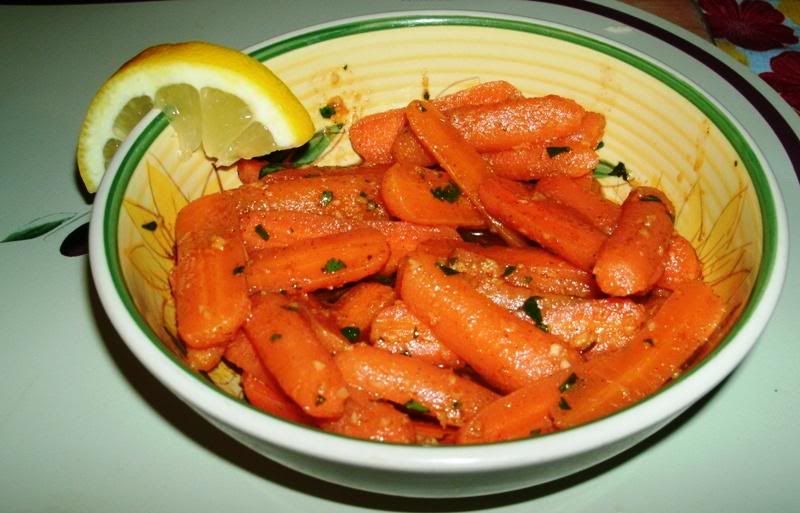 The taste, however, is where the real fireworks began. The warm sweetness of the carrots balanced in perfect counterpoint with the fresh, sour bite from the citrus and the earthy richness of the cumin, pimentón and garlic. The cayenne and cinnamon added a rich, warming depth that wrapped itself around me, bringing heat without being hot. The result was a very pleasant and fulfilling explosion of taste sensations. Even the olive oil had a part to play in this symphony, binding everything together and lending its Mediterranean basso nova as a foundation for the the entire experience. The only way to truly know this is to try it. You will be impressed with the simplicity of this salad, and enthralled with its flavour - and I'm willing to bet that you will be able to close your eyes and almost feel the sunny breeze in your hair as you hear the waves breaking against the cliffs of the Moroccan coastline.... |
|
|
If you are a visitor and like what you see, please click here and join the discussions in our community!
|
|
|
|
|
HistoricFoodie
Admin Group
Joined: 21 February 2012 Location: Kentucky Status: Offline Points: 4945 |
Post Options
Thanks(0)
Quote Reply
Posted: 21 August 2013 at 16:01 |
|
Nice choice, Ron. I believe those carrots will balance nicely with the chicken livers. The taste is certainly complimentary, and they add a splash of color to the plate.
Normally I'm not big on the idea of symmetry when plating. But in this case I think I'd center the chicken livers, then put three small piles of carrots equally spaced around them. |
|
|
|
|
gonefishin
Master Chef
Joined: 20 September 2012 Status: Offline Points: 1778 |
Post Options
Thanks(0)
Quote Reply
Posted: 21 August 2013 at 18:17 |
|
Those carrots look great Ron! I can think of a number of dishes I'd like to serve them with...thanks for sharing!
...and again...nice pictorial! (welcome back!) |
|
|
Enjoy The Food!
|
|
|
|
|
TasunkaWitko
Admin Group
Joined: 25 January 2010 Location: Chinook, MT Status: Offline Points: 9389 |
Post Options
Thanks(0)
Quote Reply
Posted: 22 August 2013 at 12:02 |
|
Many thanks, guys - I was impressed with this dish in that the carrots had just the right amount of "tooth" to them; a great texture contrast to chicken livers, I imagine ~Also, I was impressed with the way that the spices wrap around you and embrace you without beating you over the head. This got me to thinking that it would make a great compliment for the main dish, as well.In all, a wonderful dish on its own or as part of a meal.
|
|
|
If you are a visitor and like what you see, please click here and join the discussions in our community!
|
|
|
|
|
HistoricFoodie
Admin Group
Joined: 21 February 2012 Location: Kentucky Status: Offline Points: 4945 |
Post Options
Thanks(0)
Quote Reply
Posted: 23 August 2013 at 07:00 |
|
OK, guys. Another meal now heading for the dishwasher. Good job everyone.
Here's the recap: First course: Gumbo Z'Herbes. Main course: Chicken Liver Madeira on Panelle Wheels. Side: Moroccan Carrot Salad Dessert: Pavlova. |
|
|
But we hae meat and we can eat
And sae the Lord be thanket |
|
|
|
|
Post Reply
|
|
 Tweet
Tweet
|
| Forum Jump | Forum Permissions You cannot post new topics in this forum You cannot reply to topics in this forum You cannot delete your posts in this forum You cannot edit your posts in this forum You cannot create polls in this forum You cannot vote in polls in this forum |


 Topic Options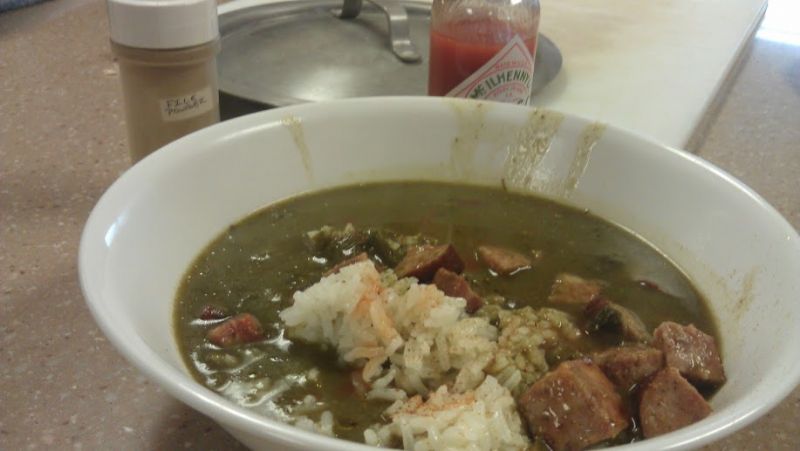
 Salat al-Jazar