
|
Thank you, from the Foods of the World Forums! |
Mushroom dishes |
Post Reply 
|
| Author | |
Furtwangler 
Cook's Assistant 
Joined: 06 July 2014 Location: Slovakia Status: Offline Points: 30 |
 Post Options Post Options
 Thanks(1) Thanks(1)
 Quote Reply Quote Reply
 Topic: Mushroom dishes Topic: Mushroom dishesPosted: 03 September 2014 at 11:51 |
|
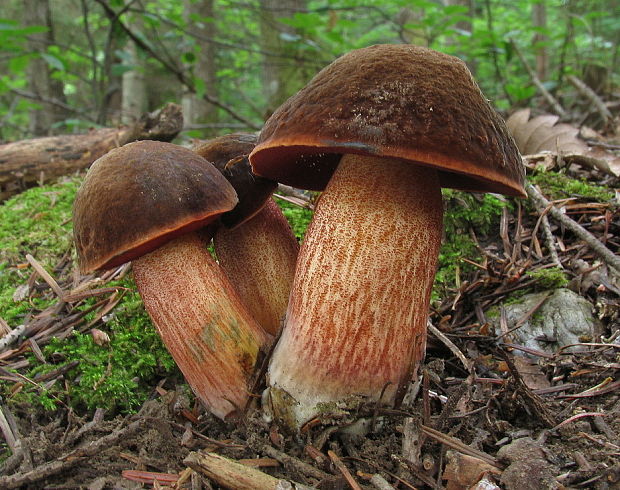
Mushrooms have started to grow, it seems. On Saturday, I bought 1 1/2 lbs. of orange birch boletes and some hedgehog mushrooms. The very same day I went cycling. And since I usually cycle in woods, I always carry a bag in my backpack on the off-chance of spotting some mushrooms along the way. And I did and came home with a bagful of black trumpets. Then on Monday I went hunting for more. While I could find only a handful of boletes (two small hazel boletes and several red-cracking boletes), I was lucky enough to find some more hedgehog mushrooms, about a pound of golden chanterelles, several parasol mushrooms, about five charcoal burners and a huge amount of black trumpet, about three pounds.
So the heroes are: Orange birch bolete (Leccinum versipelle) This is a more robust, earthier and darker (both in colour and flavour) version of a cep. It can be eaten fresh, e.g. in stews, in omelets, or dried and then used accordingly. The best omelet I had in my life was in late spring when garlic was still wet and mild and these started growing. The cap sliced, the stem diced, slowly cooked in butter, with a bit of chopped young garlic added, seasoned and then the heat turned up to finish the omelet, it was outstanding. Unlike some other species in the genus, this one has a thick and somewhat softer stem, so it's better suited to cooking in its fresh state than, say, a hazel bolete. But what it has in common with the latter is the intense flavour and the fact that the flesh blackens when cut. So it's not a good idea to make a creamy sauce with it, unless you like your sauce gray. When dried, the flavour intensifies even further and may even gain some coffee overtones. It works fantastically with pureed lentils as pasta filling, as they do in the north-east of Poland. It grows under birch trees, hence the name. Hazel bolete (Leccinum pseudoscabrum) Similar to the former, with one difference: the stem is very firm, so it's best to use this one dried. Can be very plentiful in the summer in beech-and-hornbeam forests. Red cracking bolete (Boletus chrysenteron) This is at its best when still young (up to two inches in diameter). It then makes one of the best pickling mushroom. When older, it's best to dry it, but it's rather inferior to other boletes as a dried mushroom. Charcoal burner (Russula cyanoxantha) A delicious summer species to be used in sauces, simple ragouts or soups. Very plentiful in summer. It doesn't dry well, so to be used fresh. Parasol mushroom (Macrolepiota procera) This one certainly cannot be confused with anything else. At times, you can literally harvest them, so plentiful they can be. Unfortunately, there is only one good use for them, so you quickly grow tired of them. Don't get me wrong, they taste fantastic, but who wants to east the same dish all the time? Golden chanterelle (Cantharellus cibarius) I think everyone knows this one. Hedgehog mushroom (Hydnum repandum) A really firm mushroom with a mild chanterelle flavour. It doesn't dry well, so use it in sauces, soups or in pickles. Black trumpet (Craterellus cornucopioides) Also known as horn of plenty, trumpet of the dead or poor man's truffle. They can be used fresh or dried. Many people around here dry them, grind them and then use them as mushroom seasoning. It's in its dried state that it's said to acquire black truffle notes. I cannot comment on that since I've never eaten a truffle nor have I ever eaten a dried black trumpet (I already have quite a lot of them dried, just haven't tested them yet). When fresh, they are, to me, unsurpassed as a stuffing mushroom. For mushroom stuffings, you want something that is intense in flavour and that grows plentifully. Well, meet the trumpet of the dead! I've also heard that when used dried, it colours the whole dish black. I hope it does as that would make a wholly different black risotto. All in all, one of the best mushrooms ever. And here are some dishes to try them out: Vařené hovězí s houbovou omáčkou a knedlíkem Mushroom used: hedgehog mushroom A Czech classic of boiled beef with sauce and dumpling. So you cook a pot of beef soup. The soup is eaten with noodles as a first course, the meat is then used for the main course. Sweat a finely chopped onion in butter, add a couple of tablespoons of flour and make a roux. Now add about three cups of beef broth and the mushrooms, which you have tenderized by letting them steam in their own juices in a covered pan at a low heat for ten to fifteen minutes. Let the sauce simmer for an hour, stirring occasionally. Finally, add a scant cup of cream, let it simmer for five minutes and serve with the beef. The dumpling is made like this: 350 grams of coarsely-ground flour and 150 grams of regular flour as mixed with 1/2 teaspoon of salt, 20 grams of fresh yeast is dissolved in a scant cup of milk, a dough is made and let to rise, then 120 grams of stale cubed buns are added, the whole thing mixed and let to rise again, then divided into four large dumplings which are simmered for 20 minutes in salted water. Slices of beef are served with dumpling slices and the sauce. I really liked the mild, noble taste of the particular mushroom here. Gombapaprikás galuskával Mushroom used: hedgehog mushroom and orange birch bolete (the latter dried) This is a Hungarian dish, but it's quite common around here too. In its essence, it's just this: chopped onion slowly fried in lard, the sliced and chopped mushrooms are added and fried more, then good-quality paprika is added and finally sour cream. It is cooked a bit more and that's it. Some people add crushed caraway, some add dill or parsley, some add garlic and so on. It is served with galuska, a very simple kind of pasta very much like spätzle. Chanterelles would be even better here, I think, but I had already used them up in a soup. But one thing has to be made clear: never, never, never use the insipid store-bought white button mushrooms in a dish like this. Vyprážaná bedľa, varené zemiaky, uhorkový šalát Mushroom used: parasol mushroom A true Slovak classic. Parasol mushroom caps are sprinkled with salt, dredged in flour, then in beaten eggs and finally in breadcrumbs, then fried in lard. Potatoes are cubed and boiled, butter and chopped parsley are added. And a refreshing cucumber salad (sliced cucumbers with vinegar, sugar, salt and pepper). A truly great meal. The mushroom tastes almost like pork here. As parasol mushrooms are huge (up to 12 inches in diameter, even more), one mushroom per person is enough. The stems are discarded, only the caps are eaten. Pierogi z grzybami Mushroom used: black trumpet (fresh) Pierogi are a Polish dish of stuffed mushrooms, I think you'll be familiar. Among my favourite fillings are: beef (chopped braised beef with fried onion, soaked bun and spices), cabbage (braised and fried cabbage with fried onion and dill), lentil (pureed lentils with fried onion and dried mushrooms), cheese (sheep's cheese with potatoes and chives - a Slovak version) and this one. There are several versions, I propose this one: Filling: two chopped onions are fried in butter, a pound of chopped fresh mushrooms are added and fried. When this cools, a bun soaked in milk is added and an egg. If it seems too wet, add some breadcrumbs. Of course, season well with salt and pepper and some chopped dill may be added, too. Dough: boil a large potato and grate it, add an egg, 1/2 cup flour that has been dry-toasted in a pan until light brown, and enough milk and flour to make, well, enough dough. Now roll the dough, but not too thinly, and cut out circles with a glass. You will place a teaspoon of filling on each circle and fold it to make a sort of a turnover. These are boiled in salted water for about five minutes, immediately smeared with butter and served with bacon nuggets, fried onion rings and sour cream. In my opinion, one of the best European dishes. |
|
|
"La cuisine, c'est quand les choses ont le goût de ce qu'elles sont."
- Curnonsky |
|
 |
|
| Sponsored Links | |
|
|
|
AK1
Master Chef 

Joined: 10 April 2012 Location: Ontario, Canada Status: Offline Points: 1081 |
Post Options
Thanks(0)
Quote Reply
Posted: 03 September 2014 at 12:49 |
|
I really don't like you right now!!!!
seriously, nice score!!!! Can I come over for dinner?
|
|
|
|
|
Furtwangler
Cook's Assistant
Joined: 06 July 2014 Location: Slovakia Status: Offline Points: 30 |
Post Options
Thanks(1)
Quote Reply
Posted: 04 September 2014 at 14:10 |
|
Oh yes, do come over. Just to make it clear, the first photo is from the farmer's market, the second one is my score. However, I went again today and here is the result (now you're going to hate me):
Top: hedgehog mushrooms Left: summer ceps (Boletus reticulatus) - taste the same as true ceps/porcini (Boletus edulis) and most people don't really distinguish between the two Front left: orange birch boletes Front right: birch boletes (Leccinum scabrum), with a similar taste Right: red cracking boletes Rear right: only two charcoal burners and four small golden chanterelles (as a bonus) Most of the boletes are already sliced and drying, some small red cracking boletes have just been pickled. I have no idea what I'm going to do with those hedgehog mushrooms - anyone fancy a pound of these? What you see there is four pounds of hedgehog mushrooms. Eight hours of walking but it was definitely worth it. The whole living room now smells of mushrooms. |
|
|
"La cuisine, c'est quand les choses ont le goût de ce qu'elles sont."
- Curnonsky |
|
|
|
|
TasunkaWitko
Admin Group

Joined: 25 January 2010 Location: Chinook, MT Status: Offline Points: 9389 |
Post Options
Thanks(0)
Quote Reply
Posted: 10 September 2014 at 18:30 |
|
Absolutely beautiful post, Tomas - thank you for sharing! I wish that we had so much delicious bounty available to us around here, but mushrooms seem to be rare, and the few I do find are of unknown variety.
It is a goal of mine to learn more about mushrooms; one of my wife's favourite memories as a child was ger grandparents (from Slovakia) picking mushrooms near their tiny town here in Montana (the name of the town is Tracy, and it is a few miles southeast of Great Falls). She knows the general area where they would go, and we plan to see if we can find any next spring. But looking at your wonderful harvest, I am beginning to think we should schedule a trip now in the autumn, as well - it is only 130 miles from where we live....
|
|
|
If you are a visitor and like what you see, please click here and join the discussions in our community!
|
|
|
|
|
TasunkaWitko
Admin Group
Joined: 25 January 2010 Location: Chinook, MT Status: Offline Points: 9389 |
Post Options
Thanks(0)
Quote Reply
Posted: 11 September 2014 at 06:43 |
|
All of those dishes sound delicious, Tomas - when we are able to go mushroom gathering, I'd like to try each one - I tried to pick a favourite but couldn't!
Your post reminded me of a dish that I tried earlier this year, a mushroom strudel. I don't have an exact recipe for it, but it had a very Hungarian feel about it, so I posted my observations and ideas about it here: http://foodsoftheworld.activeboards.net/gombs-rtes-pr-pirospaprika_topic4206.html I hope to re-create it sometime!
|
|
|
If you are a visitor and like what you see, please click here and join the discussions in our community!
|
|
|
|
|
Furtwangler
Cook's Assistant
Joined: 06 July 2014 Location: Slovakia Status: Offline Points: 30 |
Post Options
Thanks(0)
Quote Reply
Posted: 11 September 2014 at 08:39 |
|
Thanks, Ron, they surely were delicious. By all means, do go mushroom hunting. I'm sure mushrooms grow in the US just as plentifully as here, you only need to know the spots. This takes some time to find the right spots, but I'm sure they are there. Also, wild mushrooms are very expensive and this way you can have them for free. But first, you'll have to buy some mushroom guide and learn to recognize the right ones and avoid confusing them with something else. With some species, like boletes, it's easy, with others more care has to be taken. http://www.finefoodspecialist.co.uk/pied-de-mouton-fresh/ Take a look here. 18 GBP for a kilogram. I had almost two of them, so about 33 GBP, which makes it around 53 USD. |
|
|
"La cuisine, c'est quand les choses ont le goût de ce qu'elles sont."
- Curnonsky |
|
|
|
|
TasunkaWitko
Admin Group
Joined: 25 January 2010 Location: Chinook, MT Status: Offline Points: 9389 |
Post Options
Thanks(0)
Quote Reply
Posted: 11 September 2014 at 20:48 |
|
Tomas - after reading and thinking about your post and photos, my wife and I ordered this field guide today:
http://www.amazon.com/Field-Guide-Mushrooms-America-Peterson/dp/0395910900/ref=cm_cr_pr_product_top?ie=UTF8 (NOTE: Please click on the link and take a look at this book - doing so helps this forum to help pay for itself!  ) )Thank you for the inspiration, my friend - I've been talking about taking this step for years, but your post has moved me to actually do it!!  |
|
|
If you are a visitor and like what you see, please click here and join the discussions in our community!
|
|
|
|
|
TasunkaWitko
Admin Group
Joined: 25 January 2010 Location: Chinook, MT Status: Offline Points: 9389 |
Post Options
Thanks(0)
Quote Reply
Posted: 11 September 2014 at 21:35 |
|
Based on Ann's recommendation, I also ordered, "Mushrooming Without Fear:
http://www.amazon.com/Mushrooming-without-Fear-Beginners-Collecting/dp/1602391602/ref=cm_cr_pr_product_top?ie=UTF8 (NOTE: Please click on the link and take a look at this book - doing so helps this forum to help pay for itself!
) |
|
|
If you are a visitor and like what you see, please click here and join the discussions in our community!
|
|
|
|
|
Furtwangler
Cook's Assistant
Joined: 06 July 2014 Location: Slovakia Status: Offline Points: 30 |
Post Options
Thanks(0)
Quote Reply
Posted: 12 September 2014 at 01:18 |
|
I'm happy to hear that and wish you good luck. One piece of advice: always consult several sources when learning to recognize a particular species. There are even websites like rogersmushrooms.com that are worth looking at. I do the same - I have two books (one large one, written by a leading Slovak mycologist, one small field guide by a German mycologist) plus I consult a website if I'm not sure. No field guide is perfect. Now there are some mushrooms that are easy to identify. Boletes come to mind. You see the tubes instead of the gills and you know it's in the bolete family. Now there are only a few poisonous mushrooms in this family and they all look strange (white cap, red tubes, red stalk and such - look for Boletus satanas) and none is seriously poisonous. In fact, I know there are people who eat B satanas, but they cook it for a really long time. But you can easily recognize porcini or those several porcini-like species that are difficult to tell apart, but all very edible and very safe. So it doesn't matter whether it's B edulis, B reticulatus, B pineus or B aereus as they're all excellent white-fleshed true boletes with the same use in cooking and the same properties. Russulas are difficult to explain, but easy to learn once somebody actually shows you a few specimens. I learned to identify them when I was maybe 5 or 6. And I've read in a guide that to determine their edibility, you only have to taste them. If the taste is pleasant, they're good. But this only works with Russulas! Myself, I tend to stick with R cyanoxantha and R virescens as they're plentiful enough here in the summer. Chanterelles are also easy to tell. You need to remember that they don't have any gills, only some wrinkles or small canyons that vaguely resemble them. Parasol mushrooms are also easy and easy to spot as well. There are poisonous lookalikes, but these are much smaller. Remember that a parasol should be huge, like 10 inches or so and really tall, too. Apart from that, one sure way to identify them is to check if the ring is easily movable, if you can move it freely along the stem. It should be. Agaricus, on the other hand, are not for beginners, neither are the edible Amanitas. I would start with boletes, parasols and chanterelles, maybe russulas. Study them well and good luck. Remember, you don't pick what you can't identify. And if you think it might be edible and it grows in large numbers and you don't yet have anything and want to identify it at home (because your field guide is not being helpful), separate it from other mushrooms because if it turns out to be poisonous, you need to prevent its spores from contaminating the other mushrooms as spores may well be poisonous enough, too. So good luck. It's not really hard, you just need to do you homework so to speak. |
|
|
"La cuisine, c'est quand les choses ont le goût de ce qu'elles sont."
- Curnonsky |
|
|
|
|
HistoricFoodie
Admin Group
Joined: 21 February 2012 Location: Kentucky Status: Offline Points: 4945 |
Post Options
Thanks(0)
Quote Reply
Posted: 12 September 2014 at 07:37 |
|
Mushrooming clubs have sprung up like fungi all across the country, Ron. You might want to investigate if there's one near you, and join in their activities. The easiest way to learn what's safe and what's not is to hang out with somebody who's been there.
|
|
|
But we hae meat and we can eat
And sae the Lord be thanket |
|
|
|
|
Post Reply
|
|
 Tweet
Tweet
|
| Forum Jump | Forum Permissions You cannot post new topics in this forum You cannot reply to topics in this forum You cannot delete your posts in this forum You cannot edit your posts in this forum You cannot create polls in this forum You cannot vote in polls in this forum |


 Topic Options

