
|
Thank you, from the Foods of the World Forums! |
Germans From Russia In The Dakotas |
Post Reply 
|
| Author | |
HistoricFoodie 
Admin Group 
Joined: 21 February 2012 Location: Kentucky Status: Offline Points: 4945 |
 Post Options Post Options
 Thanks(0) Thanks(0)
 Quote Reply Quote Reply
 Topic: Germans From Russia In The Dakotas Topic: Germans From Russia In The DakotasPosted: 06 February 2015 at 20:12 |
|
As I’ve mentioned in the past, Ron and I have been working on a joint project, exploring the foodways of the Germans From Russia. We both have a personal connection with this special culture. Ron’s people, on his father's side are Russo-German from Sulz, a village in the southern region of Ukraine. They’d moved there from Alsace and the Black Forest region of Germany My people, on my Dad’s side, were Ukrainian. But, for various reasons, we are unable to determine more than that. While they were not, as far as I know, originally from Germany, they certainly would have had German neighbors. Plus, our immigrant experiences parallel each other’s. Ron has briefly described these people in his Germans From Russia Sausage post [http://www.foodsoftheworld.activeboards.net/germans-from-russia-sausage-recipes_topic4328.html], and we’ve both made references to them, here and there. But, for the sake of clarity, here’s a summary of who they are and where they came from. Generally speaking, there are three distinct groups of Germans From Russia (that awkward phrase, unfortunately, is how they prefer to be known). In 1763, Catherine of Pomerania---later to be known as “The Great”---Empress and Autocrat of all the Russias, issued a manifesto inviting the peoples of the world to settle in Russia. At the time, the Russian serf was considered to be loutish, ignorant, and uncultured. What the Russians call nil kulturny. Catherine’s goal was to settle her agricultural lands with a more civilized farming community. Although everyone was welcome, she particularly targeted Germans. Being herself a German princess, that only made sense. As historian Yekaterina Knissinova notes, to Catherine the edict meant “the hope of both economic and, above all, socio-cultural progress of the backward country….” The heart of the manifesto was that it promised any settlers that they could maintain their ethnic identity; speak their own language, dress in their native clothes, establish and administer their own schools, live under self-rule, etc. Just think of how the Amish fit in our own society, and you’ll get the idea. They were exempt from military service, which, otherwise, was universal. The importance of this exemption cannot be overstated. Most of the Germans attracted by her offer settled along the Volga River. By 1767 there were at least 100 colonies established by these so-called Wolgadeutsche. In 1803, Catherine’s grandson, Alexander I, issued a similar invitation, leading to a second great wave of immigration. These people settled primarily in south Russia, along the Black Sea, and, eventually recolonized into Crimea and Ukraine. Collectively they are known as Schwarzmeerdeutsche (Black Sea German). It’s this group that’s of particular interest to me and Ron. Finally, in 1812, as a result of the Russo-Turkish War, Russia annexed Bessarabia, which had been part of the Ottoman Empire. It rushed to fill that land with immigrants, which constituted the third wave. A hallmark of Bessarabian German food, of course, are its distinctive Turkish influences. Near as we can tell, the Germans from Russia were primarily (but not exclusively) from southwestern Germany (Sudpfalz, Württemberg, Bayern) and of course Alsace - basically, the Black Forest Region and the Upper Rhine Valley. Their route of migration brought them into contact with Hungaran, Slovak, Romanian and possibly even Polish foodways - and of course Ukrainian and Russian. All of these settlers “looked in their neighbors pots.” So their food is essentially German and Alsacian, but modified by contact with other ethnic groups, growing conditions where they settled (which accounts for much of the difference between the Wolga- and Schwarzmeerdeutsche cuisines) and influenced by what, and how, their neighbors cooked. Tracking the changes in foodways just this far can be a major job, with attention being paid to nuances of language, population dynamics, recipe sources and modifications, and so forth. But we’re not done yet. In the late 19th century, Russia reneged on its deal. The German culture was attacked in many ways, and the military exemption was cancelled. Rather than serve in what many of them saw as a foreign army, German settlers emigrated once again, this time to the United States. This is very similar to the route followed by my own people. My great-grandfather changed the family name, and my grandfather emigrated from Ukraine because they were no longer exempt. So you can see why I feel kinship with them. By and large, the Wolgadeutsche settled in Kansas and Nebraska; the Schwarzmeerdeutsche in the high plains, particularly North Dakota, where they constitute the largest ethnic group in the state population. In each case, their foods again underwent a change as they accommodated new ingredients and American cooking methods. Minnesota, btw, is a sort of melting pot between the two groups, and some of its foods are even more modified as a result. Although not touching our purposes directly, one thing should be pointed out. Not all the Russo-Germans left. Many of those who remained suffered during the Stalinist purges, and were forcibly relocated to Siberia, where their foods underwent yet another radical change; both because of ingredient availability, and due to the influence of indigenous peoples. About two million of these ethnic Germans still live in Russia, primarily “in the East.” What about the food itself? Ron and I are focused on the diaspora of the Schwarzmeerdeutsche, tracing the changes from Alsace and Germany all the way to North Dakota. Other aspects, such as the differences between them and the cuisine of the Wolgadeutsche, will be discussed only in a collateral way. For instance, we might look at how the same dish is called by different names, based on original dialect and where settlement took place. For example, a meat-stuffed dough envelope is called Fleischkuchie (or Fleischkeuchle) by the Black Sea Germans. The same dish, made in the Volga River settlements, would be called Fleischmaultasche. In both places they were usually fried, but the Wolgadeutsche sometimes baked them. But they’re the same dish. Fleischplachinta is another form of the same dish, with an obvious Ukrainian influence (the “plachinta” part), so we can place it there. For our purposes, therefore, we would use either the Fleischkuchie or Fleischplachinta forms (particularly as they are used in North Dakota), but might refer to Fleischmaultasche in passing. Of great help is this glossary of German-English food terms that Ron discovered: http://www.frank-kolb-russia.org/miscellaneous/dictionary-food-terms.shtml Language aside, German-Russian cooking, according to Sam Bungardt, author of the Germans From Russia cookbook, Sei Unser Gast (Be Our Guest), characterizes it as “basically peasant cooking. It’s not fancy, but the kind of plain and substantial cooking that was needed to nourish hard-working farmers.” That’s exactly what we’re experiencing as we prepare these dishes. Among the Black Sea Germans, typical dishes would be plachinta (pumpkin-stuffed turnovers), borscht, which was adopted from their Ukrainian neighbors, savory strudels, the aforementioned Fleischkuchle, and a unique lettuce “salad” that is more like a soup than anything else. Still and all, the food, at base, is German: hearty, stick to the ribs meat and potato types of food. This raised a problem for us. Normally, when devising themed meals, we try for four or five courses that are representative of the cuisine being discussed. The problem doing that with Schwarzmeerdeutsch food is twofold: First, because so much of the food is based on starches (particularly dumplings and potatoes) and sauerkraut it is easy to overload on them. I mean you can easily come away feeling that everything has dumplings or kraut (or both) in it. The second problem: too many of the recipes sound (and, as it turns out, are) mouth friendly. So it’s hard to limit. Initially, we resolved the second problem by doubling up. Instead of devising a single menu, we would each write one, and prepare the dishes on it. Neither of us was surprised when there were no duplications. There are so many possibilities, all of which can be representative of the cuisine as a whole, that it would have been stranger if we had made the same choices. FWIW, here are the two independent menus: My Menu: Appy: Kaseknephla (Cheese Buttons) Soup: Linsensuppe (Lentil Soup) Salad: Salatiz Rediska (Radish Salad) Main: Rippchen Mit Sauerkraut und Schupenudel (Spareribs with Sauerkraut & Fingernoodles) Dessert: Aprikosenkuchen (Apricot Kuchen) Bread: Landbrot Mit Kummel (Tangy Caraway Rye) Ron’s Menu: Soup: Knoephlasuppe mit Huhn (Chicken Dumpling) Salad: Gurkensalat (Marinated Cucumbers) Main: Sausage Knoepfla mit Wursteintoph (Hotdish with Dumplings) Side: Warmer Kartoffelsalat (Hot Potato Salad) Dessert: Raisin Sour Cream Pie Even these final menus represent a struggle, on each of our parts, to come up with a balanced meal. Even so, it was difficult making choices; so much so that you’ll notice that Ron had yet to decide, for sure, what to make as his main dish. In addition, there were reasons that other dishes didn’t make the cut, having nothing to do with quality. For example, I was originally going to include Kurbis Stumbus (Pumpkin-stuffed Turnovers) as a side-dish, and had actually started to experiment with what is as close to being an iconic Schwarzmeerdeutsche dish as you can get. The issue: My sparerib choice already is a complete, one-pot meal. The Kurbis Stumbus (http://www.foodsoftheworld.activeboards.net/kurbis-stumfus_topic4330.html) would have been too much. In the end, we decided to not present these as themed meals. Rather, what we intend is an on-going discussion, with recipes, that reflects the totality of the North Dakotan Schwarzmeerdeutsche food experience. Meanwhile, here are links to some Germans From Russia dishes each of us has already posted (in no particular order): Click here for some various "Germans from Russia" sausage recipes Various Chokecherry Recipes Manitoba Farmers Sausage Cured Breakfast Hamburger Ron's Family's Recipe for Kase Knepfla (Cheese Buttons) Tangy Caraway Rye Bread German White Bread Kurbis Stumfus (Mashed Pumpkin and Potatoes) Chicken and Knoephla Soup Blachinda Raisin and Sour Cream Pie Pickled Eggs Sauerkrautbrot (Sauerkraut Bread) Kasharahmdungi (Chokecherries in Cream) Potato Candy Spareribs and Sauerkraut with Fingernoodles Knoephla Hotdish Chokecherry Wine Beet Wine Rhubarb Wine Apfelwein (Apple Wine) Lowenzahnwein (Dandelion Wine) Watermelon Rind Pickles Schlecksel (Watermelon Syrup) Linsensuppe (Lentil Soup) Chokecherry Syrup Buffaloberry Syrup Ron's Family Recipe for Kosher Dill Pickles Bierocks (Runzas) Pfeffernisse rolls Pfefferneusse Cookies Pickled Beets Ron's Family Recipe for Pickled Beets Ham Crust Schwäbisches Fleisch Mary Ann Lehr's Strudels Schwarzbeeren and Schwarzbeeren Recipes |
|
|
But we hae meat and we can eat
And sae the Lord be thanket |
|
 |
|
| Sponsored Links | |
|
|
|
HistoricFoodie
Admin Group
Joined: 21 February 2012 Location: Kentucky Status: Offline Points: 4945 |
Post Options
Thanks(0)
Quote Reply
Posted: 06 February 2015 at 20:15 |
|
SOURCE INFORMATION
There is an incredible amount of information available about the Germans From Russia, and their foodways in particular. A simple web search will reveal all sorts of sites, blogs, and social networking locations. Two educational groups exist to maintain records, share data, and maintain the traditions of Germans From Russia. Although both are technically nonpartisan, AHSGR and its chapters are more focused on the Wogadeutsckhe, while GRHS is almost entirely concerned with the Schwarzmeerdeutsche. American Historical Society of Germans from Russia 631 D Street - Lincoln, Nebraska 68502-1199 Telephone: (402)-474-3363 www.ahsgr.org Email - ahsgr@ahsgr.org Germans From Russia Historical Society 1125 West Turnpike Avenue | Bismarck, North Dakota 58501 Telephone: (701) 223-6167 | www.grhs.org An incredible reference source, most of which is on-line, is the Germans From Russia Heritage Collection maintained by North Dakota State University. Everything from family records, to recipes, to photos is maintained in the collection. NDSU also publishes and distributes books dealing with Germans From Russia. Germans from Russia Heritage Collection Libraries NDSU Dept #2080 PO Box 6050 Fargo, ND 58108-6050 Tel: 701-231-8416 http://library.ndsu.edu/grhc/aboutus/index.htm Here is a list of German-Russian food terms and their English translations taken from the Recipe Index Search found in the NDSU Libraries - Germans from Russia Heritage Collection (GRHC): http://www.frank-kolb-russia.org/miscellaneous/dictionary-food-terms.shtml There are several dozen cookbooks dealing with the foods of Germans From Russia. Many of them are fund raisers, published by churches and AHSGR and GRHS chapters. As such they contain a plethora of recipes and insights that have come down from immigrants. Others are professionally written and published. We’ve used three of these books extensively: Cookbook for Germans From Russia, Nelly Das, Alex Herzoz translator, North Dakota State University Library, Fargo, ND, 2003 German Food & Folkways: Heirloom Memories from Europe, South Russia, & the Great Plains, R. M. H. Gueldner, North Dakota State University Library, Fargo, ND, 2002, Sei Unser Gast (Be Our Guest), Sam Brungardt, editor, North Star Chapter of Minnesota, AHSGR, Minneapolis, 2008 |
|
|
But we hae meat and we can eat
And sae the Lord be thanket |
|
|
|
|
TasunkaWitko
Admin Group

Joined: 25 January 2010 Location: Chinook, MT Status: Offline Points: 9389 |
Post Options
Thanks(0)
Quote Reply
Posted: 07 February 2016 at 12:21 |
|
GfR Links and Comments Here are some snippets on many foodways, traditions, characteristics and other information about Germans from Russia in North Dakota; this part of a WPA project and written in 1938, when much of my own family would have been considered first-generation immigrants:
https://books.google.com/books?id=ogAFiiuD_ggC&pg=PA80&lpg=PA80&dq=Russo+Germanic+Food&source=bl&ots=XlIA2POER_&sig=4NOgOxyEs8yTQV6CXXvETkRz-t4&hl=en&sa=X&ei=L8WUVKy3DoWlyQSrxIKoAw&ved=0CFUQ6AEwDDgU#v=onepage&q=Russo%20Germanic%20Food&f=false This is pretty much the best write-up we've found so far on the Germans From Russia experience; from Catherine The Great, no less: http://www.dw.de/catherine-the-great-and-the-russian-germans/a-16965100 From Sam Brungardt, author of Sei Unser Gast (Be Our Guest), considered to be the bible of Russo-German cooking:
Depending upon where these German-speaking people settled in the Russian Empire, the cooking of the colonists was influenced to various degrees by their Russian, Ukrainian, Romanian and other non-German neighbors…. However, nearly always, the German Russians gave the dishes they adopted their own twist. Among the Germans from South Russia [i.e., the Black Sea Germans], Plachinta (baked pumpkin- or meat=filled turnovers),* Borscht, savory Strudel, Fleischkuchle (deep-fried beef and onion turnovers), a soupy lettuce “salad” that was served with dumplings, Pfeffernusse cookies [with watermelon syrup], and custard-based Kuchen are signature dishes. *Note the P rather than B. Plachinta; with various spellings it is, apparently, a more common appellation than Blachinda. "Pfeffernisse is basically the equivalent for the Standard German 'Pfeffernüsse' which most people know as the spicy cookie. In the Volga German dialect spoken in my area, it is pronounced 'peffer-neese' because the dialect is for the most part a variant of Pfälzisch, the dialect spoken in the Palatinate region of Germany." |
|
|
If you are a visitor and like what you see, please click here and join the discussions in our community!
|
|
|
|
|
TasunkaWitko
Admin Group
Joined: 25 January 2010 Location: Chinook, MT Status: Offline Points: 9389 |
Post Options
Thanks(0)
Quote Reply
Posted: 19 September 2016 at 22:06 |
|
A great article of the GfR experience:
|
|
|
If you are a visitor and like what you see, please click here and join the discussions in our community!
|
|
|
|
|
TasunkaWitko
Admin Group
Joined: 25 January 2010 Location: Chinook, MT Status: Offline Points: 9389 |
Post Options
Thanks(0)
Quote Reply
Posted: 20 September 2016 at 15:56 |
|
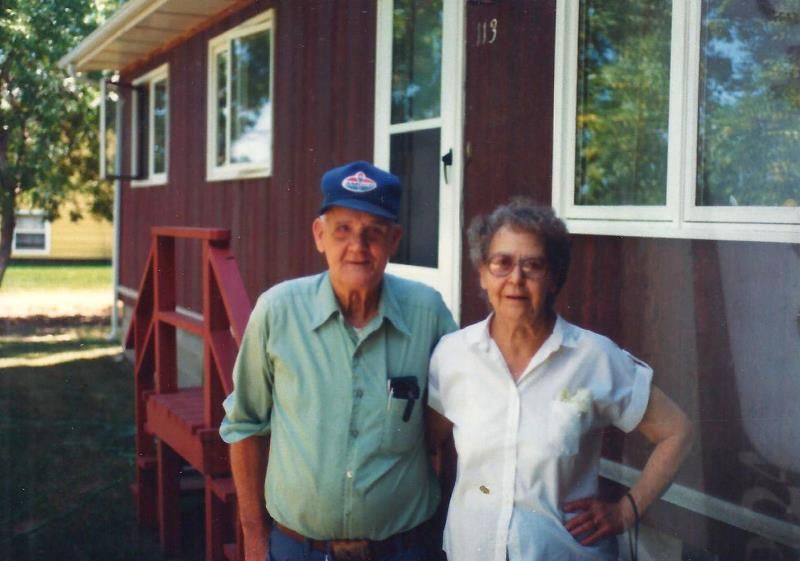
My grandparents, Raymond Woodrow Fischer and Helen Magdalena Plagge Fischer, at their home in Killdeer, North Dakota. I am going to guess the late 1980s.
|
|
|
If you are a visitor and like what you see, please click here and join the discussions in our community!
|
|
|
|
|
Tom Kurth
Chef's Apprentice 
Joined: 10 May 2015 Location: Alma, MO Status: Offline Points: 251 |
Post Options
Thanks(0)
Quote Reply
Posted: 20 September 2016 at 18:50 |
|
Fischer by the \spelling I know to be German. I assume Plagge is as well.
I'm curious, were all the Volgadeutsch Mennonite?
|
|
|
Best,
Tom Escape to Missouri |
|
|
|
|
TasunkaWitko
Admin Group
Joined: 25 January 2010 Location: Chinook, MT Status: Offline Points: 9389 |
Post Options
Thanks(0)
Quote Reply
Posted: 21 September 2016 at 08:58 |
|
G'morning, Tom -
I haven't really looked deeply into the religious sects and can't speak specifically for the Wolgadeutsch, but I do know that regarding the Schwarzmeerdeutsch, some "colonies" were Catholic and some were Lutheran, including Mennonite and Hutterite. I've seen references to the Mennonites, and I've spoken to some Hutterites up in this area; they said that their families spent some time in the Russian Empire, as well. I am guessing it was much the same for the Wolgadeutsch. Plagge is indeed a German name. My grandfather was born Catholic, but converted to Lutheranism so that he could marry my grandmother. The funny part is that I, raised Lutheran, married a Catholic!  I'm still Lutheran, but it was quite the family controversy at the time, both on her side and on my side. 25 years later, my opinion is that the differences - especially these days - aren't worth fussing over. I'm still Lutheran, but it was quite the family controversy at the time, both on her side and on my side. 25 years later, my opinion is that the differences - especially these days - aren't worth fussing over.
|
|
|
If you are a visitor and like what you see, please click here and join the discussions in our community!
|
|
|
|
|
Tom Kurth
Chef's Apprentice
Joined: 10 May 2015 Location: Alma, MO Status: Offline Points: 251 |
Post Options
Thanks(0)
Quote Reply
Posted: 21 September 2016 at 18:52 |
|
Yeah, I'm Lutheran too, just not much anymore. I am entirely of German descent unless you count that one Prussian as Polish. Instead of a Lutheran/Catholic
marriage (my parents), it was a Prussian/Saxon
union. Dad was always looked down on by his Prussian father-in-law. I find it interesting looking at your info and recipes. There is so much that is familiar but then has a little twist from, apparently, the Russian influence. Dad always claimed that the Volgadeutsch made Kansas and surrounding farmlands into America's breadbasket by bringing "Turkey Red' wheat with them. He didn't know his way around a kitchen so he had no use for any other wheat. Coming from western Kansas, he was prejudiced about soft wheat, pasta and sheep. Had no use for any of them.
|
|
|
Best,
Tom Escape to Missouri |
|
|
|
|
TasunkaWitko
Admin Group
Joined: 25 January 2010 Location: Chinook, MT Status: Offline Points: 9389 |
Post Options
Thanks(0)
Quote Reply
Posted: 22 September 2016 at 08:30 |
|
On my mother's side, there is Prussian, so I know what you mean!
Yes, the more I learn of this cuisine and the group that I am a member of the more I like it. What I enjoy is that the "twists" that come from the influence of eastern Europe are integral to the cuisine of my wife's heritage, as her family is from a part of Slovakia that seems to have Austro-Hungarian, Russo-Ukrainian and Polish/Czech influences. This means that as I discover new things, she is also rather familiar with them, just under a different name or a slightly different form. As I recall, Turkey Red was the wheat that made dryland farming possible and profitable in America. Ironic that it comes from the area we are speaking of, which is part of "the breadbasket of Europe." 
|
|
|
If you are a visitor and like what you see, please click here and join the discussions in our community!
|
|
|
|
|
TasunkaWitko
Admin Group
Joined: 25 January 2010 Location: Chinook, MT Status: Offline Points: 9389 |
Post Options
Thanks(0)
Quote Reply
Posted: 07 December 2016 at 08:33 |
|
Here is a somewhat contemporary profile of Sulz, the German colony in Ukraine where my ancestors lived (link to PDF document):
http://marksdesk.com/FamilyHistory/Thomas_GeorgB_1797/HistoryOfSulzConradKeller.pdf Some of my ancestors are mentioned in there. I also came across a book in a local library. I didn't have the time to do more than thumb through it for a moment, but I did note the title and other publishing information: The Black Sea Germans in the Dakotas, by George Rath; Pine Hills Press; Freeman, South Dakota, 57029; 1977. Library of Congress Catalog Number: 76-57046. Finally, to go with the photo of my grandparents above, here are two more. This photo is from 1956: 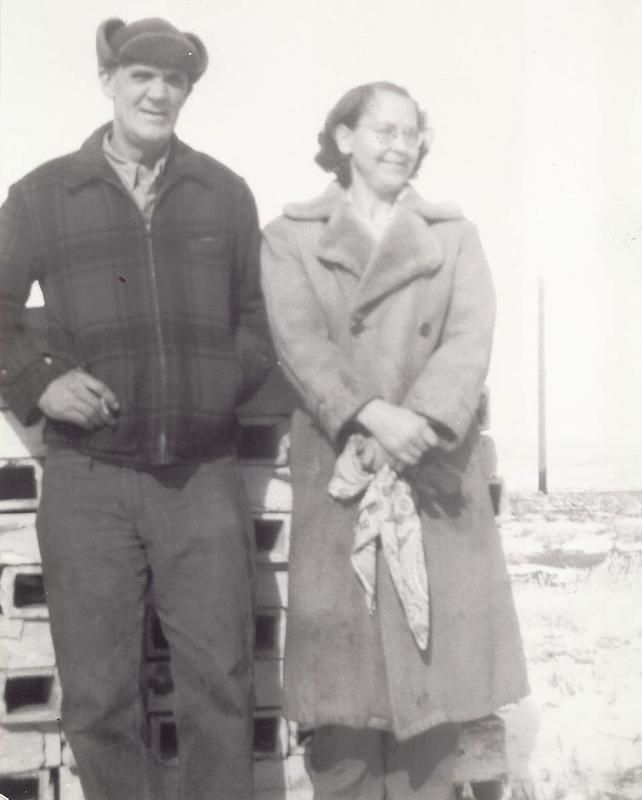 I spent a lot of time playing on, sitting on and looking at the world from the short wall that was built with the bricks standing behind them. And this one, from 1987: 
|
|
|
If you are a visitor and like what you see, please click here and join the discussions in our community!
|
|
|
|
|
TasunkaWitko
Admin Group
Joined: 25 January 2010 Location: Chinook, MT Status: Offline Points: 9389 |
Post Options
Thanks(0)
Quote Reply
Posted: 15 May 2017 at 10:15 |
|
Here is an excellent article on the Germans from Russia and Agriculture, among other things....
http://www.resurgentgrains.com/newsletter/agriculture-as-movable-world-part-twelve#comments |
|
|
If you are a visitor and like what you see, please click here and join the discussions in our community!
|
|
|
|
|
HistoricFoodie
Admin Group
Joined: 21 February 2012 Location: Kentucky Status: Offline Points: 4945 |
Post Options
Thanks(0)
Quote Reply
Posted: 16 May 2017 at 02:10 |
|
Fantastic find, Ron. I've downloaded the whole thing as a hard copy, for in-depth reading.
I'd also love to order the Srumpp book, but it's not in the economic cards. An incredible documentation of one of the two largest voluntary migrations in human history. Something that struck me: Stumpp's research indicating that most of the GFR's originally came from Wurtemberg, and that religion was a factor in their emigration decision. That came as a surprise, as I'd preveiously not seen any such reference. Good job, my friend. |
|
|
But we hae meat and we can eat
And sae the Lord be thanket |
|
|
|
|
TasunkaWitko
Admin Group
Joined: 25 January 2010 Location: Chinook, MT Status: Offline Points: 9389 |
Post Options
Thanks(0)
Quote Reply
Posted: 16 May 2017 at 08:39 |
|
Thanks, Brook -
I remember in my early research that religion (Catholic/Lutheran) was indeed important in the demographics of each colony, and the regional aspect that the author of this article mentions makes perfect sense, given that the migrations happened before the rise of German nationalism. My own ancestors, primarily from Alsace and Sufpfalz, would have thought of themselves as members of those communities, and German-speaking, rather than out-and-out German. |
|
|
If you are a visitor and like what you see, please click here and join the discussions in our community!
|
|
|
|
|
Margi Cintrano
Master Chef

Joined: 03 February 2012 Location: Spain Status: Offline Points: 6362 |
Post Options
Thanks(0)
Quote Reply
Posted: 13 August 2017 at 16:06 |
|
Brook and Ron, This is absolutely amazingly incredible .. Exemplarily written, researched and fascinating to read .. Thank you for sharing this Gentlemen .. |
|
|
Volamos a Mediterraneo, un paraiso que conquista su gente u su cocina.
|
|
|
|
|
TasunkaWitko
Admin Group
Joined: 25 January 2010 Location: Chinook, MT Status: Offline Points: 9389 |
Post Options
Thanks(0)
Quote Reply
Posted: 24 September 2017 at 21:01 |
|
From Jorge John of the Germans from Russia Repository:
|
|
|
|
|
Margi Cintrano
Master Chef
Joined: 03 February 2012 Location: Spain Status: Offline Points: 6362 |
Post Options
Thanks(0)
Quote Reply
Posted: 25 September 2017 at 00:11 |
|
Tas, Absolutely exceptional photography and exemplary penning. Thank you for sharing this with all of us here. Have a wonderful day .. |
|
|
Volamos a Mediterraneo, un paraiso que conquista su gente u su cocina.
|
|
|
|
|
TasunkaWitko
Admin Group
Joined: 25 January 2010 Location: Chinook, MT Status: Offline Points: 9389 |
Post Options
Thanks(0)
Quote Reply
Posted: 26 October 2017 at 08:39 |
|
I ordered this book today:
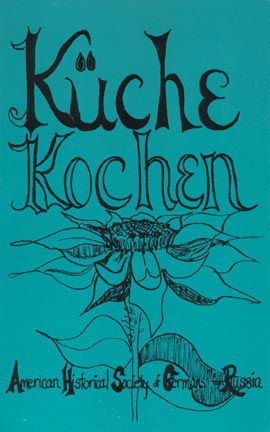 You can read more about it by clicking here: https://ahsgr.site-ym.com/store/ViewProduct.aspx?id=5324118 This book is recognized as one of the definitive sources on the foodways of the Germans from Russia, and I am looking forward to its arrival. I'll try to post more on it when it arrives, and will certainly post when I cook out of it.
|
|
|
If you are a visitor and like what you see, please click here and join the discussions in our community!
|
|
|
|
|
TasunkaWitko
Admin Group
Joined: 25 January 2010 Location: Chinook, MT Status: Offline Points: 9389 |
Post Options
Thanks(0)
Quote Reply
Posted: 13 September 2018 at 10:33 |
|
Gutes Essen: Good Eating in German-Russian Country
From www.ndhorizons.com:
|
|
|
If you are a visitor and like what you see, please click here and join the discussions in our community!
|
|
|
|
|
TasunkaWitko
Admin Group
Joined: 25 January 2010 Location: Chinook, MT Status: Offline Points: 9389 |
Post Options
Thanks(0)
Quote Reply
Posted: 24 January 2019 at 12:55 |

|
|
|
If you are a visitor and like what you see, please click here and join the discussions in our community!
|
|
|
|
|
Post Reply
|
|
 Tweet
Tweet
|
| Forum Jump | Forum Permissions You cannot post new topics in this forum You cannot reply to topics in this forum You cannot delete your posts in this forum You cannot edit your posts in this forum You cannot create polls in this forum You cannot vote in polls in this forum |


 Topic Options
 The German-Russian cooking tradition is a testament of a people’s self-sufficiency, frugality and humble affection for their ancestral origins…. German-Russian cooking is basically peasant cooking. It’s not fancy, but the kind of plain and substantial cooking that was needed to nourish hard-working farmers….


